
He spent 15 years in the league and acquired plenty of items along the way. Now, NBA veteran Scott Williams has decided it’s time to spread them around.
“I’ve always enjoyed my memories more than the items from the past,” says Williams, who, in the span of a single year, went from being passed over in the NBA draft to a co-starring role on the Chicago Bulls’ first championship team in 1991.
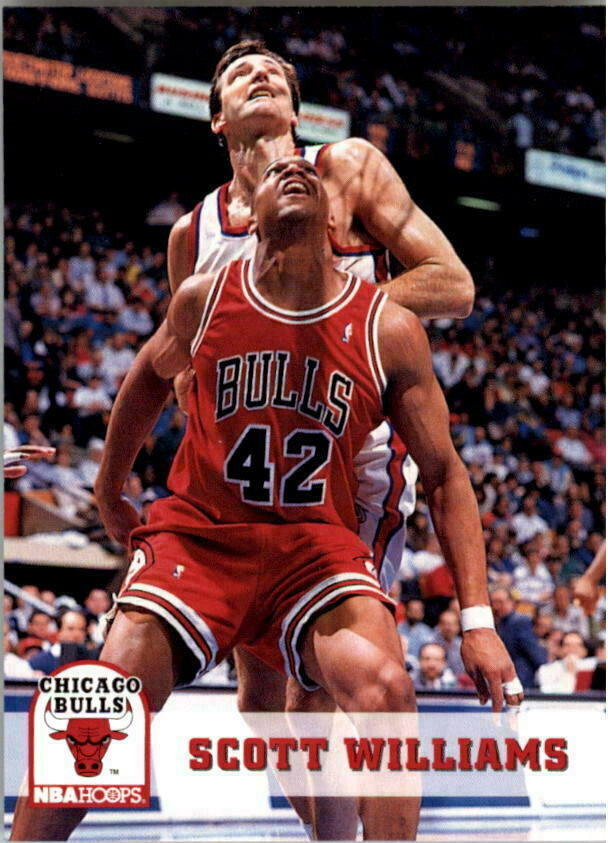 In time, Williams would win two more titles, back to back to back – with a Bulls team led by a fellow Tar Heel named Michael Jordan, who considered Williams the missing piece to the championship puzzle. In fact, it was Jordan who told Bulls general manager Jerry Krause to sign Williams.
“Things work out the way they’re supposed to sometimes,” says Williams, the only NBA player to have shared locker rooms with Jordan and a rookie named LeBron James. All of which is to say, Williams accrued a lifetime’s worth of memories during that extraordinary span; a few championship rings and team-signed keepsakes, too.
Now, some of it is up for sale through Heritage Auctions.
“Some items have been in storage facilities and cardboard boxes for decades,” Williams says. He adds, with a small laugh: “Because at some point, how much can you really display without people looking at you sideways and asking, ‘Dude, are you going to live in the past?’”
Williams is offering more than a dozen key pieces from his collection – among them his Chicago Bulls championship ring from that 1991 season. It’s estimated to sell for more than $80,000; bidding was already up to $23,000 only a few hours after bidding opened last week.
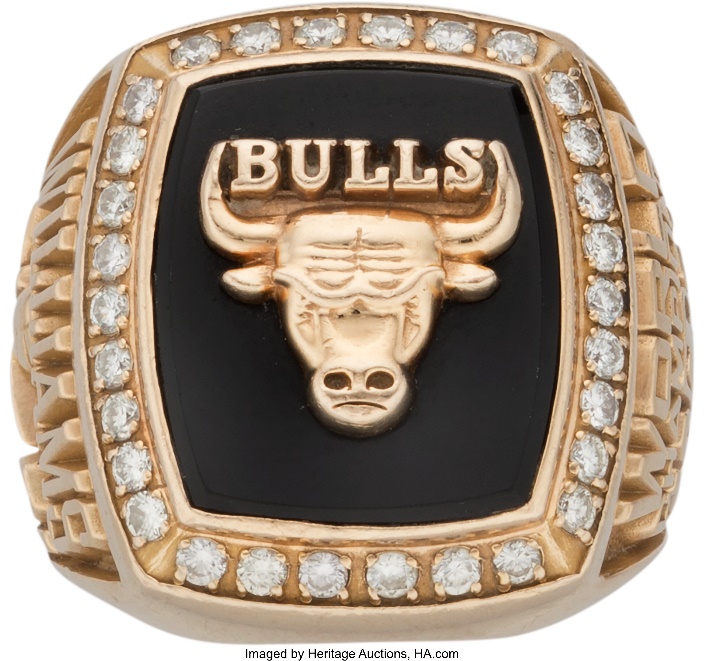
The ring, which features a golden logo and the word “Bulls” set against a black stone on the face surrounded by 30 diamonds. was designed by Martyl Reinsdorf, wife of longtime Bulls chairman Jerry Reinsdorf, who had a long career of her own as a jewelry designer.
Williams, now 53, is keeping his ’92 and ’93 rings – one to give to each of his children, at some point. He offers the 1991 ring in this event only because he never wears it.
 “There’s a history to those Chicago Bulls teams surpassed by few others who have won titles,” Williams says. “There was, of course, the mystique and the greatness around MJ, his marketability of being the top player in sports – any sport – for a long period of time. But it was also just a special time to be part of what was happening there – the struggle to get a championship for Mike, trying to get past the Detroit Pistons, and building that team through the draft, for the most part.
“We didn’t really have that ‘superstar’ lineup. We had guys who represented the city as a collection of talent, who maybe overachieved because we played so well together and understood our roles. We made sacrifices and achieved what we wanted, and we accomplished something greater than the sum of its parts. A lot of people identified with us in Chicago and the nation and the world, frankly, because we had something special to watch.”
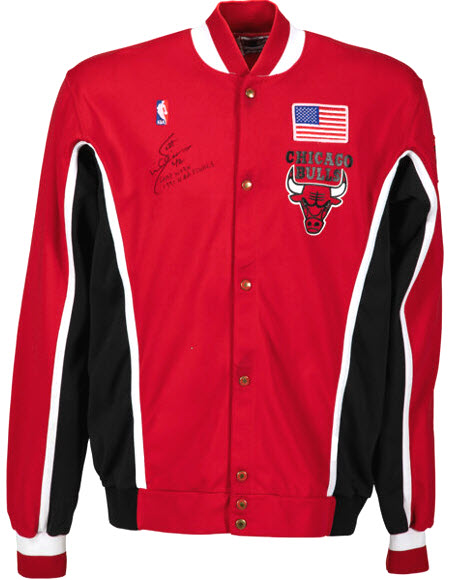
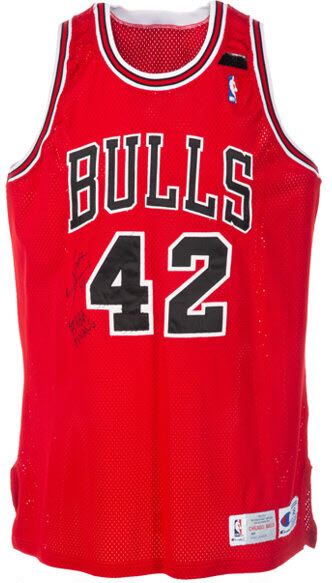
Williams has also consigned a few jerseys, jackets and uniforms spanning his playing days – including the signed game-worn warm-up jacket and pants used in the 1991 Finals, during which he made significant contributions during the overtime win in Game Three over the Los Angeles Lakers. Also up for grabs are his autographed and game-worn jersey and trunks from the 1993 Finals adorned with the black armband on the left shoulder memorializing Michael’s father, James Jordan, who died before the 1993-94 season.
There are three painted team balls signed by everyone who played on, coached and worked in the front office for those 1991-93 title teams, including head coach Phil Jackson and assistant Tex Winter, famously known as the inventor of Chicago’s vaunted Triangle Offense.
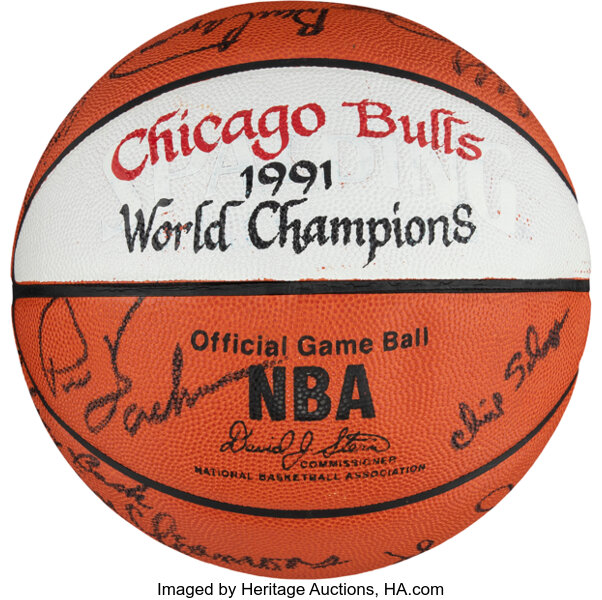
“The best thing that happened to me was being around Jordan, (John) Paxson, (Bill) Cartwright,” he says. “They taught me how to be a professional. The on-the-court stuff from Jackson and Winter was important. But the knowledge I got about what it takes to be a pro athlete off the floor and taking care of yourself and learning the game outside the game and handling the media, those are the things that propelled me to a 15-year career. I could have played seven, eight years on my talent, but those guys taught me how to be a leader. They taught me about being a help to the coach and organization on the floor and in the community. We competed hard, real hard. But those were my closest friends.”