
PART ONE IN A FIVE-PART SERIES
The new book “Operation Bullpen”, detailing the FBI’s 1999 break-up of a major autograph forgery ring, details massive amounts of forged autographs the conspirators sold to home shopping channels.
SportsCollectorsDaily.com has new excerpts from the yet-to-be released work by Kevin Nelson.
“Operation Bullpen”, Kevin Nelson’s book detailing the saga of the forgery ring brought down by the FBI, is about to be released, detailing the rise and fall of the California-based group that bilked consumers out of over $100 million during the 1990s.
SportsCollectorsDaily.com obtained an advance copy of the book and among the many fascinating, bizarre and troubling stories it weaves are the large number of fakes the ring dumped into the TV home shopping markets during the ring’s operation.
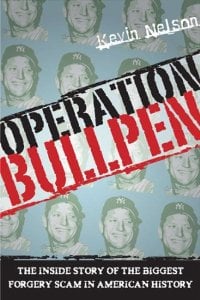 The book’s third chapter begins with forger Mike Lopez who made a “connection” with a national cable TV home shopping network.
“Mike had loads of signed memorabilia to offer them–specifically 2500 of his team-signed NFL helmets,” Nelson writes. “Not only did he burn the network for a cool $750,000 on the deal, he had the added satisfaction of watching his bogus stuff being peddled on TV and snapped up by suckers across America who thought they were buying the real thing.”
Another passage detailed more bogus items that made their way into the shopping channel market via Stan Fitzgerald, New York-based proprietor of the largest fake memorabilia outlet, “Stan’s Sports Memorabilia”. Gloria Marino, mother and business manager of the now-infamous forger Greg Marino, “speculated that Stan the Man had made $10 million in the racket.”
One member of the ring, ‘Big Rickey’ Weimer “agreed this was possible, saying that Stan had made gargantuan money selling gargantuan amounts of crap on cable TV.”
‘Big Rickey’ added that “he had sold lots of crap on cable too”.
The book details how greed was the basis for the number of people attracted to the forgery game. Some of the players in it were card and memorabilia dealers who saw others making money from authentic and fake signatures.
Dealer Shelly Jaffe, who spent six months in jail for his role, is quoted in the book saying he “couldn’t make an honest living. I’d pay 90 bucks for an item. I’d go to a show and the guy at the table next to me would be selling four of the same items, clearly fakes, for twenty-five bucks apiece. Forgeries were becoming so prevalent you either quit the business or you joined them. I joined them.”
Despite the size and scope of the fraud that was perpetrated on an unsuspecting public, only a few of the conspirators served more than a few months in jail.