
It’s been 25 years but Mike Cramer remembers the time when he put a backup quarterback on a football card and then watched a stunning turn of events make it one of the hottest cards at hobby shops and shows across the country.
“We wanted to get as many players into the set as we possibly could,” he said. “We had photos of some guys who had never had cards before. Kurt Warner had never had a card before, and he was a quarterback. We had to get him into our set.”
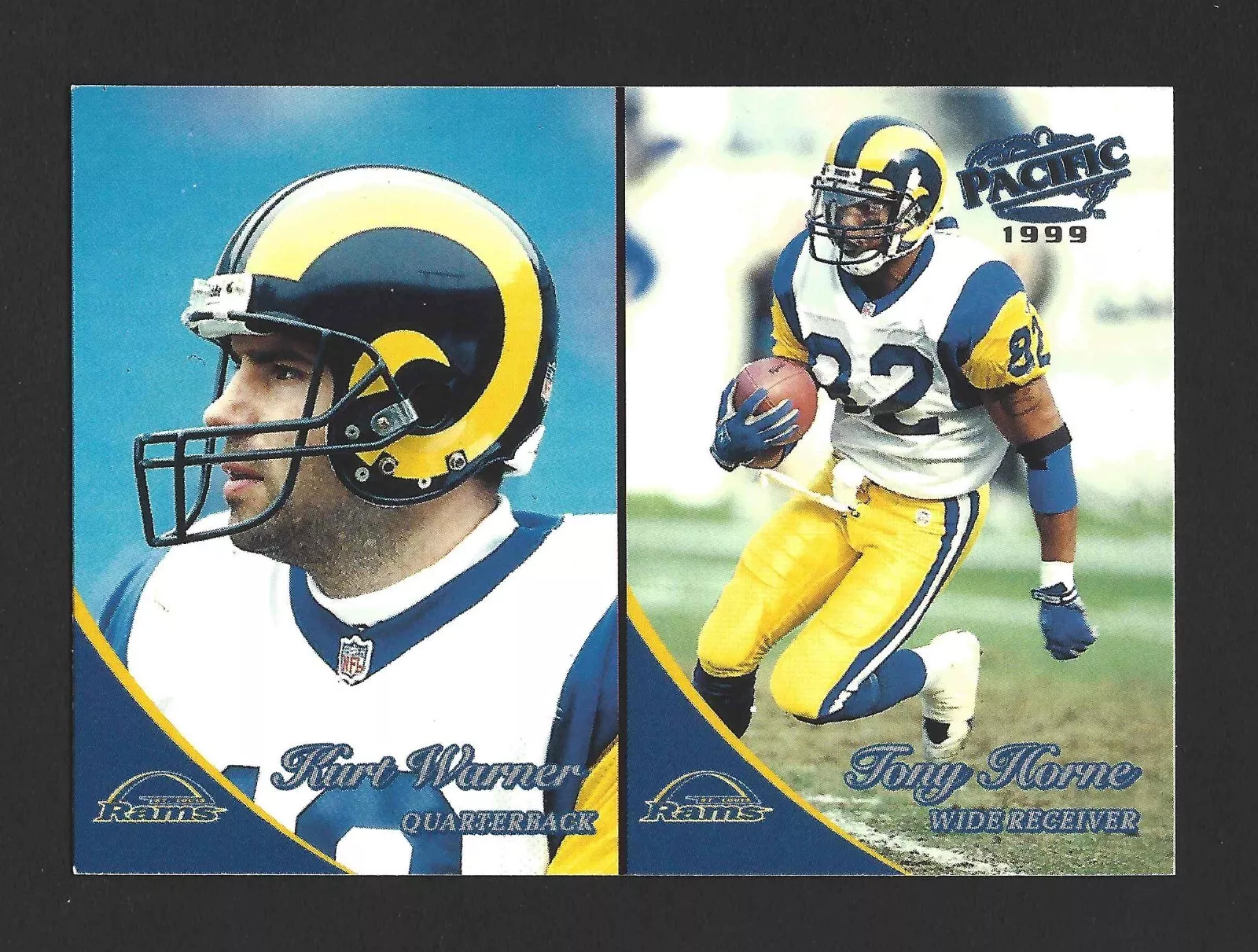
Thus was born the 1999 Pacific Kurt Warner.
Although Pacific had a team of photographers, Cramer spend every Sunday afternoon travelling around the country and shooting photos with a Nikon and a 400mm lens. Warner got limited playing time in 1998, buried on the depth chart behind Steve Bono and Tony Banks. The Rams rebuilt their offense in 1999 and brought in free agent quarterback Trent Green, who was coming off a breakout year in Washington.
And then, Green suffered a season-ending knee injury. Last week, we wrote a story on how that was the injury that turned the hobby upside down. Kurt Warner’s opening day performance is part two of that story.
“We were all over the hobby media after he had such a big game in Week 1,” Cramer said. “Mike Monson was our PR guy, and he was in touch with the hobby media constantly. He was calling Beckett, Sports Collector’s Digest, Tuff Stuff – everyone. But Warner got no respect from the hobby media until October. They finally acknowledged that we had the first Kurt Warner rookie card.”
Pacific put Warner on the card with Horne, the Rams’ kick returner who had finished sixth in the league in 1998.
When the season began in September 1999, Cramer had something no other card company had – a Kurt Warner rookie card in a 1999 NFL football set. After the unknown quarterback passed for 308 yards and three in a 27-10 win over the Baltimore Ravens in his first start, collectors took notice. Week 2 saw Warner pass for 275 yards and three TDs in a 35-7 win over Atlanta.
By Week 6, the Rams were 6-0, Warner had thrown 18 touchdown passes, and 1,531 yards. 
“It didn’t really matter what the hobby media said or didn’t say,” Cramer said. “The Warner card took off long before they started paying attention to it. The popularity of this card was driven by collectors who wanted it, not by someone at a magazine or a price guide who says a card should or shouldn’t be popular. That whole thing made me realize that they really had no influence on what was happening with collectors.”
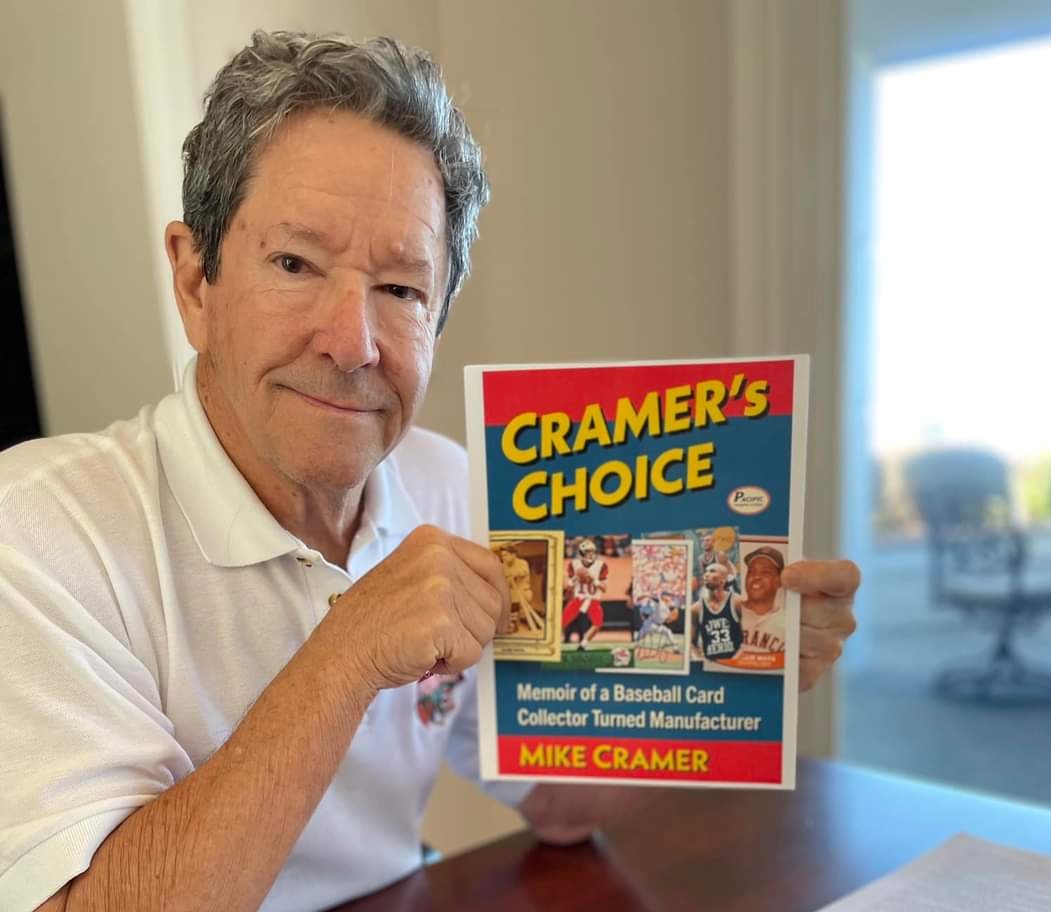
Late in the summer of 1999, Cramer saw firsthand how Warner’s early success changed what was happening in the sports card market.
“We were late shipping to Walmart,” Cramer said. “Harold Anderson was their buyer, and he was on the verge of cancelling their order for 1999 Pacific Football because of it. But then Kurt Warner had that big first week and he found out we had the only Kurt Warner card. The next call I got from him was to find out how much Pacific Football we had left and how many more cases he could get.”
In November, Beckett’s Football Card Editor Dan Hitt called the Pacific Warner/Horne card “as hot as a new football card can get.”
When Green was injured, Rams coach Dick Vermeil and offensive coordinater Mike Martz put their faith in Warner. He had seen mop up duty in one game in 1998, completing four of 11 passes for 39 yards at San Francisco in the last regular season game of the year.
“We had some photos of Warner, but there wasn’t very much out there because he didn’t play all year,” Cramer said. “We got more photos of him early. That year, I picked all the players for our sets and all of our photos. I wanted to get Kurt Warner into as many sets as possible because watching him on the field as a photographer, I could really see how special he was. I remember thinking ‘this guy looks like Dan Marino or Brett Favre.’ As it turned out, he really was that good. You don’t see a guy like that come around very often. There were a lot of guys who came into the NFL with a lot of hype, and I got to see them at field level too. A lot of those guys turned out to be overrated.”
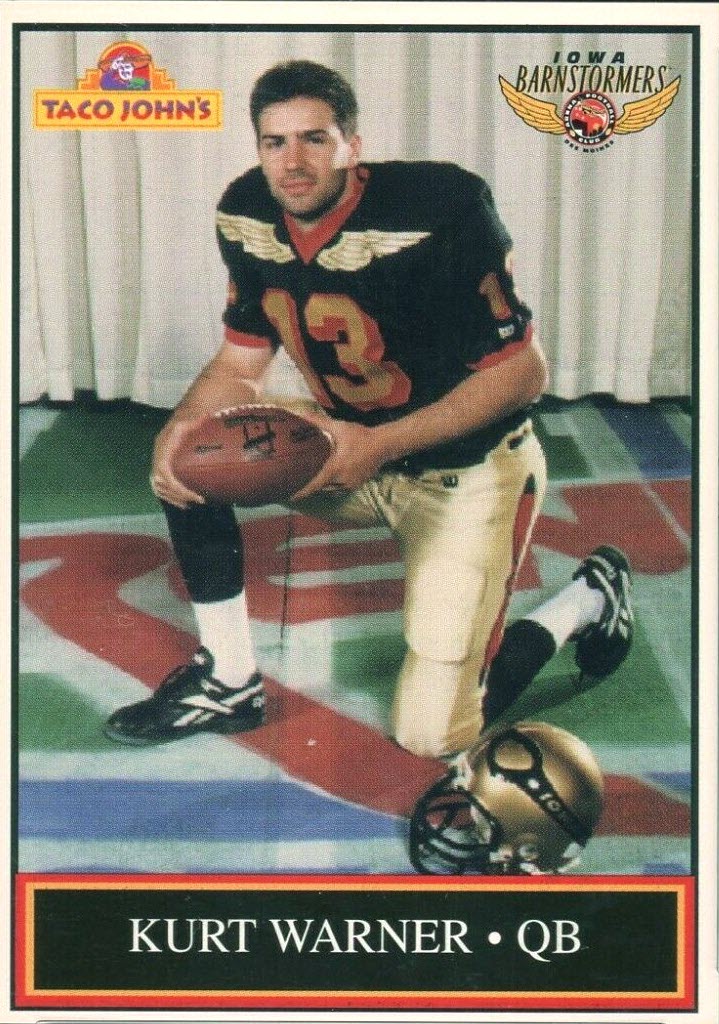
Warner and Tom Brady were the two quarterbacks who were not on anyone’s radar who got Cramer’s attention when he was taking photos for Pacific. While Brady had been a quarterback in a high profile program at Michigan, he was able to play in an all-star game and attend the combine. Warner, meanwhile, came out of a small college, kept his dream alive by playing in the Arena Football League for the Iowa Barnstormers, and then spent a season in NFL Europe with the Amsterdam Admirals. Instead of attending a combine, Warner worked out every day and stocked shelves at a grocery store by night.
What’s in a Number?
If you take a close look at the Pacific Kurt Warner rookie card, you will notice that he is not wearing number 13. Even the most dedicated Warner collectors may not know or may not have noticed he’s sporting the number 10. When asked about the photo in an interview in 2001, Warner said he had always worn 13. It had nothing to do with superstition, but everything to do with faith.
“I wore number 13 in college and everywhere I played,” Warner explained. “When I got to the Rams, Steve Bono was the starting quarterback and he wore number 13, so it wasn’t available. Tony Banks wore number 12. Our punter (Rick Tuten) had 11 and our kicker (Jeff Wilkins) had 14. So I ended up with number 10.”
When Bono left the Rams after the 1998 season and Trent Green was signed, it was the perfect opportunity for Warner to get his old number 13 back.
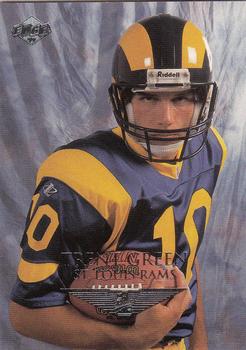
“Trent always wore number 10, so it was a great opportunity for him to have his number and since 13 was available, I got my number.
“A lot of people relate number 13 to superstition, which is one of the reasons that I chose the number. Your success in football or in life has nothing to do with superstition. If you believe in God and understand that he is in control of your life, then there is no room in your life for superstition. That’s why I like 13 as a number – it’s my way of showing that there is nothing superstitious in my life.”
Warner said he saw the Pacific card many times people would ask him to sign it, especially when it was his only NFL card.
“It’s exciting to see yourself on an NFL football card,” Warner said. “The first time I saw it, it made me think of all of the hard work and the obstacles that I had to overcome, and that I had finally made it. When I would sign that card for fans, it was like I was giving them something that would make them feel like I was sharing my journey with them.”
These days, you can pick up Warner’s first ever NFL card for less than five bucks, although the highest graded copies can fetch quite a bit more.
Warner had a record-setting rookie season and led the rams to the Super Bowl. Before the season, collectors were scrambling for rookie cards of Ricky Williams, Edgerrin James, Donovan McNabb and Tim Couch. No one paid any attention to Kurt Warner and his half-card RC.`
A couple weeks after the Super Bowl at the annual Kit Young Hawaii Industry Conference, Pete Quaglierini of NFL Properties named the 1999 Pacific Kurt Warner rookie card the NFL Card of the Year.
“That was a really special recognition for us,” Cramer said. “Our success that year was mostly in retail and it was 100 per cent driven by collectors. That card kind of came out of nowhere and turned out to be the big card of the year.”
The creation and rise of the 1999 Pacific rookie card was an exact reflection of the 1999 rookie season that Kurt Warner had.
