
As a midwestern kid in the 1970s, nothing topped buying Topps wax packs at the beginning of spring as another baseball season entered my young life. I continued snapping up more and more packs through the summer months, thumbing through each stack hoping for fresh faces, preferably Chicago Cubs, to stare back at me. Unlike many of my friends, I didn’t grow disinterested in those cards as other activities heated up, like the return to school, scouts and football. But, alas, eventually the baseball campaign ended and the agonizing wait until next spring began. It never once occurred to me back then that some of those heroes in my Topps collection headed south, way south, to Venezuela to compete in Winter League ballgames.

Nor did I realize that baseball cards existed beyond the south (and north) border of the United States. Topps produced Venezuelan sets during this time period, as Jason Schwartz thoroughly recaps in this SABR article and veteran hobby writer George Vrechek marvelously covers here.
A few months ago, I bought a 300-card 1970 Venezuelan set commonly referred to as Ovenca, the editor listed in the album that holds the beisbol cards. Mind you, this was not a product created by Topps, but to me, Ovenca and Topps cards intersect in many ways, as I’ll point out later in this article. As was common practice with trading cards in Latin America, most Ovenca cards were lightly glued into a paper album, partially or entirely concealing the cards’ backside Spanish descriptions. My 54-year-old Beisbol ’70 Album has obviously seen better days, but the rich history and stories the cards hold more than make up for the rough condition.
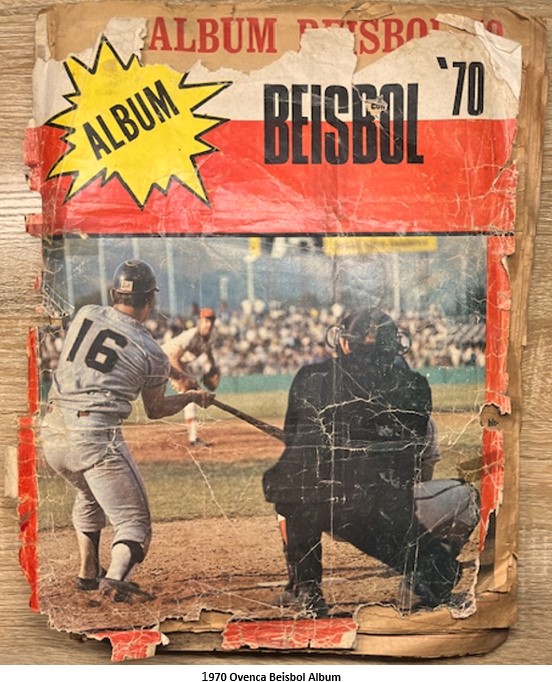
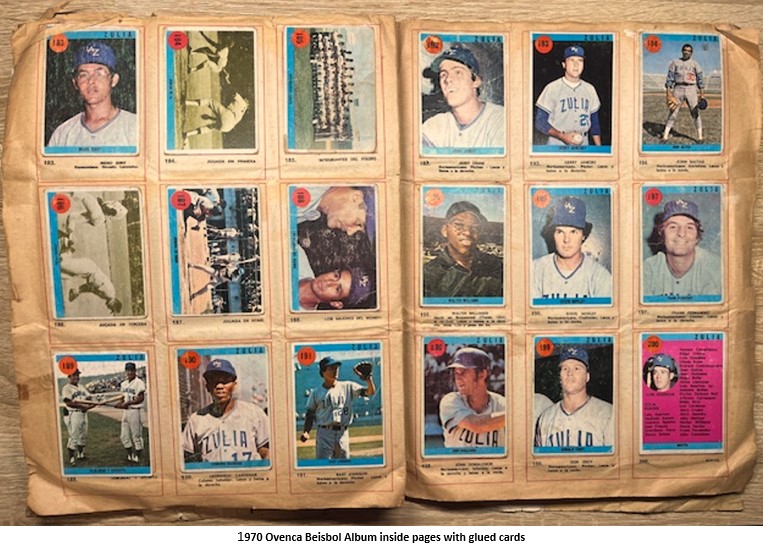
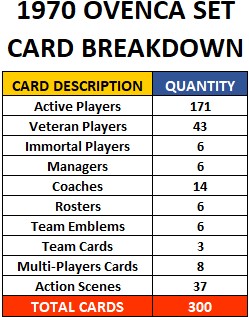
The collection features six Winter League teams – Tigers de Aragua (Tigers), Cardenales de Lara (Cardinals), Magallanes Navegantes (Navigators), Leones del Caracas (Lions), Aguilas del Zulia (Eagles), Tiburones de La Guaira (Sharks), each with 40 cards. The remaining 60 cards are spread over Veteranos players (Veterans), Inmortales (Immortals, i.e. deceased) and miscellaneous action & team cards.


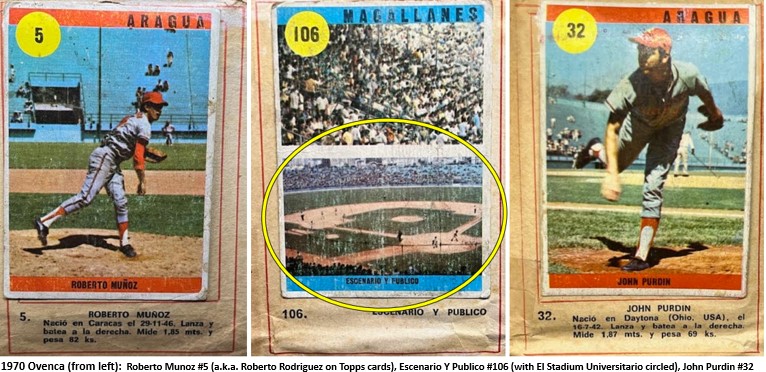
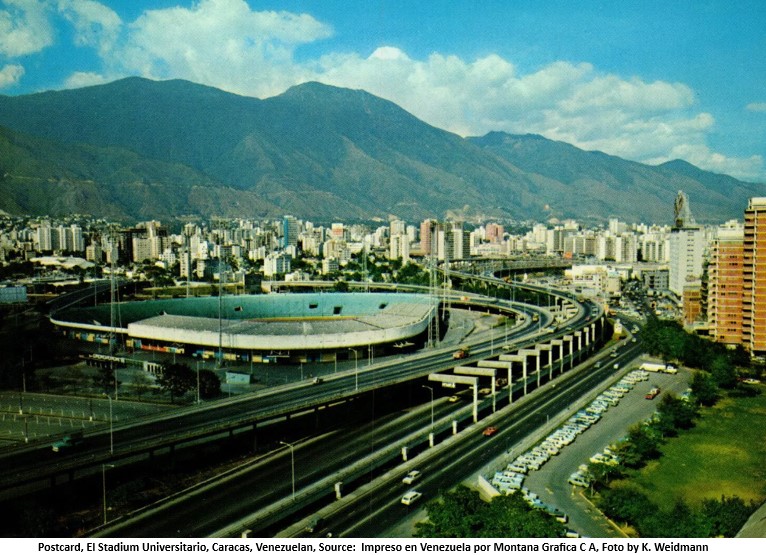
One of the League’s stadiums, El Stadium Universitario in Caracas, is featured on card #106. The 30,000-seat capacity venue, built in 1950, can be seen in the background on multiple cards throughout the set.
This gorgeous vintage postcard shows how the ballpark, which is still in existence today, nestles into a mix of city skyline and mountainous terrain.
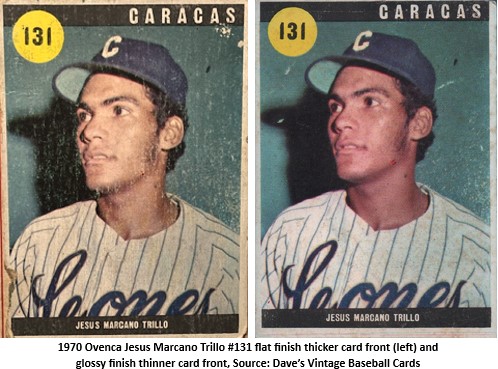
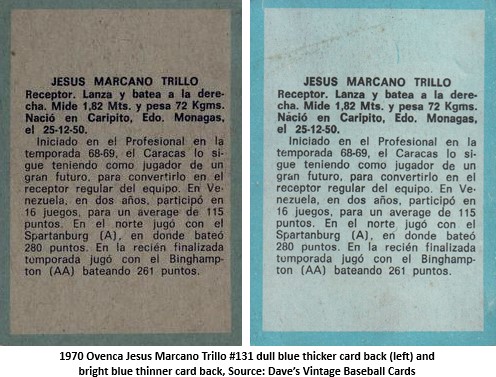
According to super collector Chris Shuchart, most cards feature a flat finish front and dull blue back on thick cardboard, though there are some rare cards with a glossy front and brighter blue back printed on thinner stock.
Sport Grafico, the local magazine akin to Sports Illustrated, published ads promoting the full color 1970 Beisbol trading cards and album.
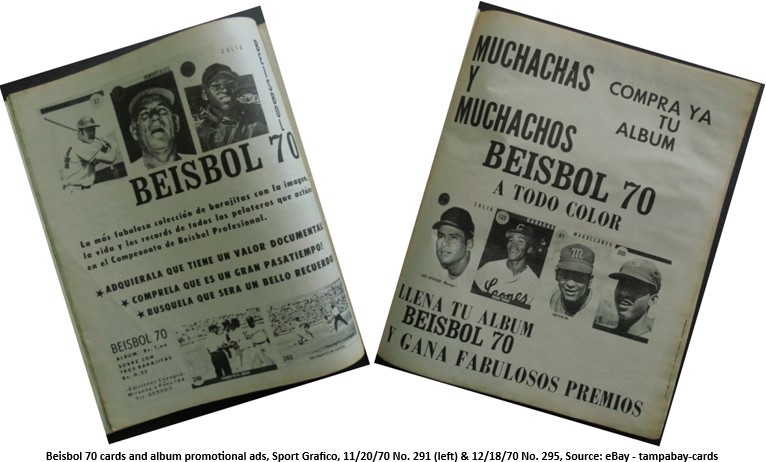
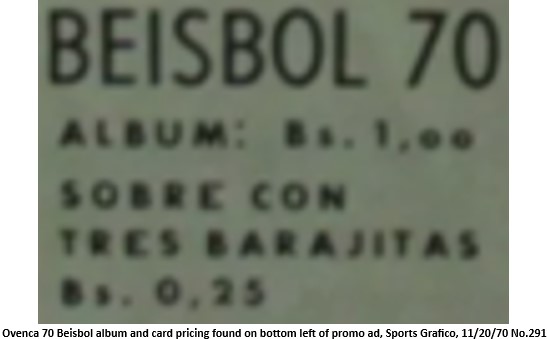
According to a pricing description in Venezuelan currency found on the bottom left of the promo ad in the Sport Grafico 11/20/70 issue, an album cost 1 bolivar and 3 cards in an envelope set you back .25 bolivar.
To learn more about Sport Grafico magazine and some Venezuelan paper cards associated with it, hobby researcher Matthew Glidden does a great job capturing details in part one and part two on his blog.
I came across this magnificent 1970 photo in Sport Grafico of a Venezuelan boy playing with his beisbol cards.
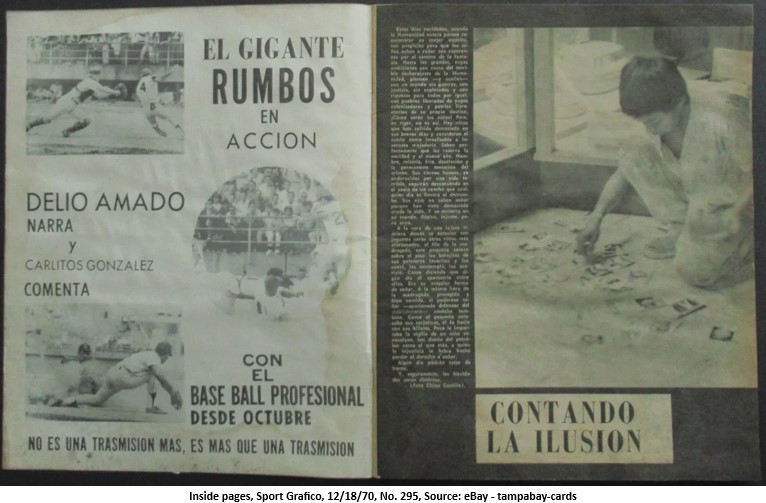
The image is a throwback to my own life as I did the same thing with Topps cards on my bedroom floor. I was curious what the copy on the left described about the picture.
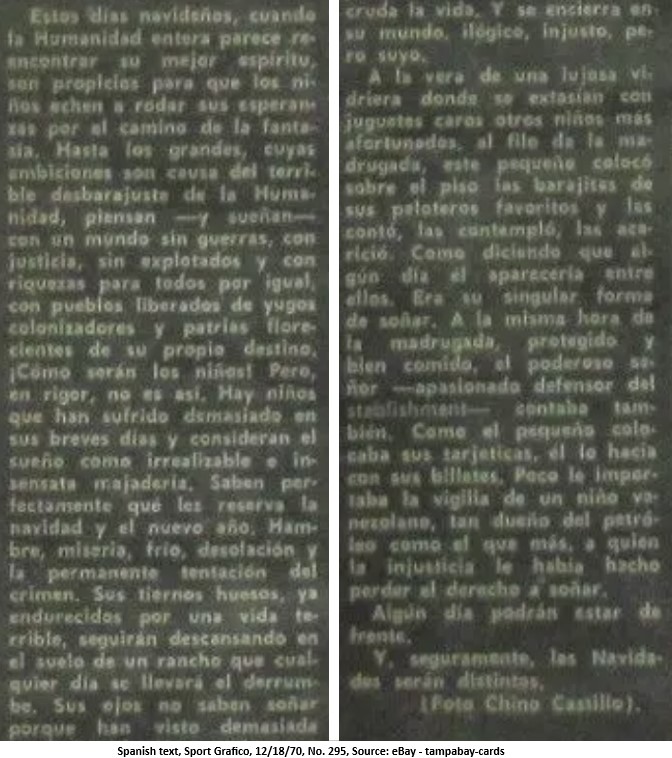
Thanks to Google Translate, I typed in the Spanish words and out spit a fairly accurate English interpretation. To my surprise, the Christmas story told of the extreme challenges a boy like this faced in Venezuela. Yet the cards provided both escape and hope to help combat his difficult life circumstances, as highlighted below.
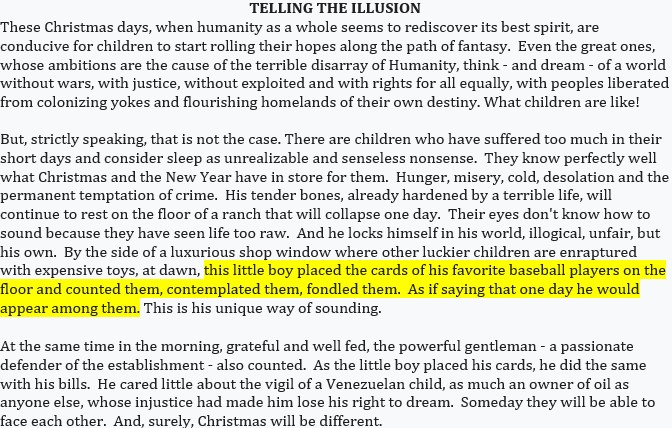
To offset that sobering reflection, let’s move on to the joy of Topps/Ovenca card connections.
NOT TOPPS, BUT THE NEXT BEST THING
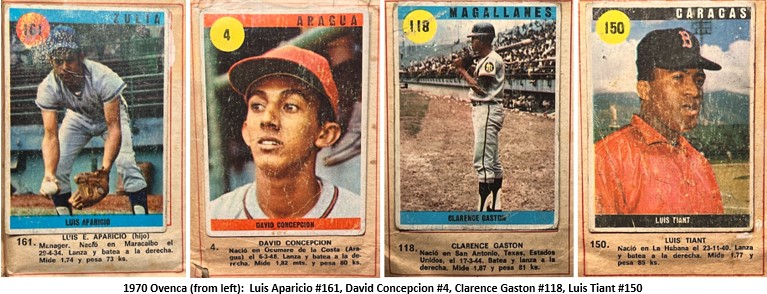
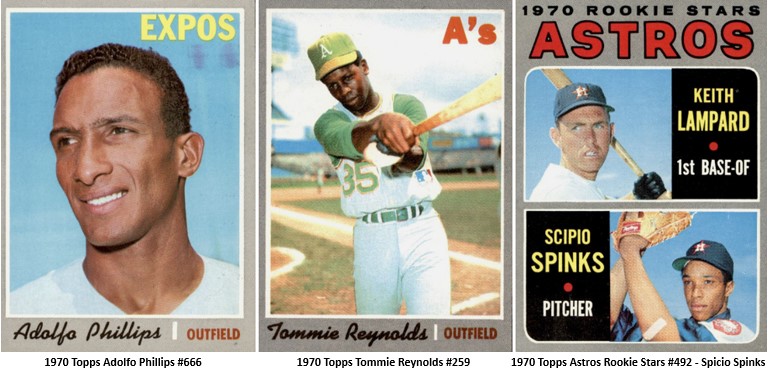
There are a few top-notch names in the 1970 Ovenca set. Native crowd favorite Luis Aparicio is the biggest superstar included, but another Venezuelan, fresh-faced David Concepion gives Aparicio stiff competition. Concepcion’s Big Red Machine years with Cincinnati were just starting to bud while Little Louie was winding down his Hall of Fame career. Clarence Gaston, who enjoyed his strongest playing career performance in 1970 in the States with the San Diego Padres, and the great Luis Tiant, joined the star card line-up.
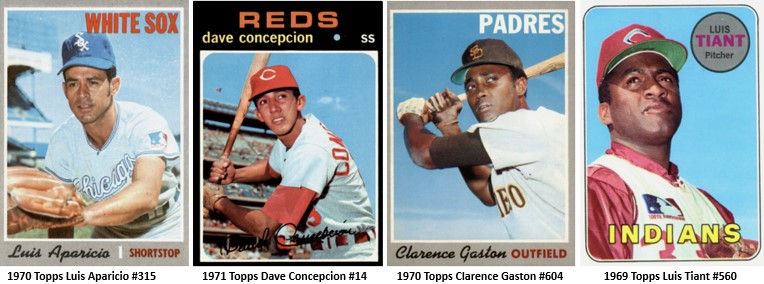
Here are their Topps counterparts around the same time period.
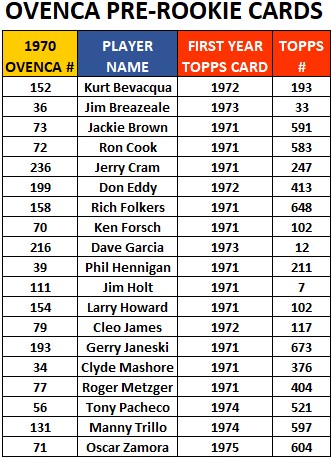
While they’re not Topps cards, it’s still cool to see 19 Ovenca pure “pre-rookie” cards of players who had yet to be featured on a Topps base card product.
THE 50’s
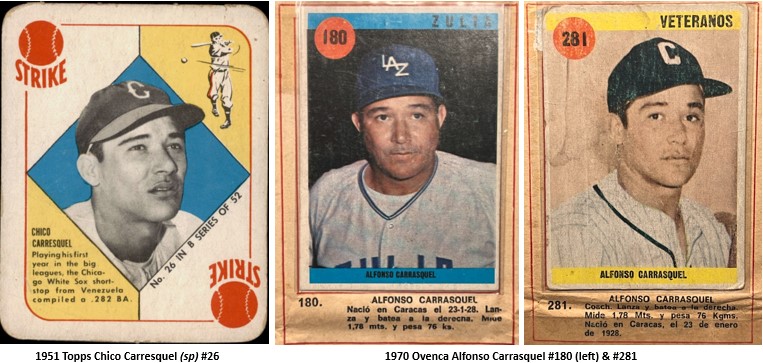
There are five players featured in the 1970 Ovenca assemblage that also have Topps cards appearing in the 1950s. The oldest Topps card belongs to Chico Carrasquel, who landed in the rare 1951 Blue Back set, Topps’ first year on the scene. Camilo Pascual, Aparicio, Ray Monzant and Orlando Pena followed suit during that decade.
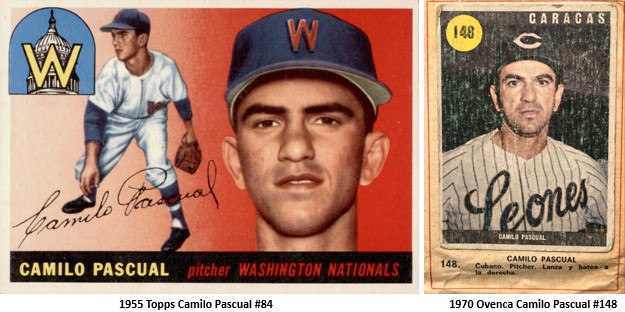
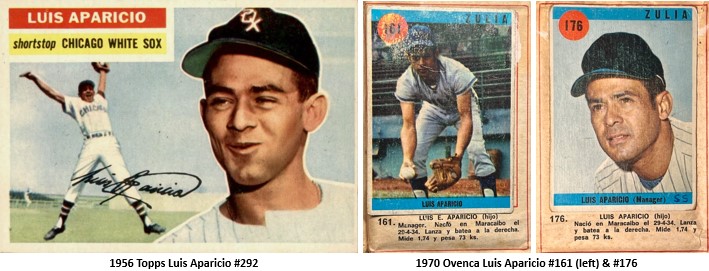
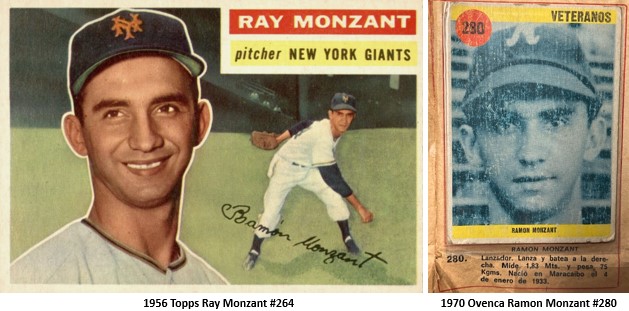
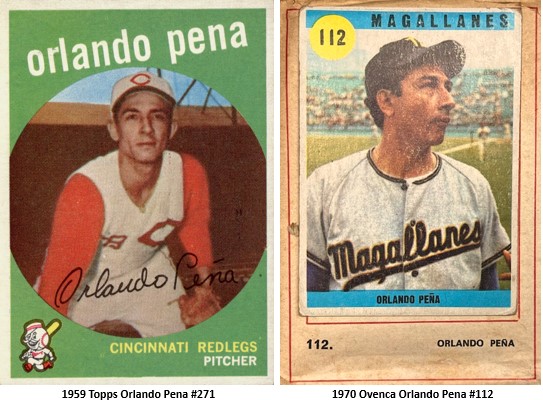
ONE AND NOT DONE
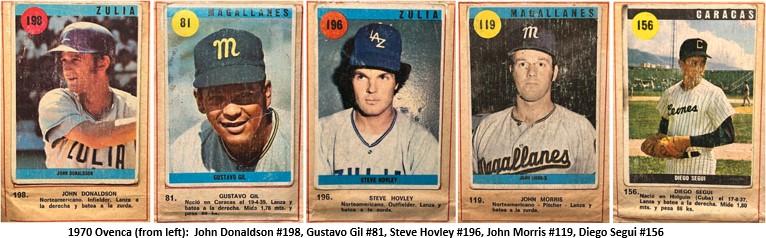
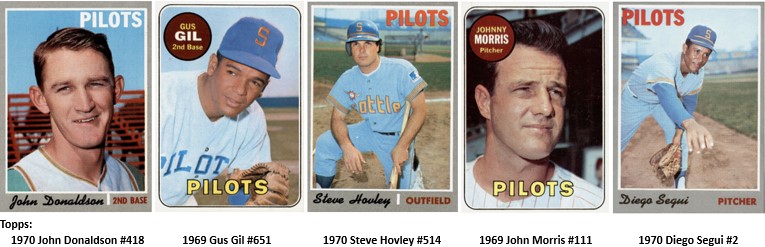
For all you 1969 Seattle Pilots fans, if you haven’t done so already, here’s your chance to add to your stash five trading cards of South America-bound Pilot players that landed right around the time the team packed up the tent.
FAMILY TREE
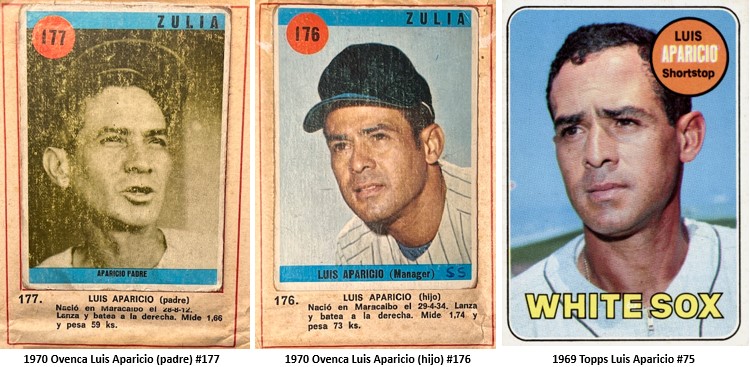
I found it interesting that some bloodlines of Topps players were shared within the Ovenca set. Aparicio’s pop, the elder Luis, garners his own card. The father/son duo were even identified as padre/hijo in the album.
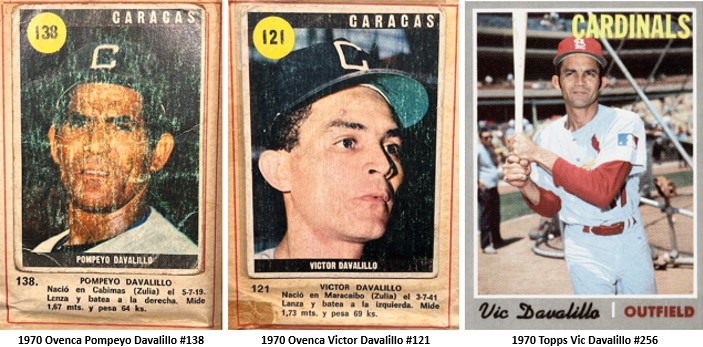
Pompeyo Davalillo, much older brother of Venezuelan Victor, commonly referred to as Vic in the U.S., hang together within the Ovenca set.
Veteran Pelayo Chacon joins his son, Elio.
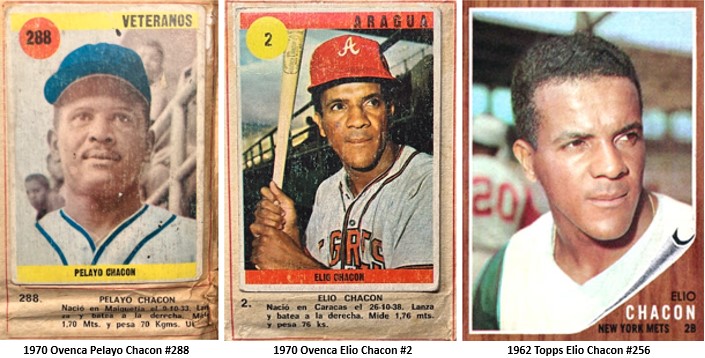
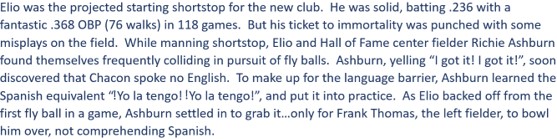
Elio suited up for the brand-new, hapless 1962 New York Mets. His Venezuelan roots contributed to some miscues during that ineffective season, as reported by baseball-reference.com:
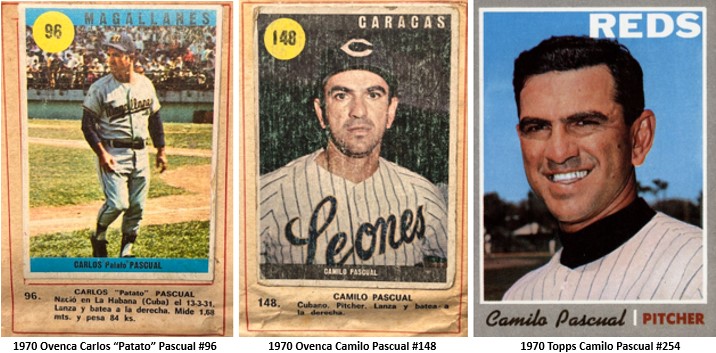
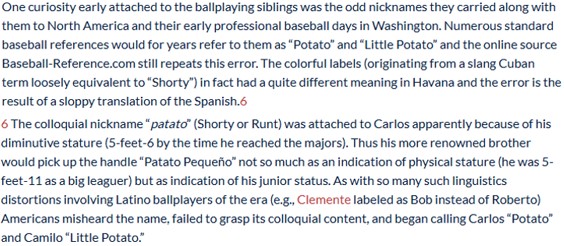
Who knew long-time MLB ace Camilo Pascual’s nickname was “Patato Pequeno”? When I saw his older brother Carlos “Patato” Pascual in the Ovenca set, I looked up how the nicknames came to be.
Peter C. Bjarkman writes on SABR BioProject:
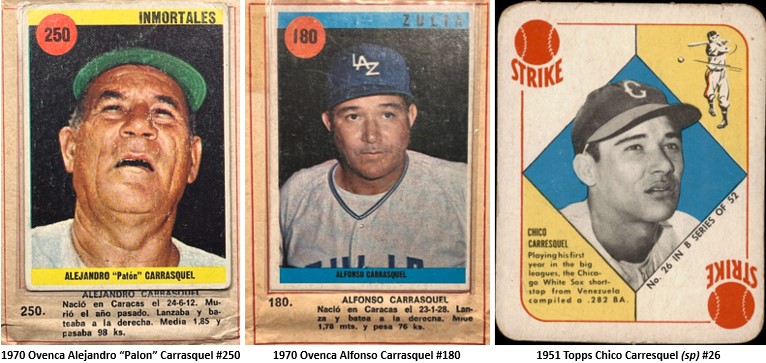
Carrasquel, portrayed with his nickname “Chico” on the fronts of his six Topps base cards, is shown with his formal first name Alfonso on his international cards. His Uncle Alejandro, the first Venezuelan to ever play in the Majors, makes an Ovenca cameo alongside his nephew.
As neat as that linkage is, here’s one even better for nostalgic collectors like myself. That same Alejandro Carrasquel card is sitting on the floor of that boy’s stockpile 54 years ago.
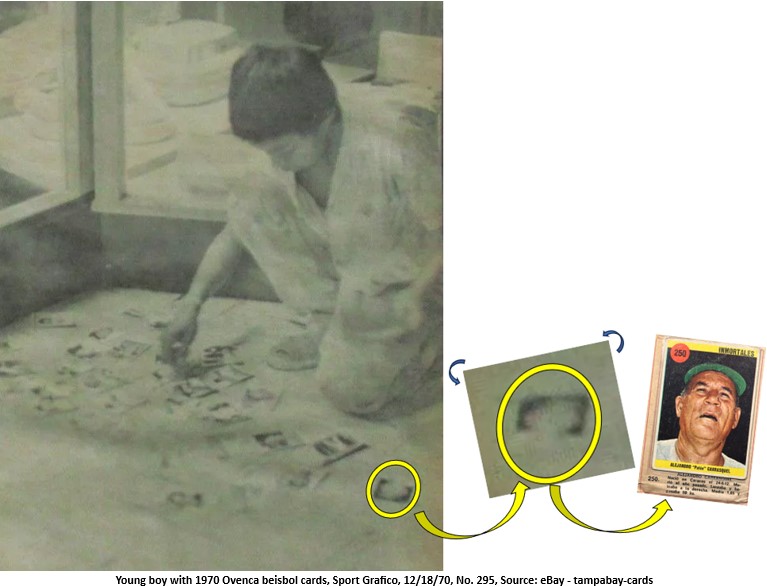
Simply wonderful.
NAME GAME
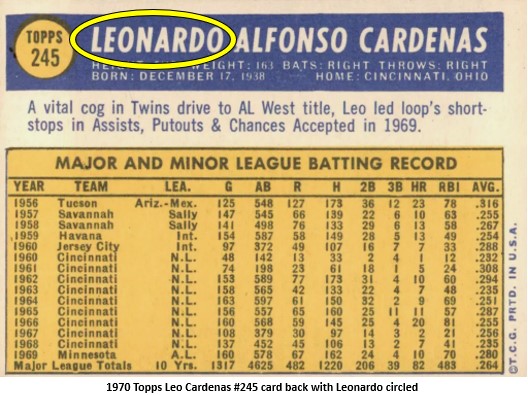
Speaking of nicknames, the Ovenca set sheds light on legal names of some Major Leaguers when compared to typed names on some Topps card fronts. For instance, Topps lettered either “Chico” or “Leo” on all 16 Topps base card fronts for Leonardo Cardenas.
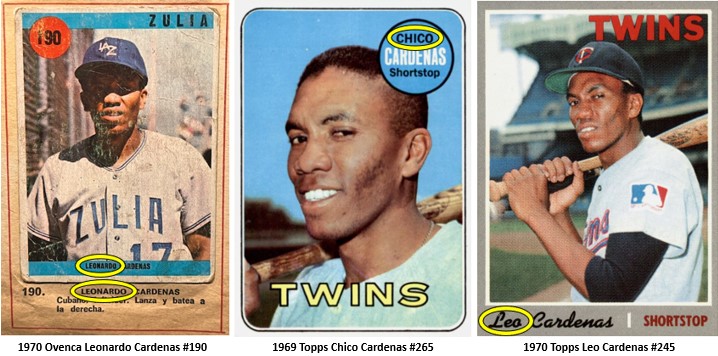
Topps did unmask Cardenas’ full first name on some card backs, like this 1970 model:
In Venezuela, Ovenca listed Boots Day as Charles, whereas Topps opted for Boots on the front of his complete 1970-1974 card run.
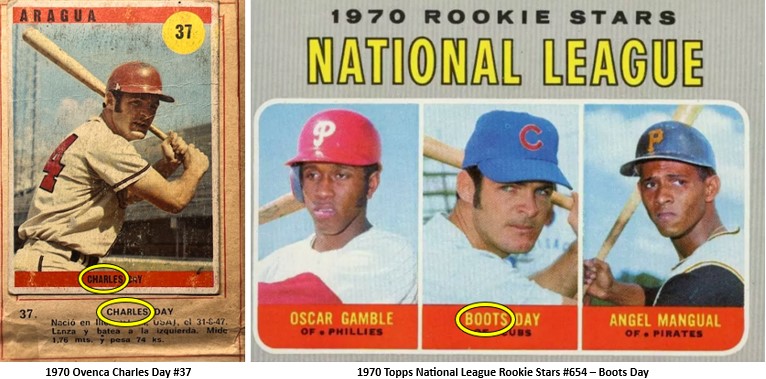
In addition to some card backs, sometimes Topps divulged a player’s birth name using the athlete’s facsimile signature.

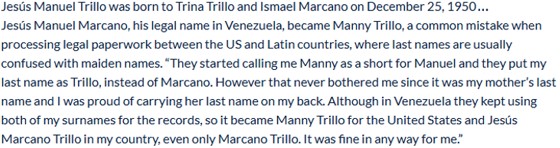
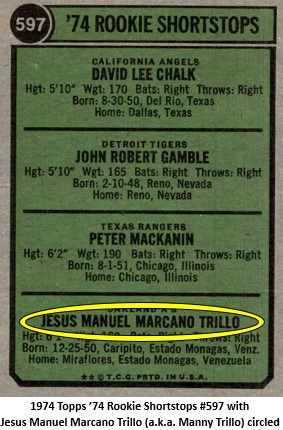
A fair share of confusion hovers over this next player’s moniker. Ovenca called him Jesus Marcano Trillo while Topps called him Manny Trillo.

Regarding the talented infielder’s name, Leonte Landino provides the dope on SABR BioProject:
Topps covered all bases by listing not only Manny Trillo on the 1974 rookie card front (above), but also Jesus Manuel Marcano Trillo on the back (below).
WHOOPS! THERE IT IS
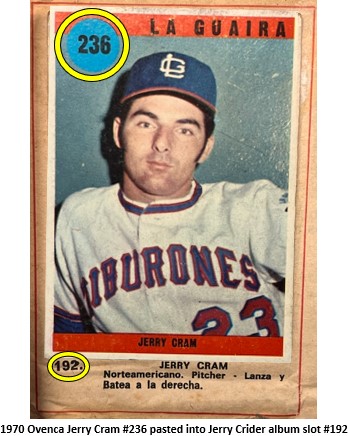
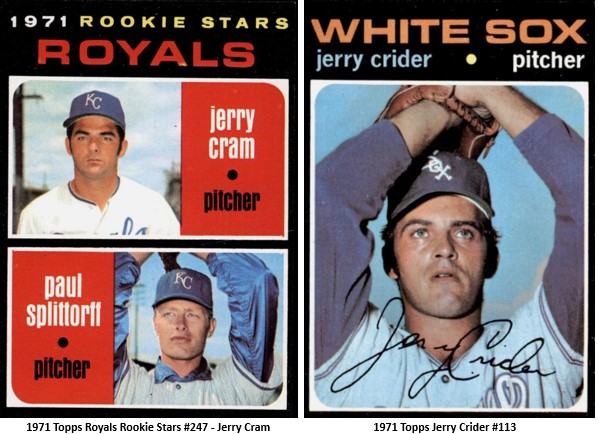
Here’s a case of mistaken identity. Ovenca got pitcher Jerry Cram right on his card and album #236 listing, but another Stateside hurler sharing the same first name was not as fortunate. When pasting Jerry Crider’s beisbol card #192 into the collector book, one might do a double take seeing Cram’s name instead of Crider’s.
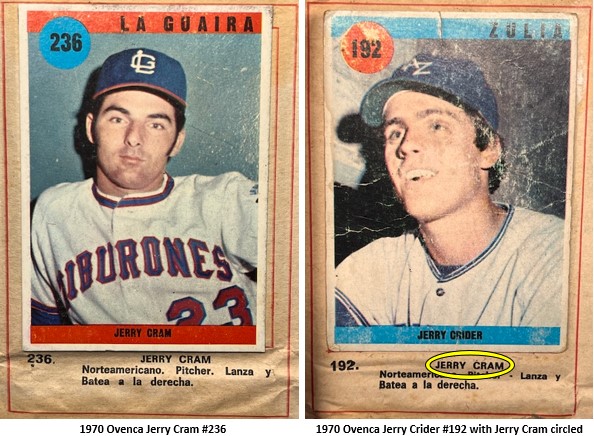
I wonder how many times this happened in the winter of 1970-1971?
Topps avoided the problem altogether by not issuing albums for their U.S. pasteboards.
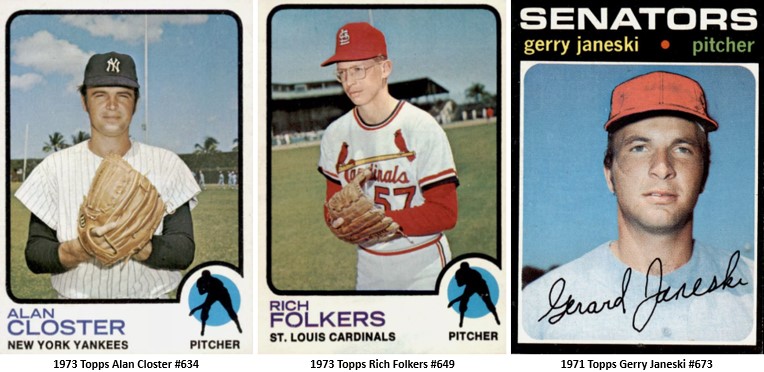
On top of the Crider album inaccuracy, there were a handful of boo-boos on Ovenca cards for the Topps visitors.
INCORRECT OVENCA CARD SPELLINGS:

CORRECT TOPPS COMPANION CARD SPELLINGS:
INCORRECT OVENCA CARD SPELLINGS:
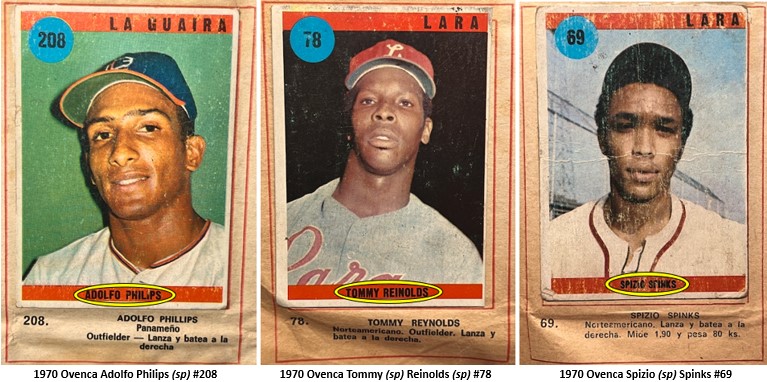
CORRECT TOPPS COMPANION CARD SPELLINGS:
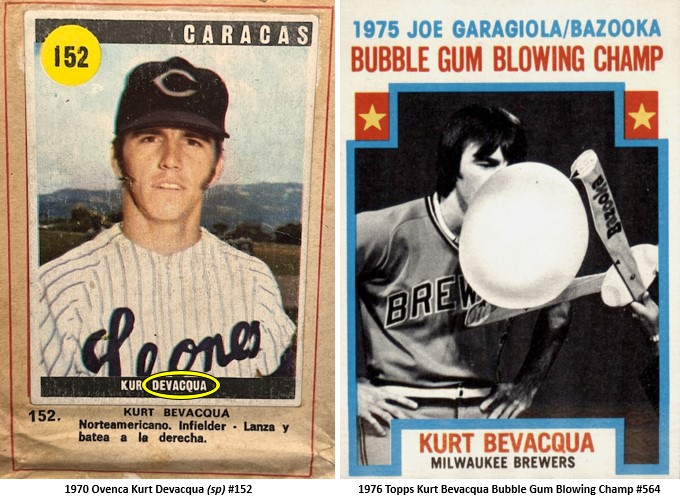
Another American player that encountered a botched name on his foreign card is Kurt Bevacqua, which may have burst his bubble upon seeing it for the first time.
GONE TOO SOON
Ovenca produced a multi-player headshot card titled EL PODER NEGRO, Spanish for BLACK POWER of four players – Clarence Gaston, Hal King, Jim Holt and Herman Hill. Each appeared on vintage Topps cards.
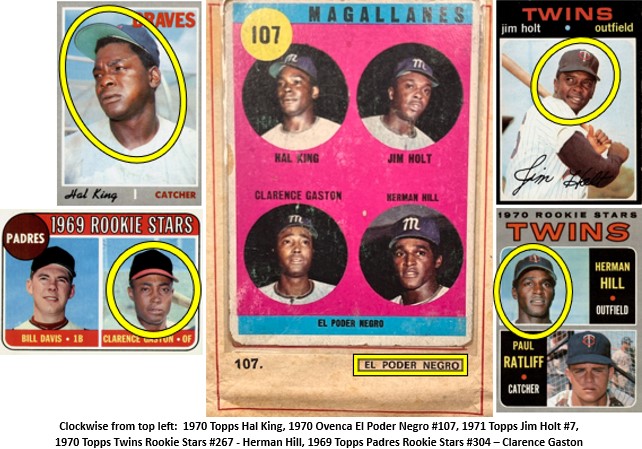
Hill’s lone Topps appearance was his 1970 rookie card shared with catcher Paul Ratliff. The Twins outfielder died tragically on December 14, 1970 in the Caribbean Sea off the northern coast of Venezuela. He was only 25 years old. Dana Yost recaps Hill’s life and death in this SABR Bio Project.
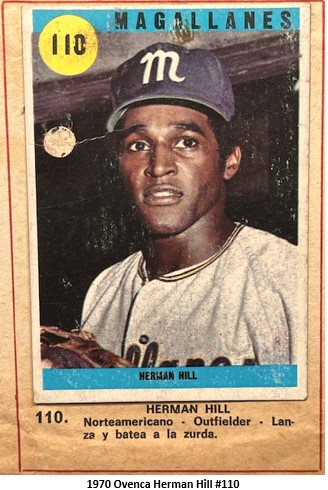
In addition to the shared Ovenca card #107, Hill had a stand-alone card #110 in the 1970 Venezuelan set.
FUTURE’S SO BRIGHT
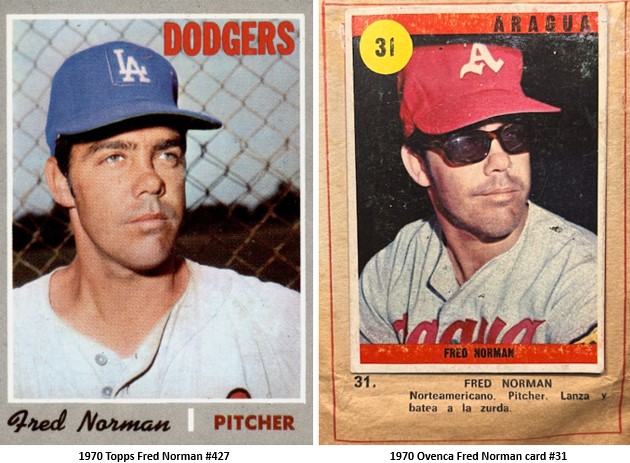
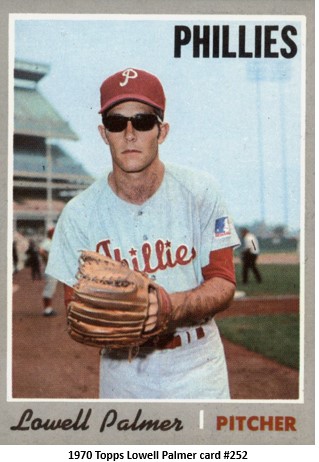
Rather than end this article on a somber note, let’s switch gears and take a quick looksee at moundsman Fred Norman. Here he is sportin’ nearly identical expressions on his 1970 Topps and Ovenca cards, but lookin’ much cooler down south with a five o’clock shadow and shades.
Lowell Palmer, you got competition.
Despite this 1970 Venezuelan baseball card set having no official Topps affiliation, there’s still a gratifying collecting kinship for me with the players of that era, and perhaps for you, too. I created a sortable Excel spreadsheet that helps navigate through the 300 non-domestic cards.
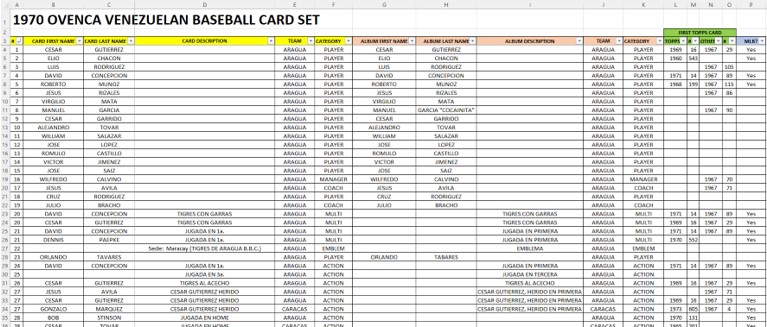
If you’d like this file, simply contact me at dgcarlson5@gmail.com and I’ll email it to you. If you enjoyed this article, you might want to check out some of my other vintage Topps articles here on SC Daily.
