
As hard as it is to believe today, there was a time when Wayne Gretzky was a budding hockey prospect ready to embark on a journey which would take him to the highest places in sport itself. A skinny teenager with incredible skill that had grizzled fans and pundits spouting off doubt and insults, he already had a year of pro experience under his belt when the Edmonton Oilers joined the National Hockey League nearly 45 years ago.
Just 17 years old, Gretzky had signed with the troubled Indianapolis Racers of the World Hockey Association and showed glimpses of the greatness to come.
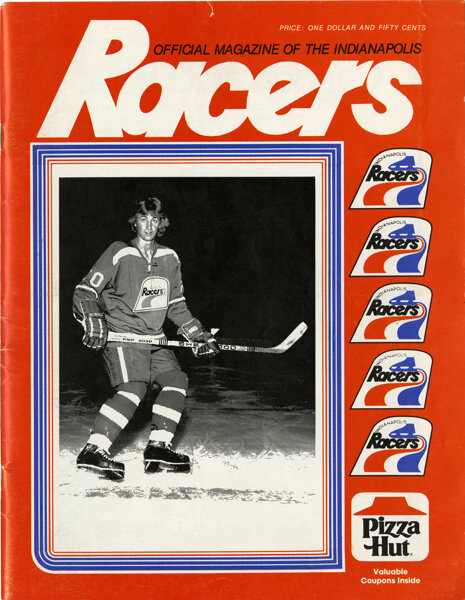
Even though he spent just eight games there, the cash-strapped club sent him packing to the Oilers, who were attempting to change leagues along with the New England (later Hartford) Whalers, Quebec Nordiques, and Winnipeg Jets.
Gretzky racked up 110 points that season and the hype for the youngster grew exponentially.
While the Oilers made it to the AVCO Cup Final before the WHA closed down, their roster was decimated before they even played an NHL game. Through some smart trades and negotiations, they were able to retain talents such as Brett Callighen, Blair MacDonald, Dave Hunter, Ed Mio, Dave Semenko, Ron Chipperfield, Stan Weir, and Risto Siltanen. However, they lost Dave Langevin, Paul Shmyr, and Bengt Gustafsson upon entry. Veterans like Al Hamilton, Bill Flett, and Dave Dryden were on their last legs while Garnet “Ace” Bailey, Jim Neilson, and Bill Goldsworthy were destined for retirement. The Oilers temporarily held the rights to Mike Liut from a dispersal of WHA players not on the four new teams, but he was reclaimed by the St. Louis Blues.
Gretzky was protected heading into the 1979 NHL Expansion Draft along with Mio and Dryden, but there was little else to choose from. The highlights here were Cam Connor (Montreal Canadiens), Lee Fogolin (Buffalo Sabres), Pat Price (New York Islanders), Colin Campbell (Pittsburgh Penguins), and Doug Hicks (Chicago Black Hawks).
In the 1979 NHL Entry Draft, the Oilers’ results were much more positive. In the first round, Kevin Lowe was a smart pick and he was followed by Mark Messier and Glenn Anderson in the third and fourth. Messier, a hometown boy that played in the WHA the year before with Indianapolis and Cincinnati, was ready for the NHL despite struggling at times on the ice–also as a 17-year-old. Anderson chose to play for Canada at the 1980 Olympics before turning pro.
A Slow Start
The 80-game NHL schedule was a much different beast in 1979-80 as each team played the other four times – two home and two away. As a result, new and existing rivalries were unable to flourish and this would not be remedied until they went to something based on divisions two years later.
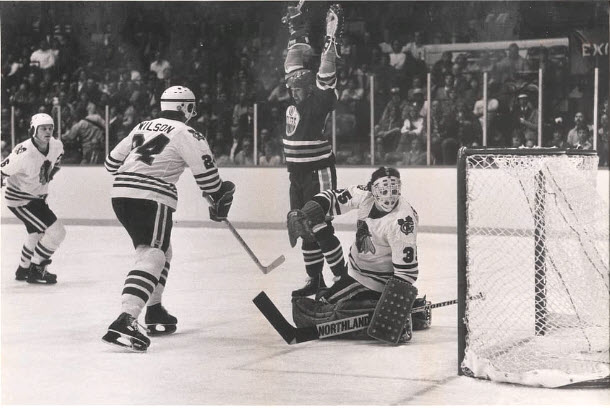
Heading out of training camp, the Oilers started their NHL odyssey with a road game at Chicago on Oct. 9, 1979. Down 2-0 early in the first, Gretzky got his first penalty at the 5:19 mark for slashing as Greg Fox got a similar assessment and Keith Magnuson went off for hi-sticking. Another power play a few minutes later resulted in Edmonton’s first goal with Lowe getting the credit while Gretzky and Callighen received assists. Hunter tied it up a few minutes later, but Chicago capitalized on two later power plays to result in a 4-2 win.
Three days later, the Oilers were home and ready for the Detroit Red Wings. Gretzky set up the opening power play goal by MacDonald, but the end result was a 3-3 tie. This game is notable for Mark Messier’s first career tally, which was scored on Rogie Vachon and forced the deadlock.
The homestand continued one night later and this time, Gretzky was not about to be denied in the mission to score his first NHL goal. While he set up Risto Siltanen during the first period, the Vancouver Canucks had created a 3-2 lead early in the third. Stan Smyl was yanked off the ice for tripping with less than two minutes left and it did not take long for Gretzky to deliver as he scored on Glen Hanlon at 18:51. In this era, the NHL did not have overtime during regular season play, so many fans went home feeling ambivalent. Gretzky clicked quickly with MacDonald and Callighen to provide a strong top line and their numbers were abnormally high here compared to other years – the first true evidence of the “Gretzky Effect”.
On Oct. 19, the Nordiques came to Edmonton and the Oilers were ready to win. Gretzky set up three of his team’s six goals that night – two of which came on a hat trick from MacDonald. It would be a while before they won another, as they went 1-5-4 over their first 10 games – finally winning again on Nov. 2 with a 7-2 decision over the future Stanley Cup champion New York Islanders. Even with that big victory, no momentum was being built and losses continued to pile up.
Some reporters in this era seized the opportunity to be extremely critical of Gretzky, believing that he was too small to compete in the NHL. However, he was scoring at a 120-point pace at the quarter mark of the season! One of these contests was win over the Washington Capitals on Nov. 13 which is particularly significant since this is the game where the photo on Messier’s rookie card from 1980-81 O-Pee-Chee was taken. It is also possible that this contest, or the one on Jan. 16, 1980, where the photo from Gretzky’s main card in the same set was shot.
An Iconic Card Arrives
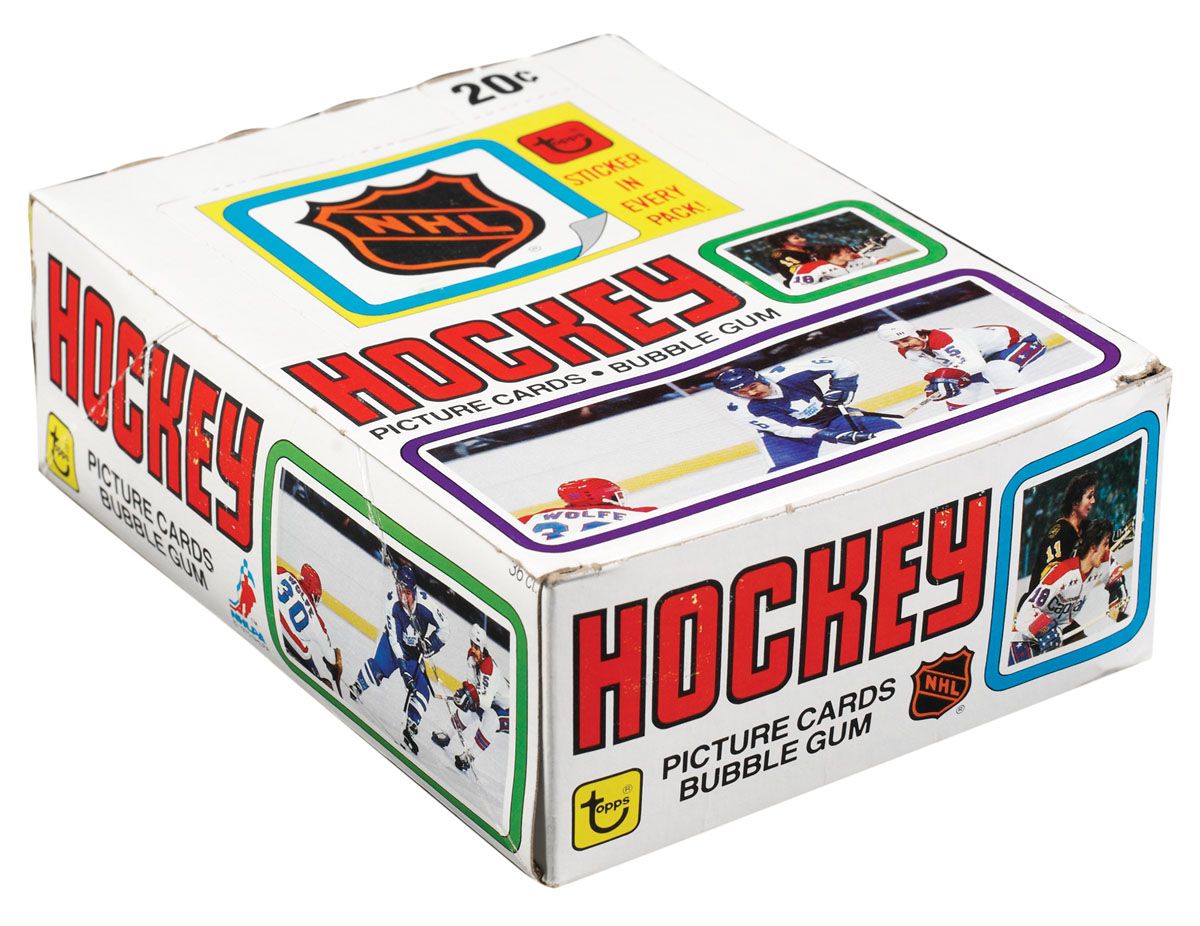
For generations of hockey card collectors, Wayne Gretzky’s rookie card is the stuff that dreams are made of – but it has a rather humble origin as it was just as plentiful as any other in the 1979-80 sets from Topps and O-Pee-Chee.
Due to his success in the WHA, it was only natural that he be included in that year’s set. Capturing Rookie of the Year honors and racking up 110 points will do that, and it was important that both companies feature the four incoming teams. Topps was the first to hit the market stateside and the photo on the front was taken in Springfield, MA by Steve Babineau as the New England Whalers hosted the Oilers on Nov. 9, 1978.
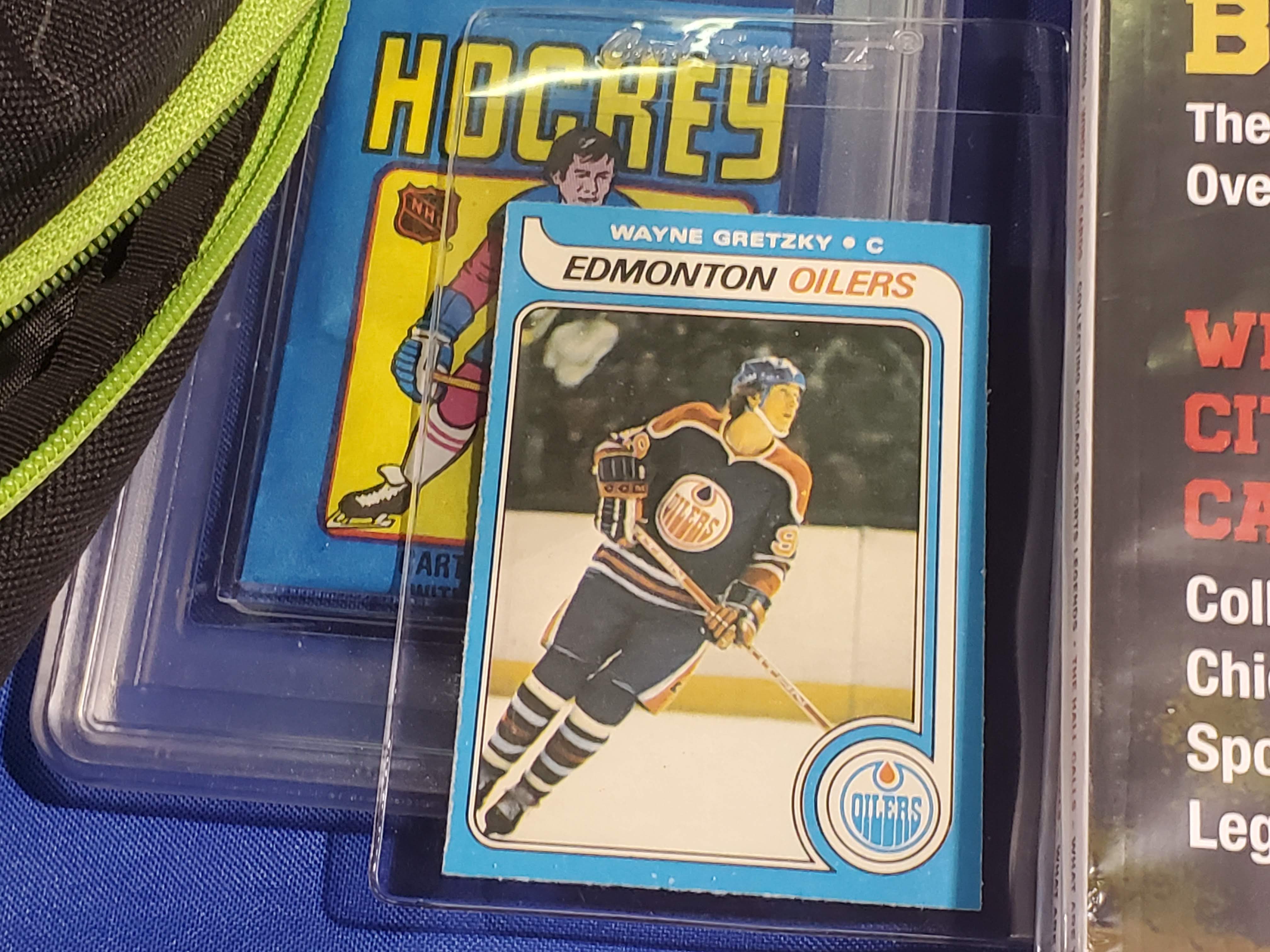
With O-Pee-Chee hitting store shelves in early January, kids were already abuzz over what Gretzky was doing at the NHL level. The iconic design, condition-sensitive borders, and so much more helped the card’s appeal – even if fans were so polarized about the young prospect.
As time went on, it became iconic as his reputation grew and accomplishments piled up – but in this time and space, it could be had for pennies if you cracked a few packs or a box. The stories in recent years of record prices being paid for graded copies and unopened material were incomprehensible then.
Other Interesting Early Gretzky Collectibles
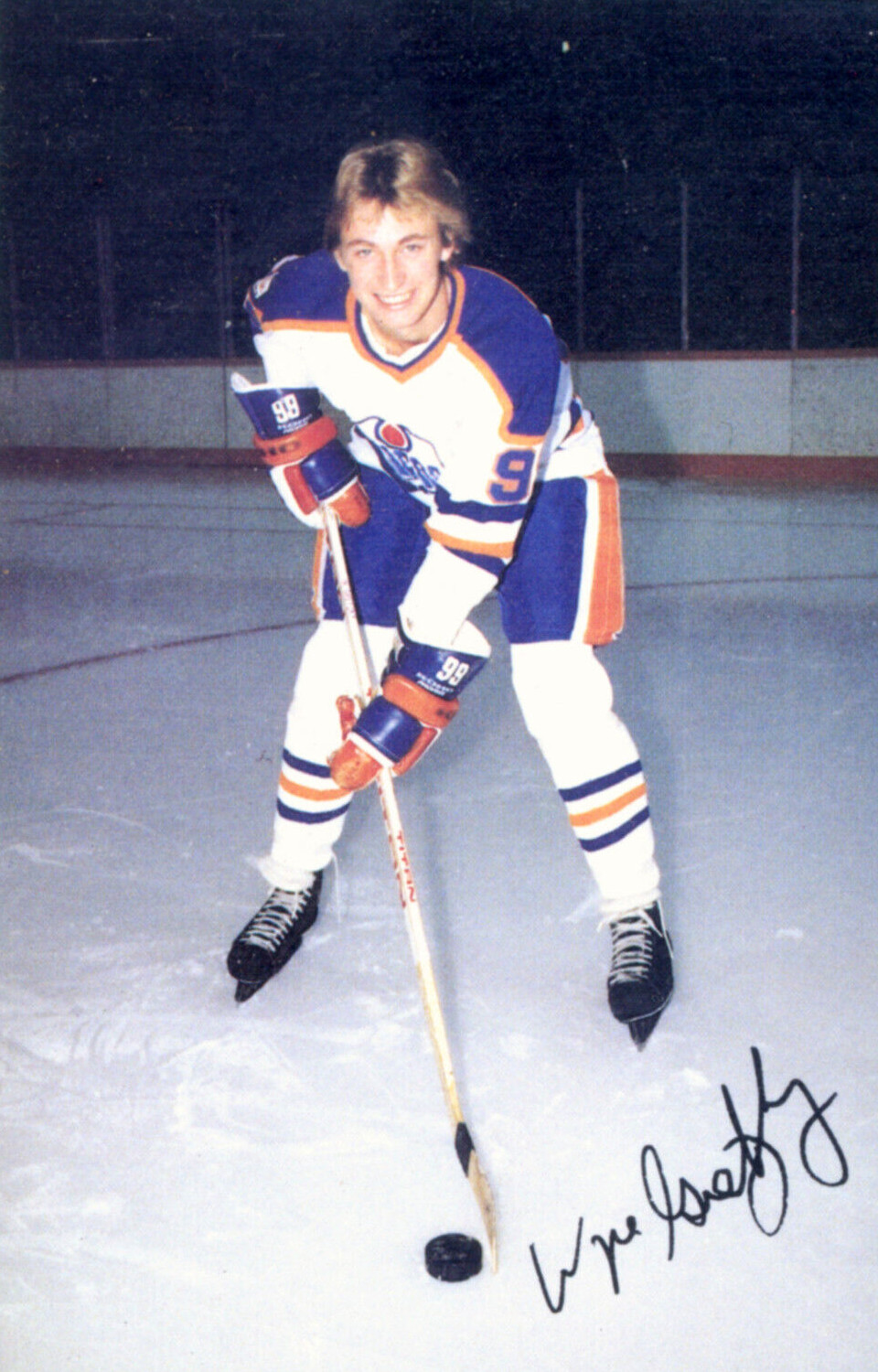
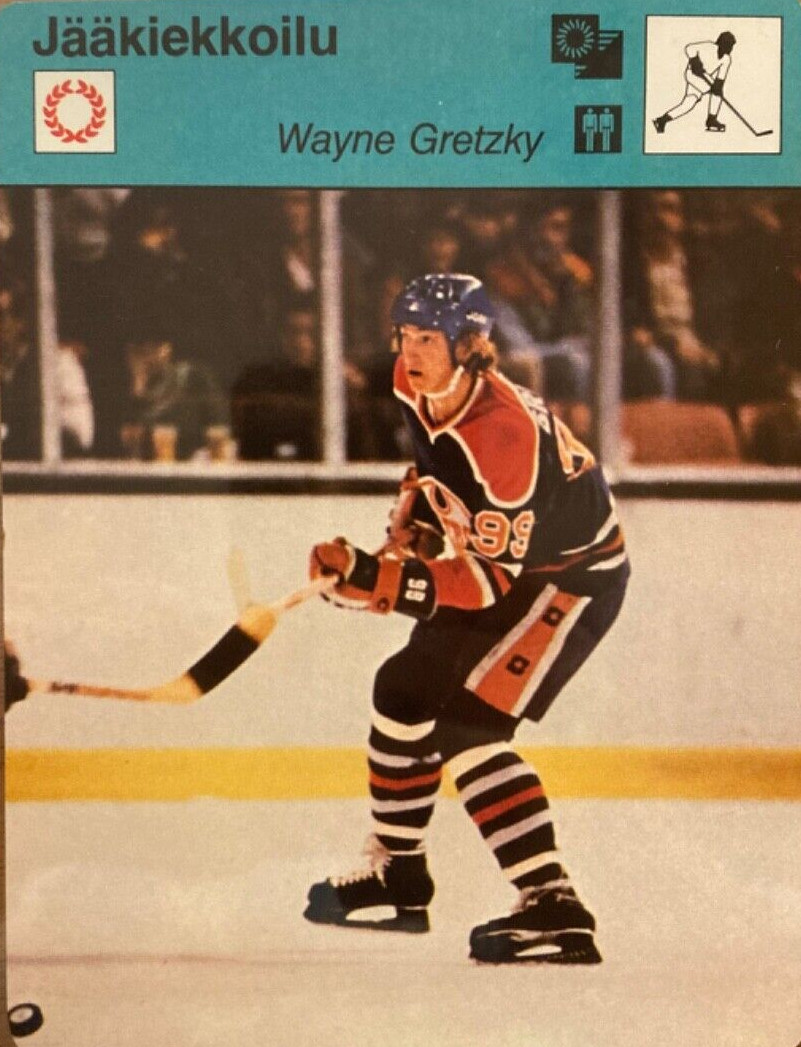
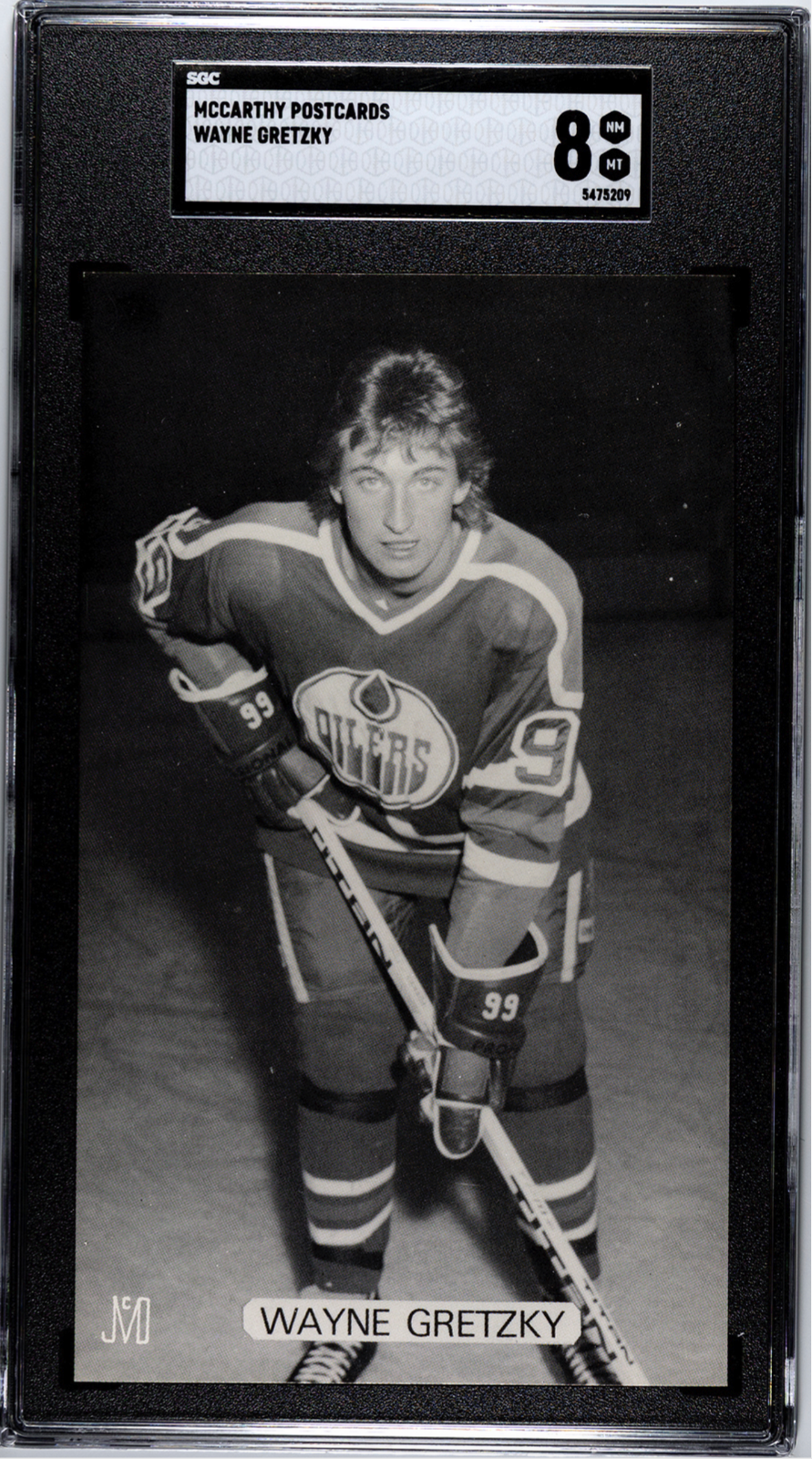
In addition to Gretzky’s rookie card, collectors can also consider his vastly underrated team issued postcard from 1979-80. Postcards never seem to get enough love from the hobby and it’s a much cheaper alternative to the far pricier O-Pee-Chee and Topps cards. In this period, there was also an oversized Sportscaster card which has four known English variations based on their print run. A fifth version has Finnish text.
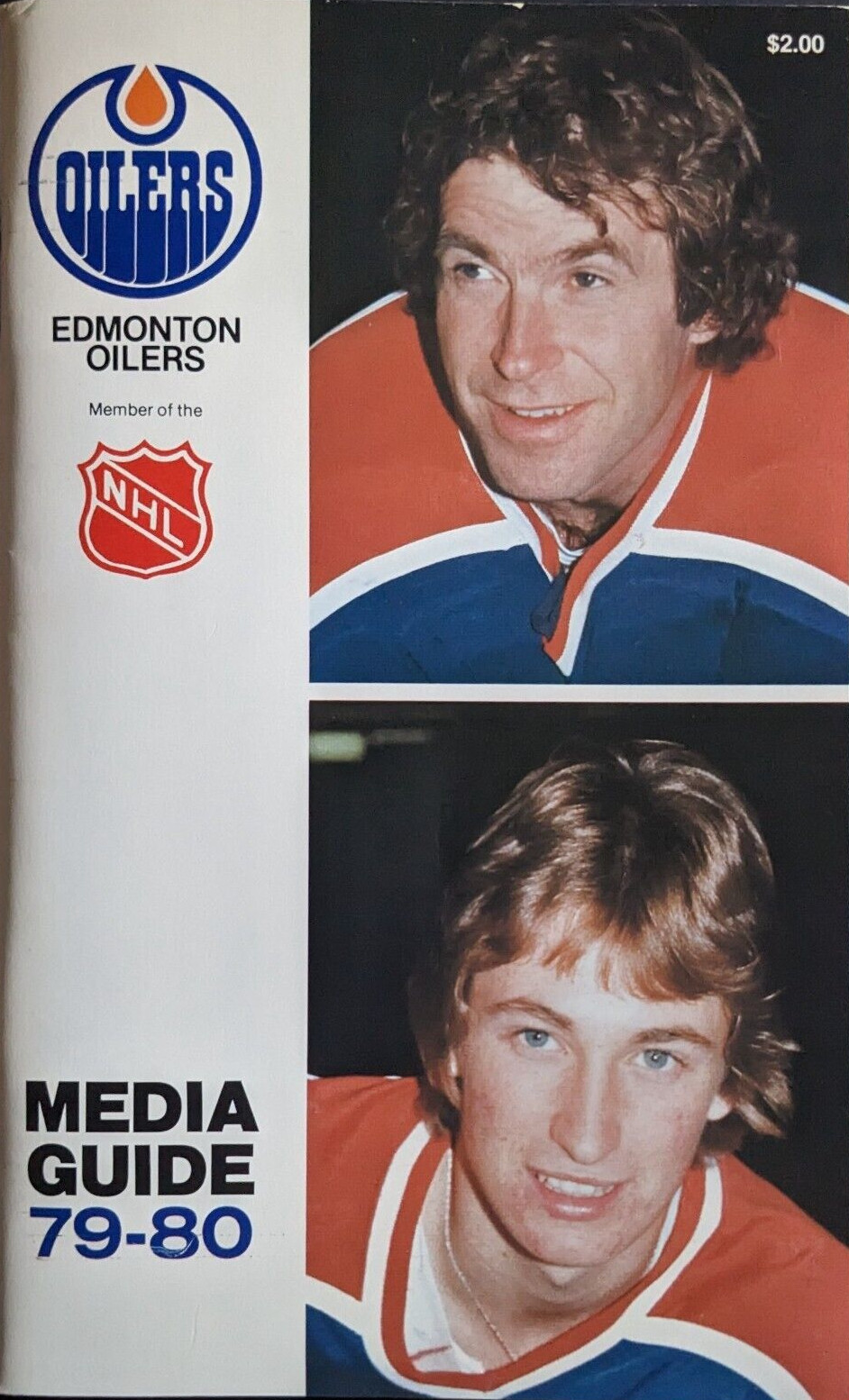
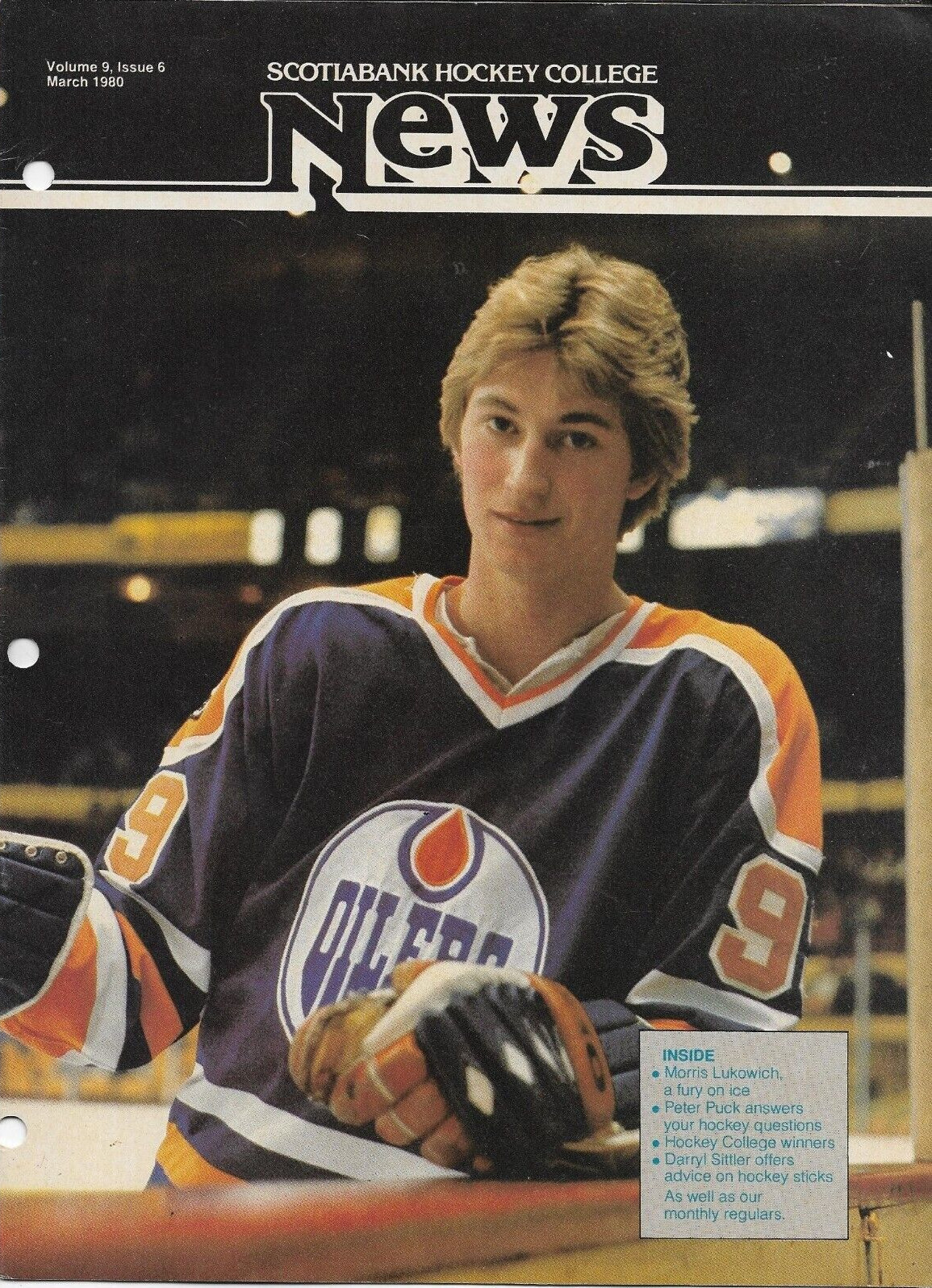
Beyond cards, Gretzky appears on the front of the Oilers’ media guide that year and there are issues of The Hockey News where he is on the cover (Oct. 19, 1979 and May 9. 1980) along other publications that surface from time to time.
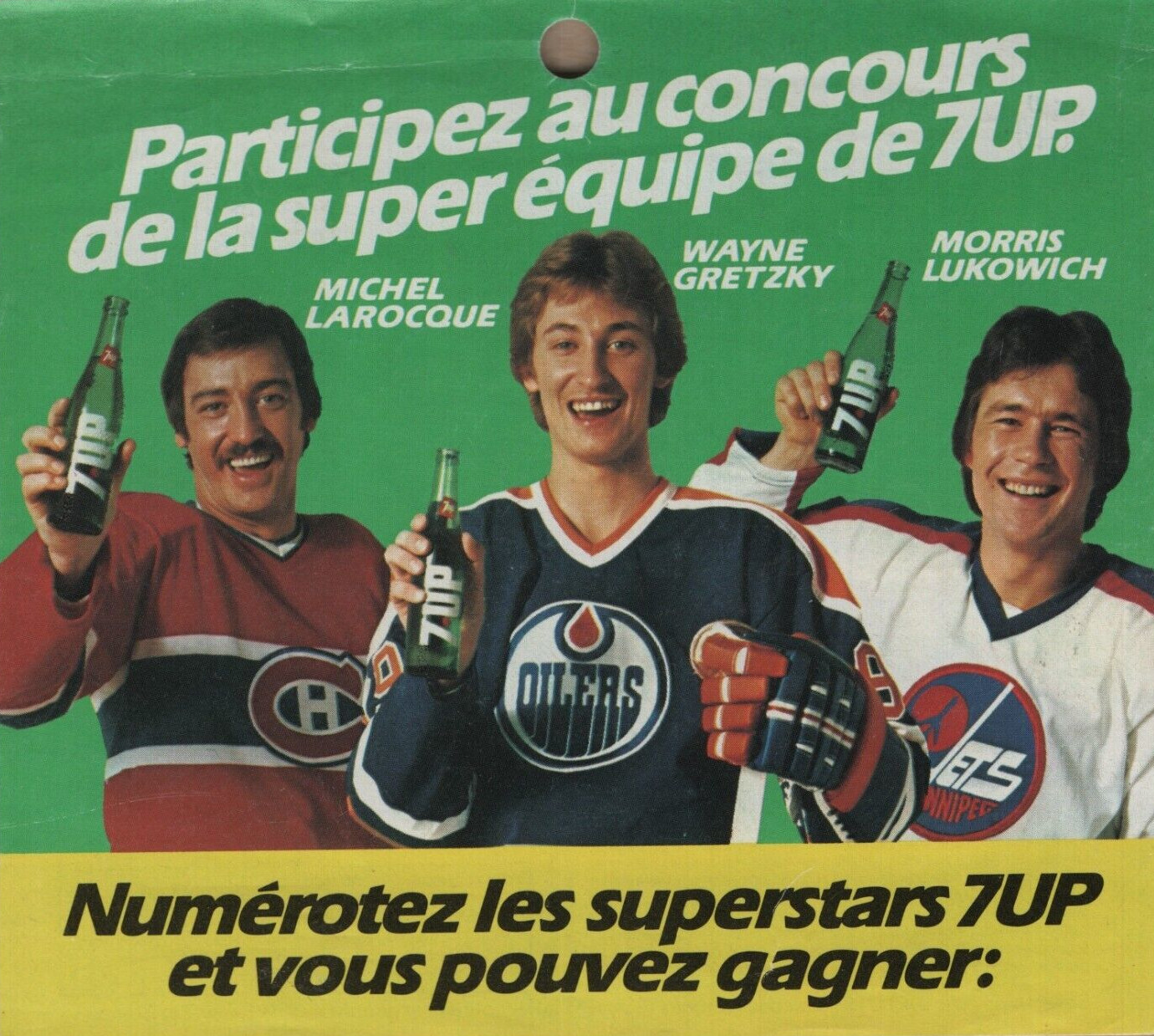
In this season, the marketability of Gretzky was also becoming apparent. Most notably, he appeared in an ad campaign for Seven-Up with Montreal Canadiens goalie Michel “Bunny” Larocque and Morris Lukowich of the Winnipeg Jets. It would not be long before Gretzky became a solo product endorser, though.
First All-Star Game
The next 20 games saw some improvement in Edmonton’s fortunes and they had amassed a 9-22-9 record at the midpoint of the season. Gretzky’s production continued at the same pace and he was chosen to play in the 1980 NHL All-Star Game in Detroit. With this being his first appearance at the event, it was also the last for his idol, Gordie Howe. Heading into the event, Gretzky was running high on a three-game point streak which included a goal and four assists against the Marcel Dionne and the Los Angeles Kings on Jan. 30 and his first hat trick (and an assist) while facing the Jets two days later.
With just 28 games left, the race between Gretzky, Dionne, and Montreal’s Guy Lafleur for the NHL scoring title was in full swing. At this point, the now 19-year-old had 84 points to his credit and trailing Dionne, who was sitting at 99. Lafleur was 10 points ahead, so many felt that those two were going to outpace Gretzky.
Chasing Glory Down the Stretch
It was in this time frame where Gretzky’s competitiveness and drive went into overdrive and he averaged nearly two points per game the rest of the way. On the ice, the Oilers were hardly a powerhouse and went through some terrible winless stretches – even losing six straight at one point.
At the trade deadline, the Oilers got what they needed to bust their slump and potentially head into a playoff spot. Tough Cam Connor was sent to the New York Rangers for troubled Don Murdoch and Don Ashby was acquired from the Colorado Rockies to temporarily fill in for an injured Callighen. The most important and shocking deal, however, was seeing captain Chipperfield go to the Nordiques for Ron Low – who knew what it was like to play for expansion teams.
Goaltending had been a problem for the Oilers throughout 1979-80 as the came in with the duo of Dave Dryden and Ed Mio. Dryden retired mid-season and Mio was injured for a time, forcing them to rely on Jim Corsi. Don Cutts was signed as a free agent and got into six games before being sent back to the CHL’s Houston Apollos and Bob Dupuis got into a game fresh off of protecting the net for Canada at the 1980 Winter Olympics.
Low was about to play some of the best hockey of his career and the Oilers did not secure a playoff spot until two games were left in the schedule as the Capitals experienced a slight implosion. Had Washington earned just one additional point in their last five, it would have been Edmonton on the outside looking in.
As the schedule went into its final days, Gretzky’s chase of Dionne became a heavy topic of discussion. Having already surpassed Lafleur for second place thanks in part of a record seven-assist night against the Capitals on Feb. 15, it had really become a two-man race. With five games left for both as of March 25, Dionne sat at 131 points while Gretzky had only put up 125.
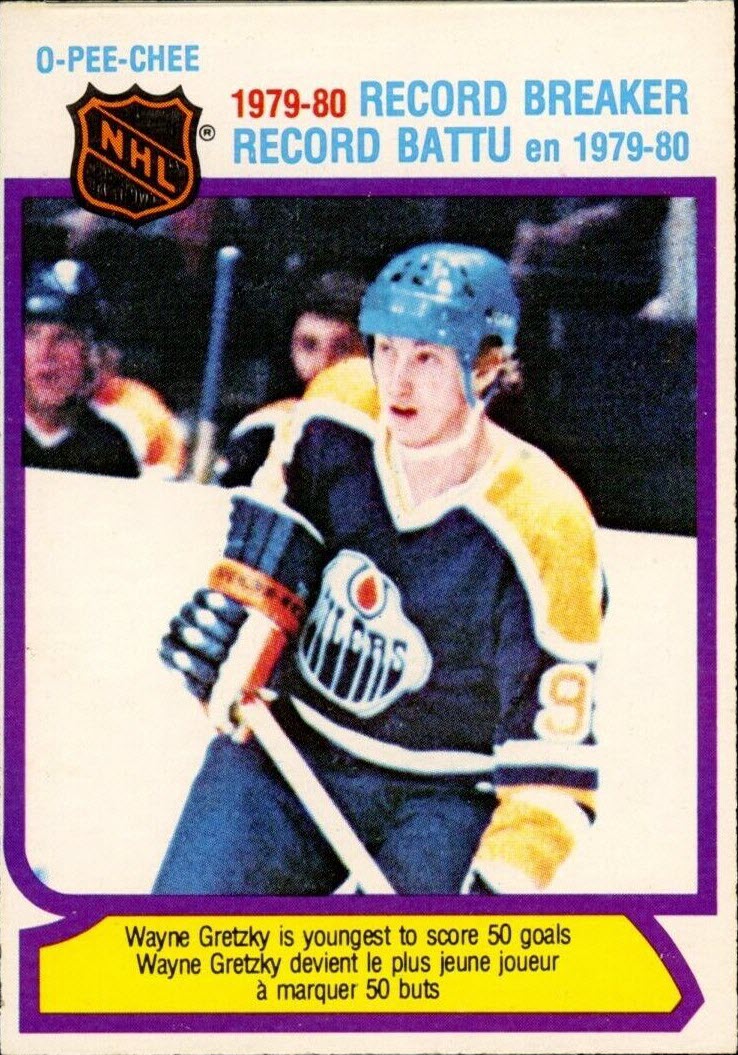
A gap like that might seem impossible for most players, but Gretzky made closing it a reality. On March 26, he posted two assists against Detroit before scoring twice and adding four assists against Toronto three days later. On April 1, the Canucks held him scoreless before he followed up the day after with his 50th goal of the season while battling the Minnesota North Stars – becoming the youngest player in NHL history to accomplish the feat (later broken). The feat is commemorated on a 1980-81 O-Pee-Chee card.
Closing out the regular season on April 4, his goal and two assists against the Colorado Rockies gave him 137 points for the year and slid him into the league lead. Dionne had one game left and 135 points and his two helpers against Vancouver on April 4 resulted in a rare tie for scoring supremacy.
For a two-season stretch following its 1979 expansion, the NHL allowed its top 16 teams into the playoffs with first overall facing 16th and so forth. The Philadelphia Flyers were heavy favorites for their first round clash with Edmonton – especially after going undefeated for a 35-game stretch earlier in the year.
With Low only losing twice in his first 11 games with the Oilers, the team still felt confident heading into the playoffs for the first time. Game 1 in Philly was a close-knit affair, with Gretzky forcing a 2-2 tie last in the first period. The contest eventually went into overtime, with Bobby Clarke scoring the winner.
Game 2 was not as close, with Gretzky held off the scoresheet and the Flyers dominating throughout for the 5-1 victory. Switching to Edmonton for Game 3, the Oilers showed guts and determination in the face of potential elimination. The home team came out firing as Gretzky scored at 15:55 of the first while Messier padded the lead less than two minutes later. Unfortunately, the Flyers stormed back with goals from Behn Wilson and Brian Propp – resulting in yet another overtime. After 20 minutes of scoreless action, the fifth period was over quickly as future teammate Ken Linseman sewed up the series.
Once the season was officially over, the NHL handed out its annual awards. Even though Gretzky tied Dionne in points, the Kings star skated away with the Art Ross Trophy on the basis on having more goals (53). Instead, Gretzky dominated voting for the Hart Trophy as the league’s Most Valuable Player. Over the next decade, the award was essentially property of the Great One – only losing it to Mario Lemieux in 1987-88.
In a move that still feels controversial nearly 45 years later, the NHL did not allow incoming WHA players to be considered as rookies. As a result, Gretzky was deemed ineligible for the Calder Trophy and it instead went to Raymond Bourque, who set new freshman scoring records for a defenseman. In essence, the argument that the WHA was an elite pro league becomes valid – but no other player before or since has come into the NHL and posted as many points as Gretzky did in 1979-80.
Named to the NHL Second All-Star Team, Gretzky was also named winner of the Lady Byng Trophy for his sportsmanship and gentlemanly play, but a bit of digging showed that he had his first of very few fights that year. On March 14, the Black Hawks came to town and while holding a 5-2 lead, a scrap broke out with Doug Lecuyer. Should this have disqualified him in the running for the award? It’s hard to say, but runner-up (by eight voting points) Dionne definitely did not drop the gloves that year.
Destined for Greatness
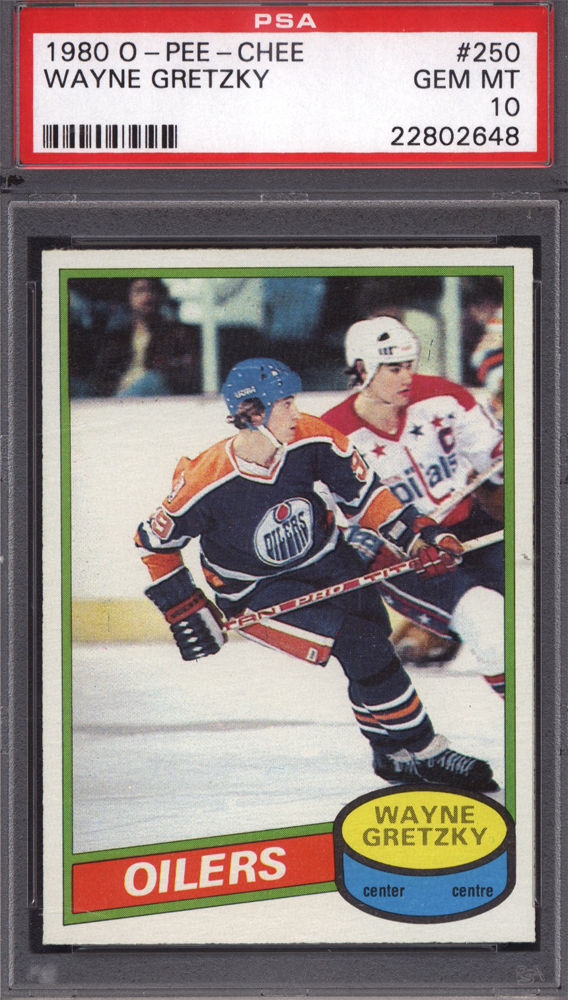
Even though Wayne Gretzky’s first NHL campaign ended in some disappointment, it was more indicative of a franchise that was not quite ready to compete. In 1980-81, more pieces would be added to the lineup like Glenn Anderson, Jari Kurri, and Andy Moog that would be there for the eventual ascent to Stanley Cup champions.
For collectors, though, Gretzky’s first NHL season is something special as it was the time when his rookie card was easy to get. Not everyone loved pulling one and treated them accordingly, but some of those that saw the potential did their best to take care of the ones they had. Owning one is really a time capsule for his WHA days more than anything else, so those second-year cards really captured what was going on at the time. In the years that followed, these became more and more coveted but will always pale compared to the rookie card.
