
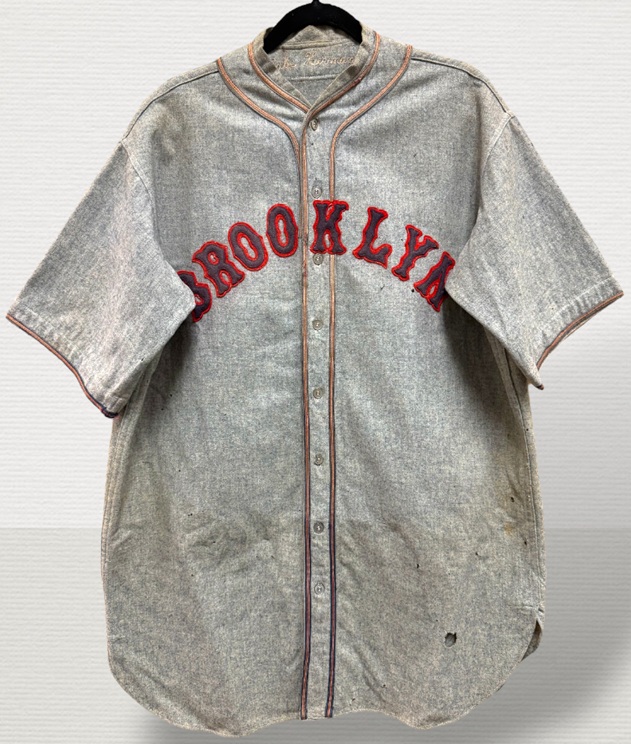
A road uniform that Babe Herman wore during the 1930 season and an autographed photograph he acquired from baseball’s most famous Babe — Babe Ruth — will reach the auction block for the first time later this month.
Grey Flannel Auctions is selling the two unique items on consignment from the Herman family.
The flannel uniform that Herman wore in 1930 is the only Brooklyn road jersey from that season that is still known to exist. The item, with “Brooklyn” in blue lettering and red trim around the letters, comes with a letter of provenance from Herman’s estate.
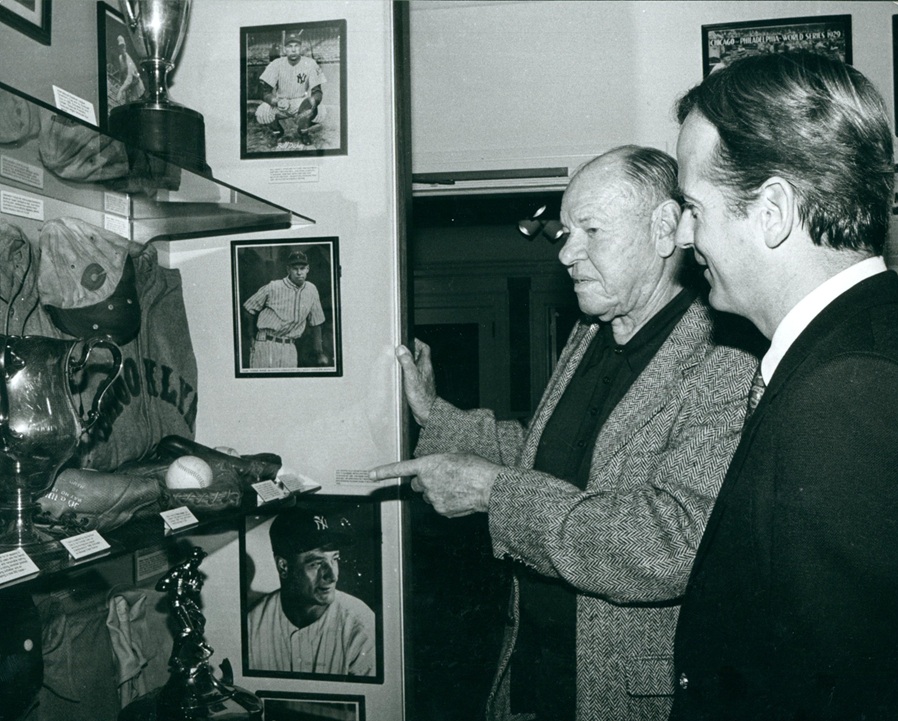
The auction item also includes a photograph of Herman showing off the uniform and other pieces of his collection to then-baseball Commissioner Peter Ueberroth.
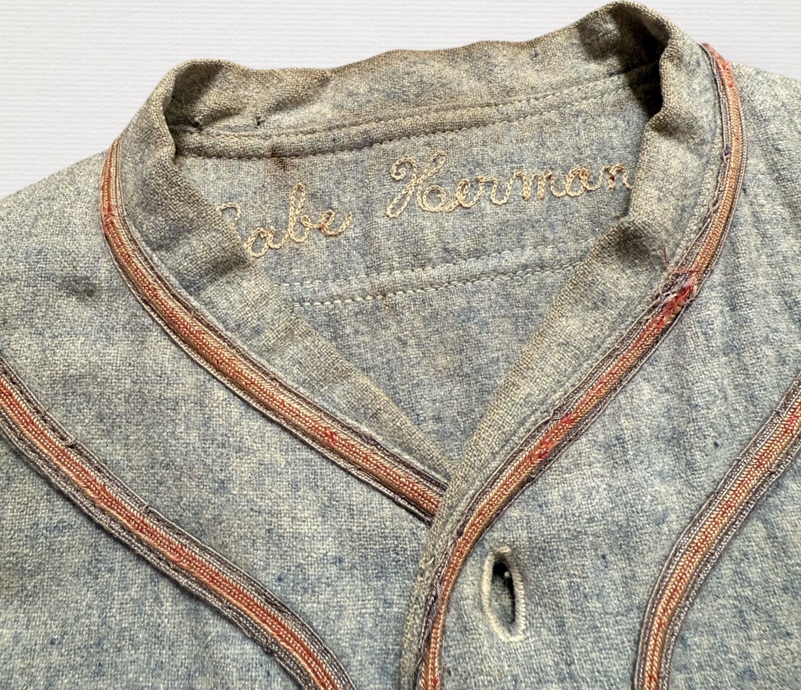
The inside collar has Herman’s name stitched in yellow thread, and only a small piece of a button on the jersey front is chipped away.
According to Grey Flannel, the baggy pants had red and blue piping and had a small hole near the left knee.
Floyd Caves “Babe” Herman had a robust career, batting .324 during his 13-year major league career. His career season high of .393 in 1930 came with the Brooklyn Robins; from 1914 to 1931, the team derived its name from manager Wilbert Robinson but returned to the Dodgers nickname in 1932. But Herman’s lofty average was not enough to win the National League batting title, as New York Giants star Bill Terry batted .401.
And Herman’s baserunning and fielding gaffes were legendary, with the left-handed hitter once doubling into a double play during his rookie season. It is the backdrop for the infamous “three men on third base” story that Herman was never able to shake.
As the Brooklyn Daily Times noted in early 1930, Herman was “by no means the smartest, nor the most colorful, but as you watch him daily you will realize his value to the Dodgers.”
By the time the 1930 season ended, the Brooklyn Citizen was reporting that in one season, Herman had developed from one of the worst outfielders in the N.L. to one of the best. After leading the N.L. in errors with 16 in 1929, Herman made only six in 1930.
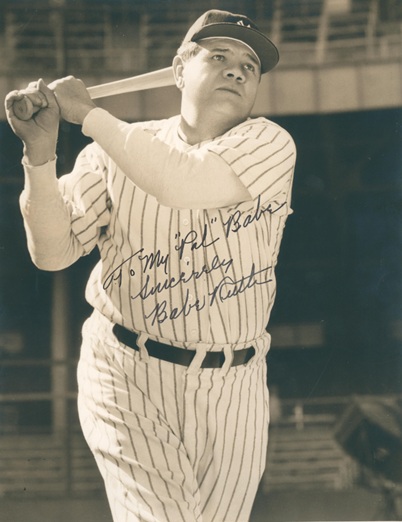
The Ruth signed sepia-toned photo measures 11 1/2 -inch by 14-inch and is personalized to Herman.
“To My ‘Pal’ Babe” is the inscription on the photograph. The image also carries a letter of provenance from the Herman estate and a letter of authenticity from JSA.
“This ‘Double Babe’ autograph rates a 10 in our opinion,” the auction listing notes.
New York-area fans had two “Babes” to root for in the same city from 1926-1933 but while their careers overlapped, the two never played on the same team.
Three Men on Third
Now, about the infamous “three men on third” play. According to a 1977 article in the Baseball Research Journal, the incident occurred during the first game of a Sunday doubleheader at Ebbets Field on Aug. 15, 1926. Brooklyn was hosting the Boston Braves and Herman came up with the bases loaded and one out in the seventh inning and the score tied 1-1. He lashed a fly ball off the right field screen, allowing Hank DeBerry to score the go-ahead run.
Pitcher Dazzy Vance, who was on second, hesitated before moving to third and then headed for home. Chick Fewster, who was on first base, headed for third, but Herman rounded second and also headed toward third base.
Third base coach Mickey O’Neil saw what was happening and yelled “Go Back!” to Herman, but for some reason Vance believed the shouts were meant for him and he returned to third base. Herman, meanwhile, ran past Fewster and slid into third base.
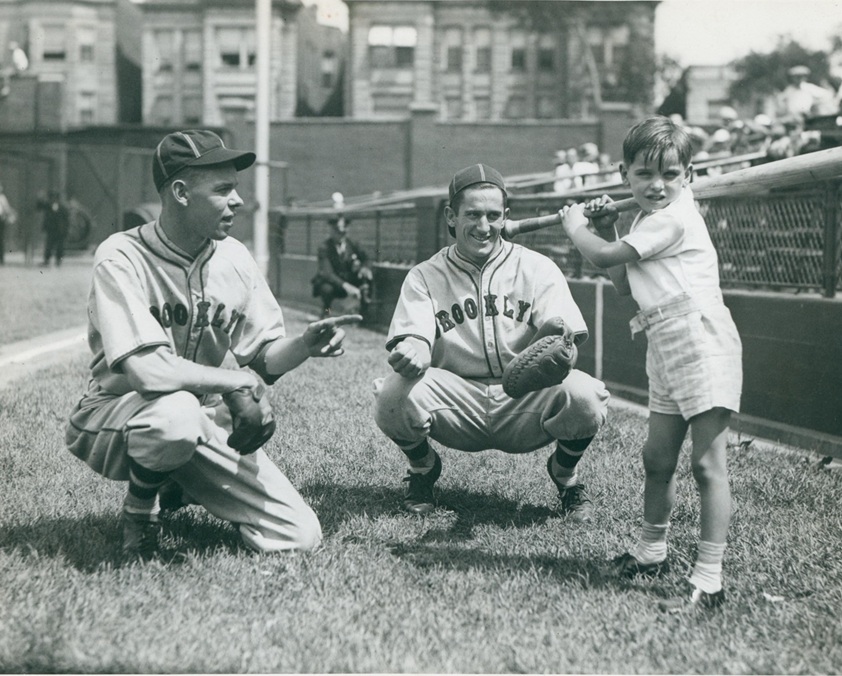
With three men standing at third, Boston third baseman Eddie Taylor tagged out Fewster. As Herman ran back toward second, Doc Gautreau tagged him out. The umpires ruled Vance was entitled to third base, Fewster was out when he was tagged and Herman was out for sliding past his teammate.
According to sportswriter Tom Meany of the Brooklyn Daily Times, “all admitted that never in their born days had they seen anything to equal Herman on the bases.”
“The walloping Dutchman runs like he hits,” Meany wrote about Brooklyn’s Babe. “High, wide and wild.”
The baserunning goof did not harm Brooklyn, which won 4-1 when it added two runs in the eighth inning and Vance retired the last six batters he faced.
Herman could not escape his incident with the “Daffiness Dodgers.” When he died in November 1987 at the age of 84, some wire service reports referred to him as the Dodgers’ base running star. Whether that was tongue-in-cheek or not remains to be seen, as many newspapers trimmed the full obituary and made it a brief, slanting the baserunning context. Another wire service correctly referred to Herman as a Dodgers hitting star.
“It was worth a day’s pay to watch him wrestle with line drives, and wave at grounders, the Brooklyn Eagle reported in 1942. “And on the bases — that’s where Mr. Herman excelled.
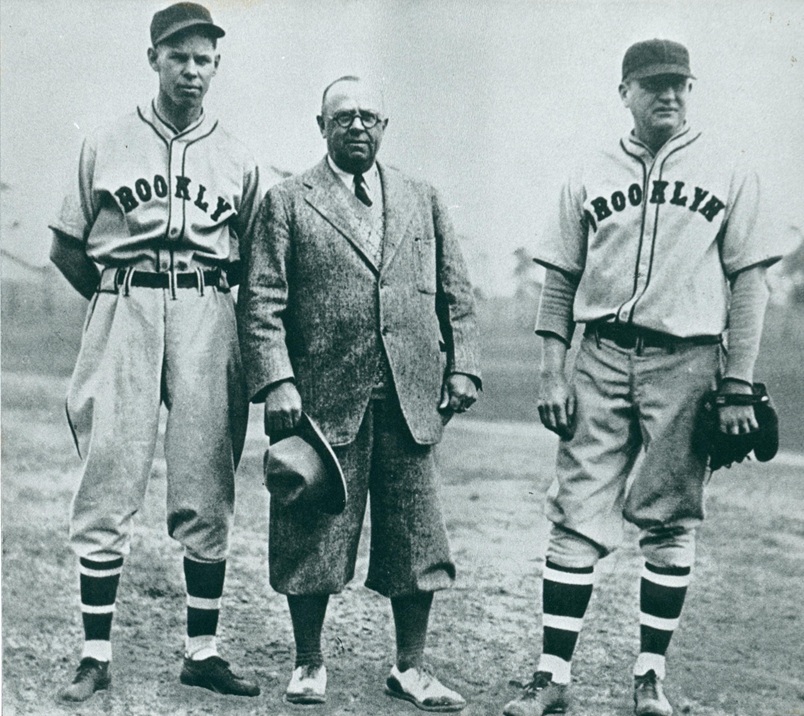
“He could do more things wrong in one game than the average guy could in a couple of seasons.”
In 1930, Herman hit .393, collected 241 hits, scored 143 runs and drove in 130.
Perhaps the designated hitter rule would have been useful for Herman.
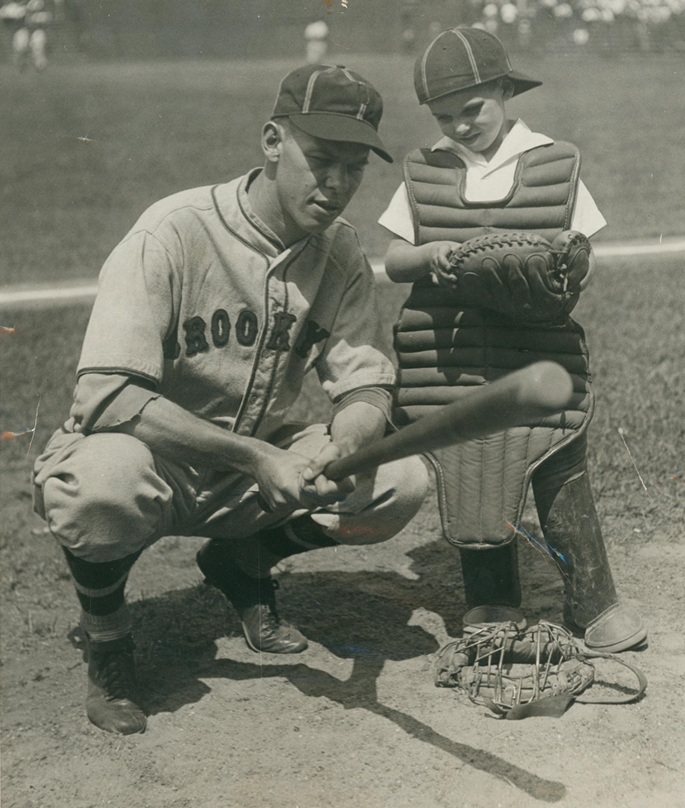
Another legendary tale. As an 18-year-old in the minor leagues with Edmonton in 1921, Herman was allegedly called “Babe” by a female fan who urged him to get a hit. A coach later told him that “You’re my babe.”
Despite his stats, Herman never came close to induction into the Hall of Fame.
“I guess there are two legends that have kept me out of the Hall,” Herman said in a 1983 interview with Maury Allen.
The auction is slated to open later this month and will close Nov. 16.