
In 1956, Topps became the unchallenged leader in baseball cards after acquiring Bowman from Connelly Container for $200,000. With no competition, the company expanded its flagship set to 340 cards and introduced practical features that made collecting more organized for kids buying packs.

Beyond the star power—Mickey Mantle (#135, back with Topps after a two-year deal with Bowman and en route to the Triple Crown), Ted Williams (#5) Hank Aaron (#31), Willie Mays (#130), Roberto Clemente (#33), and others—the set debuted three key innovations in Topps’ regular baseball series: team cards for all 16 MLB clubs, two unnumbered checklist cards, and opening cards for the league presidents.
These elements weren’t flashy like the color-tinted action portraits or cartoon backs, but they helped young collectors track their progress in an era without digital tools, while giving the product a more complete, official feel.
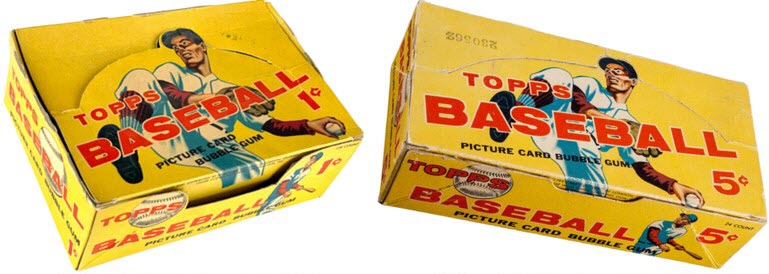
The packaging echoed this excitement: wax wrappers and boxes featured a dynamic action photo of a nameless player we now know is Detroit Tigers left-hander (and former two-time AL MVP) Hal Newhouser.
Team Cards: A First for Topps Flagship Sets
While it experimented with the team card concept in what were essentially test issues in 1951, the 1956 set marked the debut of dedicated team cards in a standard Topps baseball release—one for each of the 16 major-league teams. These cards showed a group photo (typically a posed squad shot) on the front, with the back detailing the stadium, recent records, and club history.
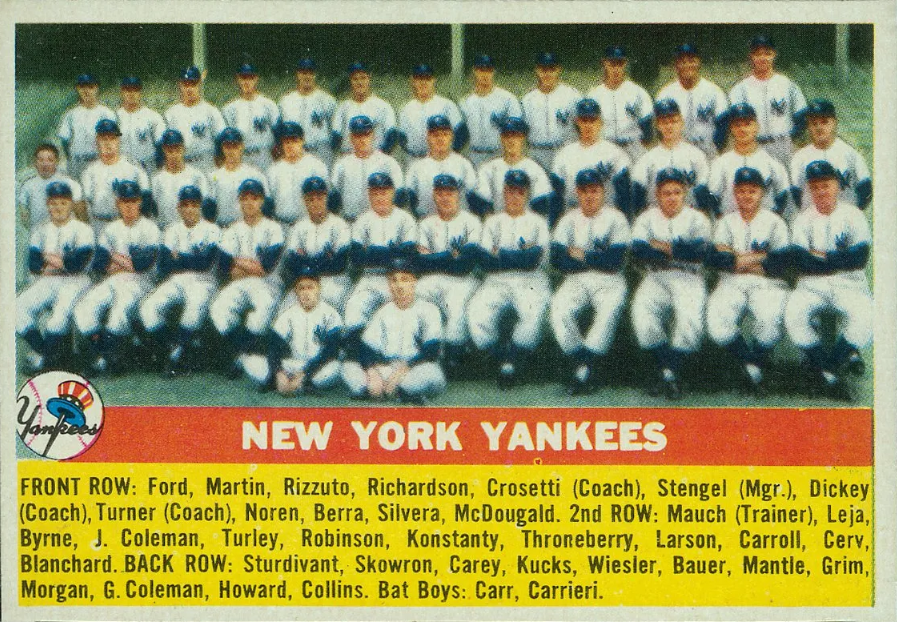
They covered every franchise, from the Brooklyn Dodgers and New York Yankees to the Kansas City Athletics and Milwaukee Braves, providing a roster overview that complemented individual player cards.
Six early-series team cards (#11 Chicago Cubs, #72 Philadelphia Phillies, #85 Cleveland Indians, #90 New York Giants, #95 Chicago White Sox, #100 Pittsburgh Pirates) exist in variations: the team name could be centered or aligned left, and some include a “1955” date reference while others do not.
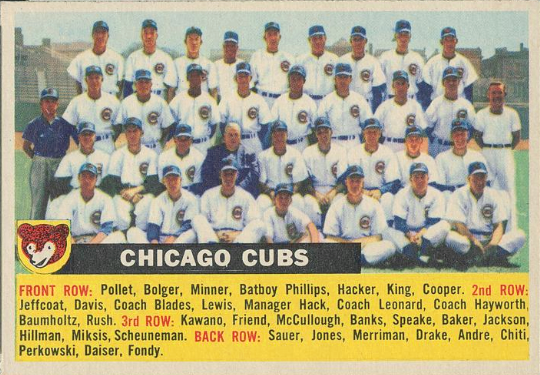
These printing differences create a mini-chase for master set builders and set registry participants.
Unnumbered Checklists: Randomly Inserted Helpers
Topps introduced two unnumbered checklist cards: one for series 1 (cards 1-100) and 3 (181-260), the other for series 2 (101-180) and 4 (261-340). These were randomly inserted into packs, just like regular player cards and are much harder to find than the rest of the cards produced by Topps that year.
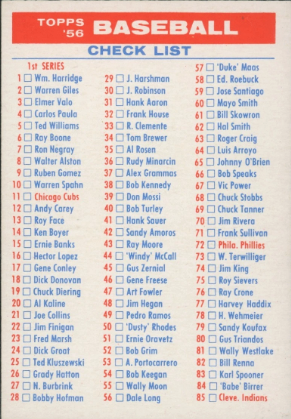
Their introduction brought a sense of organization to collecting and finally gave collectors the knowledge of exactly which players were in the set and where.
However, accounts from the era note that collectors often got frustrated when a checklist replaced a desired star, and many kids discarded them as uninteresting or marked them up while tracking their collections.
The checklists featured simple designs (red, white, and blue fronts with orange, brown, and gray backs) and were practical tools for marking owned cards. Because they were randomly distributed and frequently thrown away, high-grade examples remain scarcer today and add value to complete sets (technically 342 cards including both checklists).
PSA has graded around 1,300 of each with only a small number grading higher than 8.
League Presidents: #1 and #2 Set the Tone
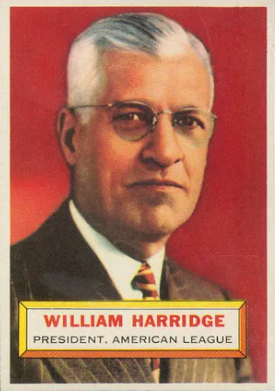
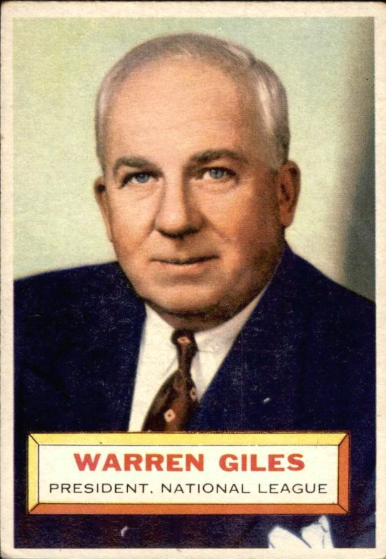
The set opened with #1 William Harridge (American League President) and #2 Warren Giles (National League President)—portrait cards honoring the executives who ran the leagues. It’s hard to imagine youngsters not being disappointed to see an old guy in a suit as packs were ripped open but if you’re a glass half full kind of person, they did offer a little front office education. The cards certainly gave the checklist an authoritative start.
Topps kept including high level baseball execs for a few more years.
Notable Omissions: Even Monopoly Had Limits
Despite the expanded checklist and exclusive rights, some prominent players were still missing. Stan Musial (a Cardinals star and future Hall of Famer) did not appear in a Topps set until 1958. Sal Maglie, a strong MVP and Cy Young contender that year, also lacked a card.
Frank Robinson, who exploded on the scene in 1956, hadn’t played a big league game when the first packs were opened and wouldn’t debut until the next year.
Brooks Robinson had debuted in September of 1955 but the 18-year-old was overmatched and Topps passed on him for another year.
Why These Firsts Still Matter
The 1956 innovations—team cards (with variations), randomly inserted checklists, and league president openers—made the set more user-friendly and established features that became staples in later Topps issues. They helped kids build sets systematically and reflected Topps’ post-Bowman freedom to create a richer product. Today, they drive registry chases (team variations and unchecked checklists are key) and offer a sneak peek at some concepts that would become staples for Topps in later years.
In a hobby centered on stars, these “firsts” highlight why 1956 endures: monopoly power translated to thoughtful extras that shaped collecting for generations.