
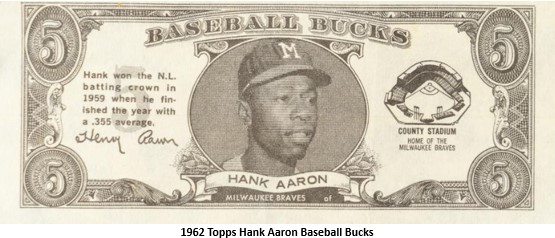
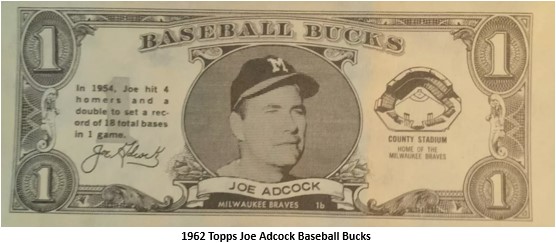
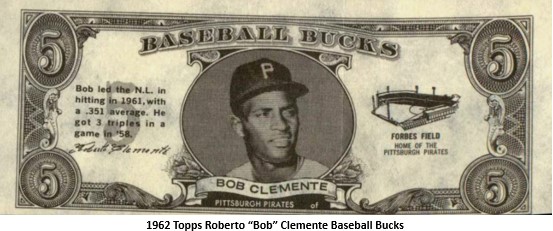
Decades before Venmo, PayPal, Bitcoin, debit cards, electronic funds transfer and endless plastic gift cards, cash was king. In 1962, Topps gave collectors a way to fatten their wallets by offering a 96-player Baseball Bucks subset. The unnumbered ancillary set contained many Major League stars and fine representation of all 20 teams. Besides player portraits, Topps included a career highlight or two about each athlete and their replica signature on the front left and their home park diagram on the front right. The Bucks had artistic traits that resembled real U.S. Treasury greenbacks.
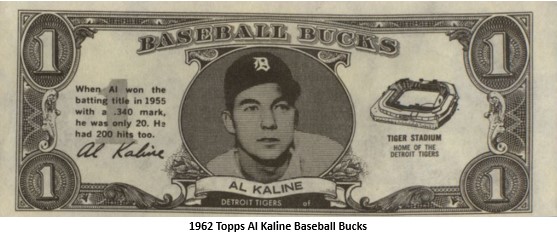
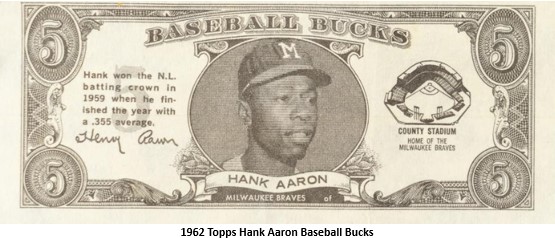
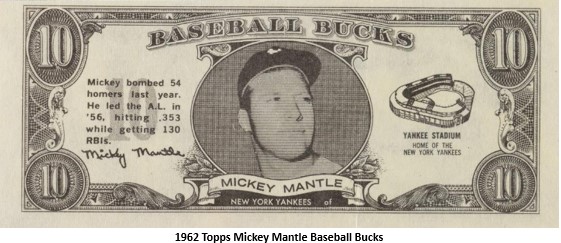
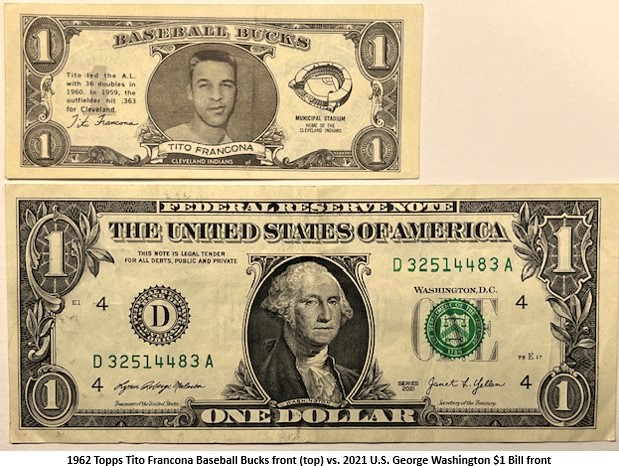
Sure, this money wasn’t legal tender, but for just a penny a pack, which according to the wrapper included “1 stick gum and picture card”, a kid could line the old billfold with one-, five- and ten-dollar ballplayer bills in a hurry and feel rich. The whole 96-player set would give you, besides nearly a hundred gum sticks, $282 of fake cash burning a hole in your pocket. That wasn’t chump change. But thanks to the diminutive size of Topps Baseball Bucks (4.13” x 1.69”) compared to genuine U.S. clams (6.14” x 2.61”), there’s no way you could hoodwink a cashier with these counterfeits.
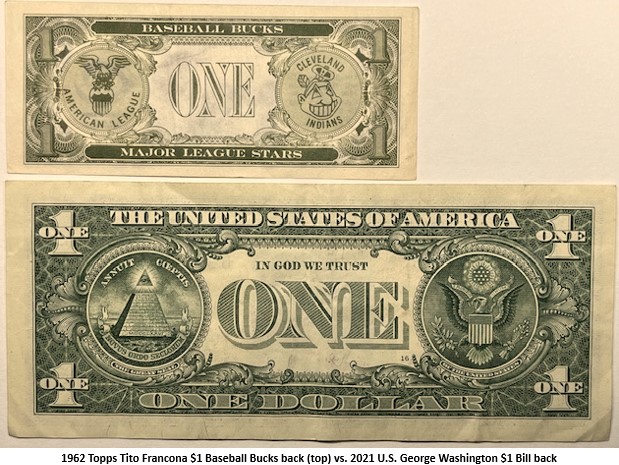
Colorful retail boxes and wax wrappers promoted the dough.
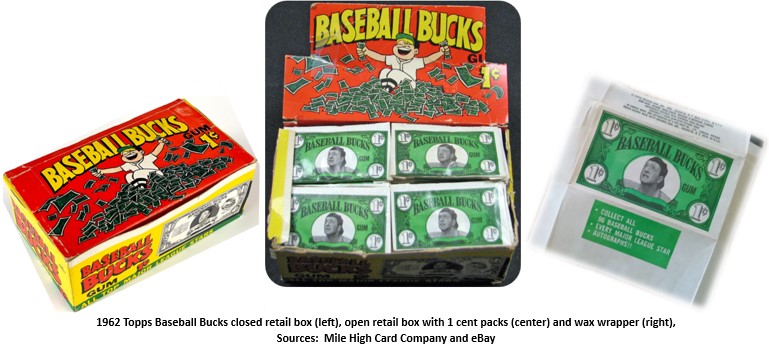
A mock Buck is displayed on the front box panel that had three quirky things going on.
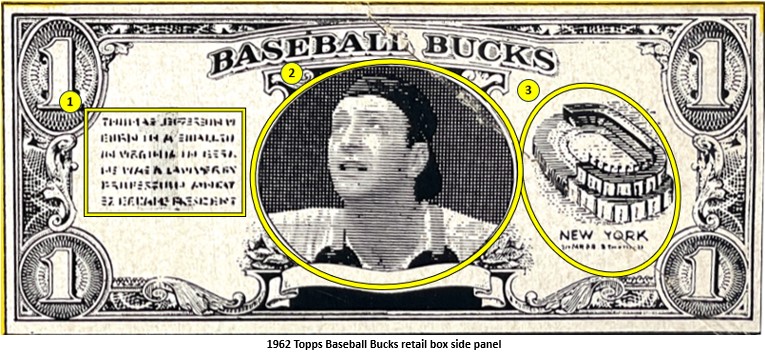
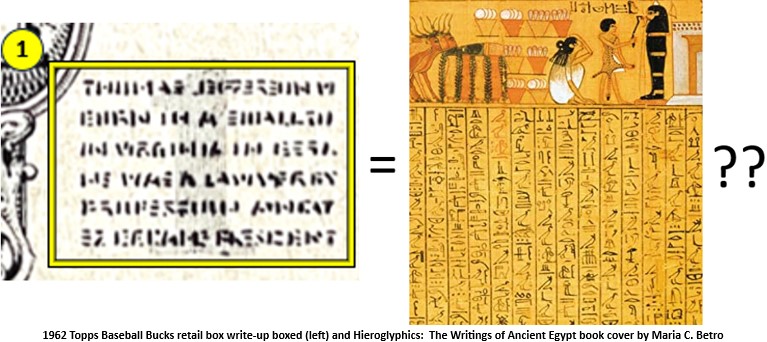
First, check out the Egyptian-like hieroglyphics used for the unintelligible bio snippet.
Second, who’s that guy wearing the tools of ignorance? 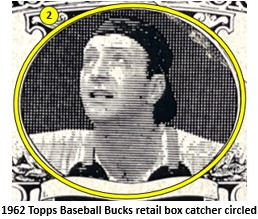
He’s also featured in greater detail on the 1960 Topps Baseball retail box.
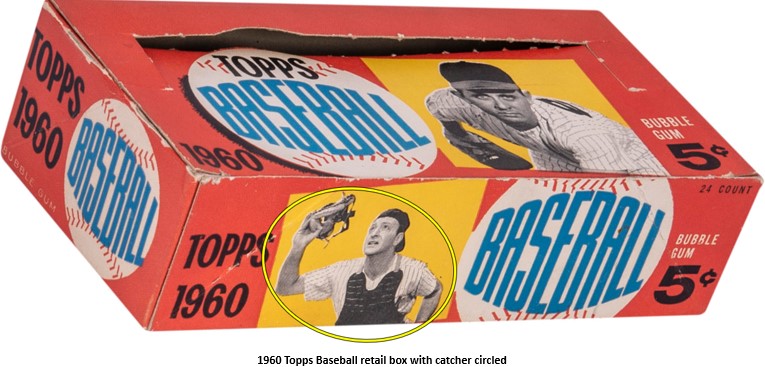
Thanks to the box shot, we see he’s holding a mask and sporting a chest protector similar to what New York Yankees backstop Charlie Silvera wore. Even the backward hat and pinstripes, with iconic NY logo peeking out, match.
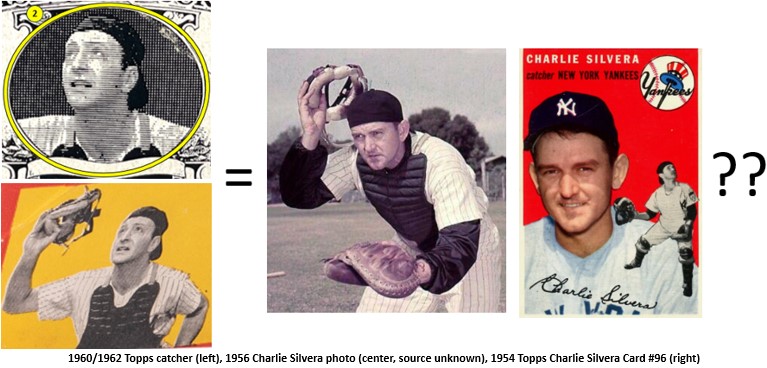
Facially, the 1960/1962 Topps guy doesn’t look like Silvera, so maybe Topps borrowed the threads from the local Bronx club and had someone pose for the picture.
For that matter, I don’t recognize this pinstriped pitcher on the 1960 display box, either.
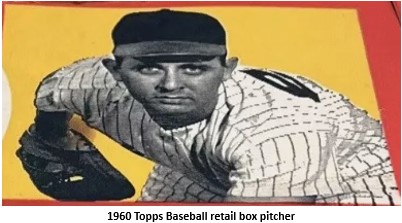
Is it possible the batterymates are Brooklyn-based Topps staffers lucky enough to don loaned Yankees duds for these promotional pics?
Third, the stadium on the retail box note is a mythical New York colosseum that loosely resembles the House That Ruth Built.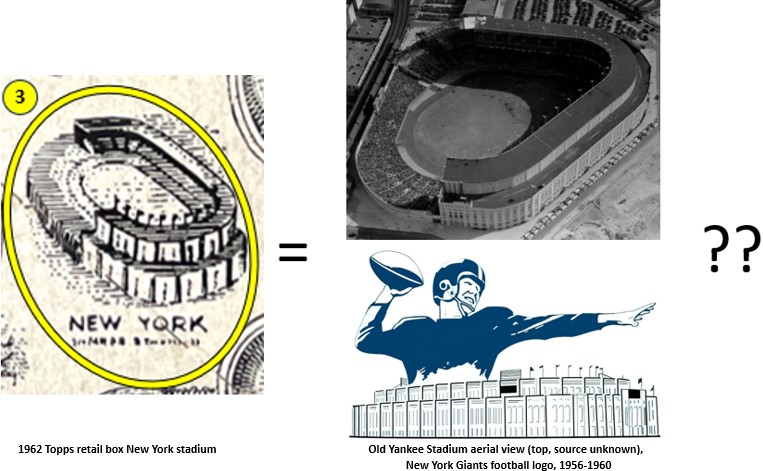
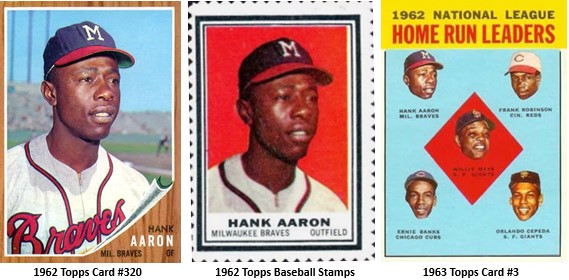
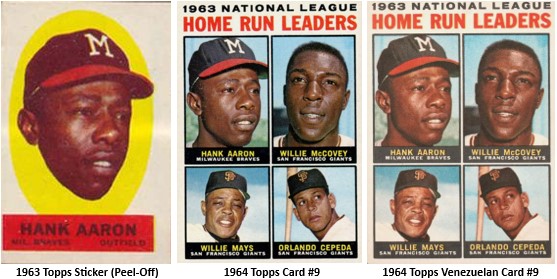
Okay, back to the legit Bucks. Topps often resorted to reusing player images throughout their many sets. Baseball Bucks were no exception. For instance, check out the Hammer’s multi-used headshot spread over these different issues.
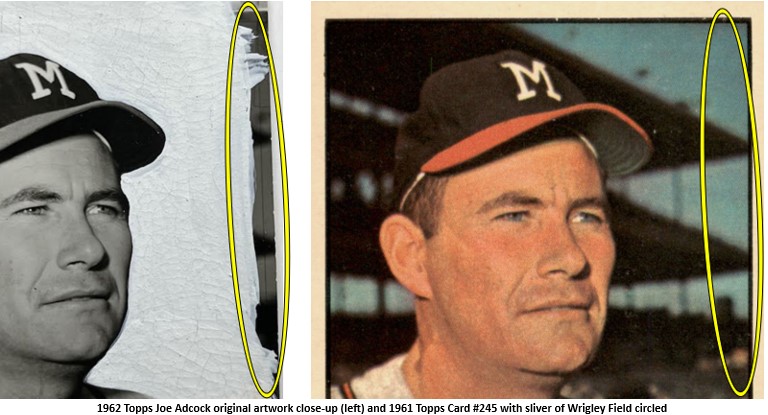
All 96 of the Bucks player images were shared on other Topps or Topps-owned Bazooka products. Milwaukee Braves slugger Joe Adcock’s Baseball Bucks portrait was also featured on his 1961 and 1962 base cards and Stamps.
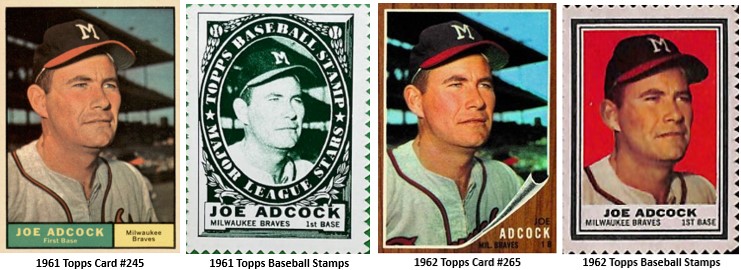
The photograph was snapped at Wrigley Field, home of the Chicago Cubs, as evident from the left field seats and rooftop in the background.
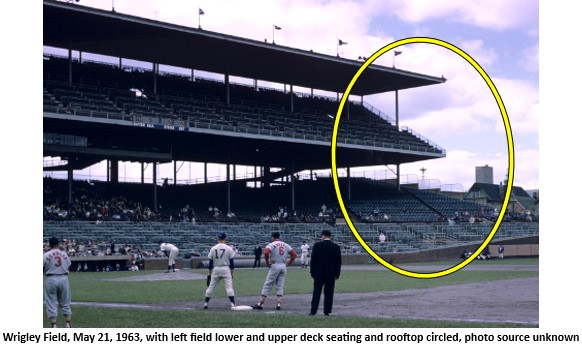
Perhaps by now you’ve noticed that only the player’s profile is visible on the Baseball Bucks front, mimicking the background-less President found on authentic U.S. currency. Case in point, those Friendly Confines field seats, grandstands and rooftop are not visible on Joe’s $1 denomination piece because Topps whited out almost all the background to create Adcock’s silhouette.
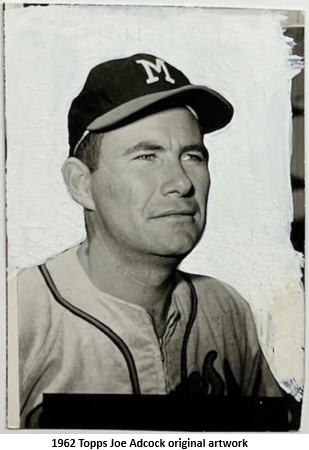
Like peering through a knothole, we barely see Wrigley Field on the far right side of his original painted artwork from my personal collection.
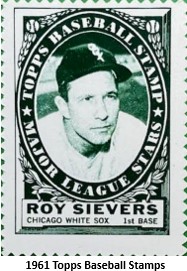
Chicago White Sox first baseman Roy Sievers was featured in the 1961 Topps Stamps set.
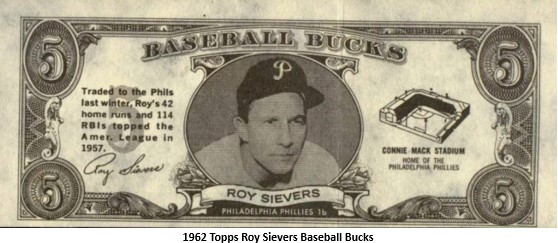
He was traded to the Philadelphia Phillies in November of 1961. Sievers is seen on his 1962 Topps Baseball Buck in the identical pose, but now with a Phillies cap.
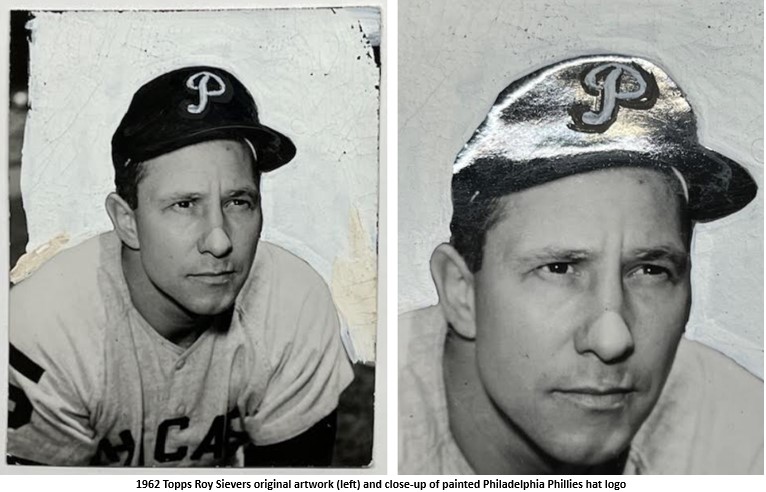
The original art shows that Topps converted his Chicago White Sox hat by painting a scripted P over the SOX logo. There was no need to doctor the Chicago jersey lettering since the fin only shows him from the neck up. A few steady brushstrokes and, voila, he’s now that star player from the City of Brotherly Love.
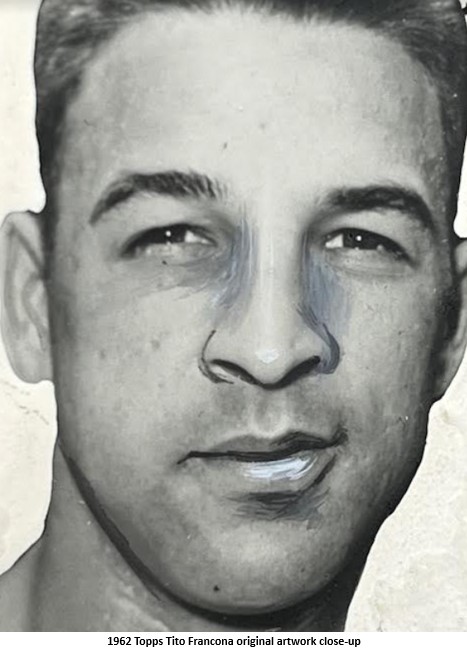
Tito Francona, father of World Series champion manager Terry Francona, is shown resting a bat on his left shoulder on his 1961 and 1962 Topps Baseball Stamps.
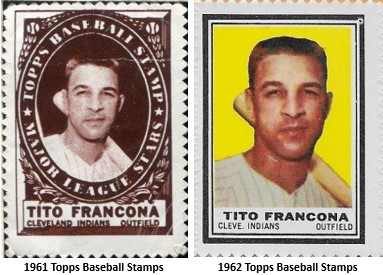
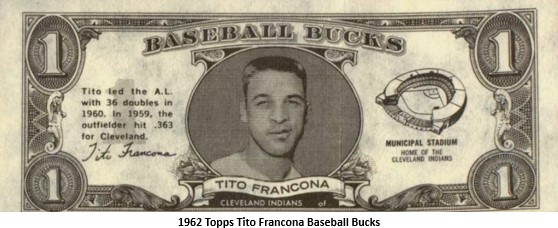
However, that club is AWOL on his 1962 dollar bill.
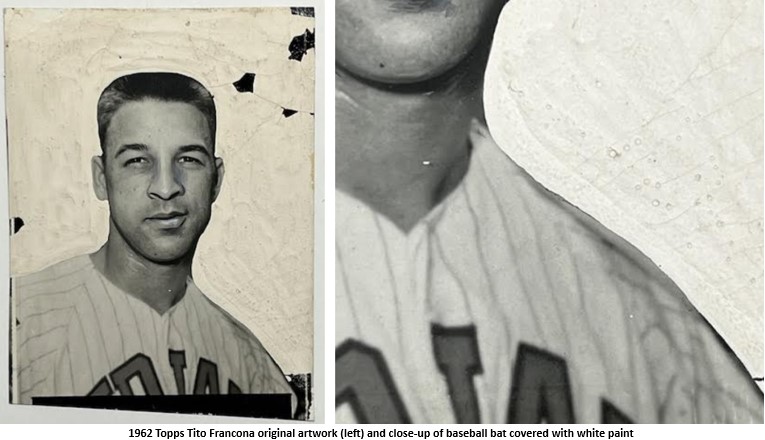
An inspection of the artwork shows Topps covered the entire photograph background (bat included) with a heavy white paint-like substance that has partially cracked and flaked off over its six decade existence.
Interestingly, Topps incorporated horizontal facial lines like the U.S. Department of the Treasury’s Bureau of Engraving and Printing designers and engravers do on the first George W., Honest Abe and the other banknote heavy hitters.
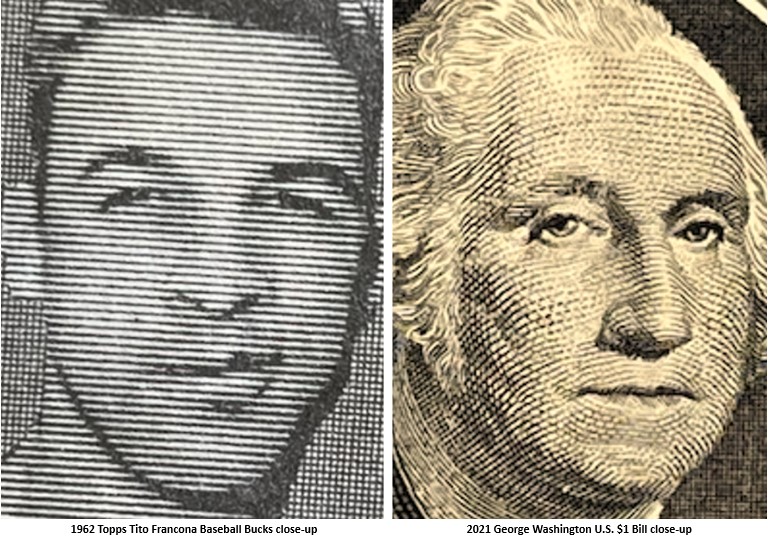
To ensure Francona’s facial features appeared through these blinds, Topps performed a fair share of touch ups and enhancements to accentuate his nose, lips and neckline.
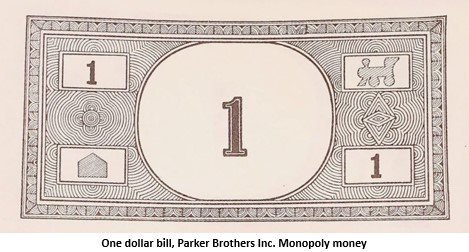
Topps did a marvelous job overall trying to design their Baseball Bucks to imitate American paper money. Their finished product makes Monopoly money look like literal child’s play.
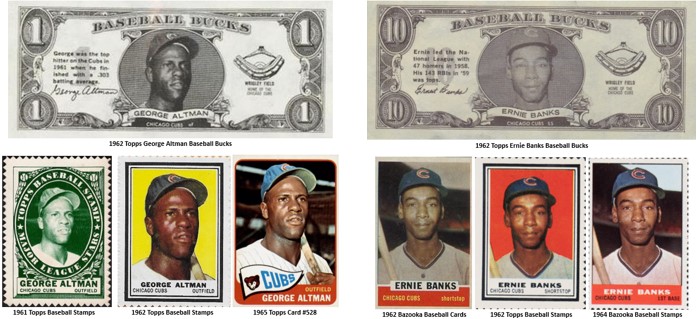
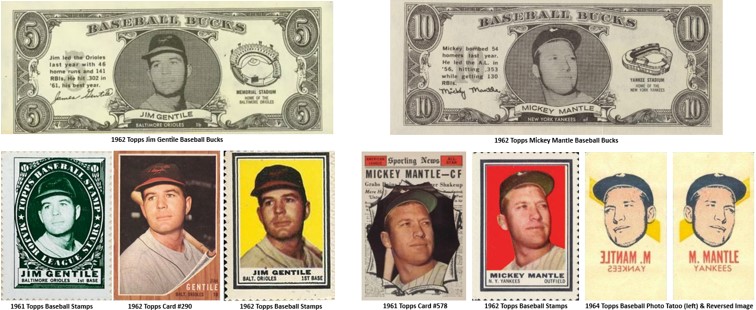
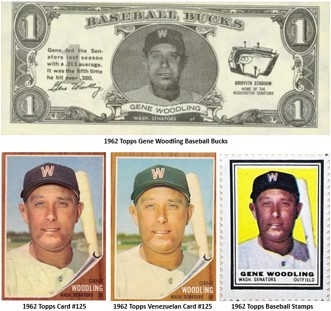
By the way, the Cleveland Indians outfielder wasn’t the only one to lose his lumber. George Altman, Ernie Banks, Jim Gentile, Mickey Mantle and Gene Woodling experienced airbrushed bats.
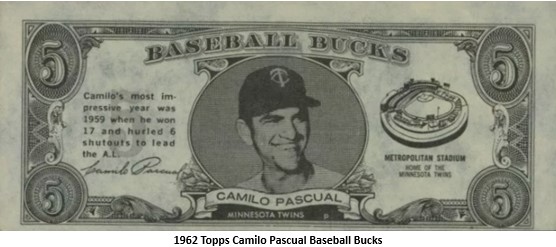
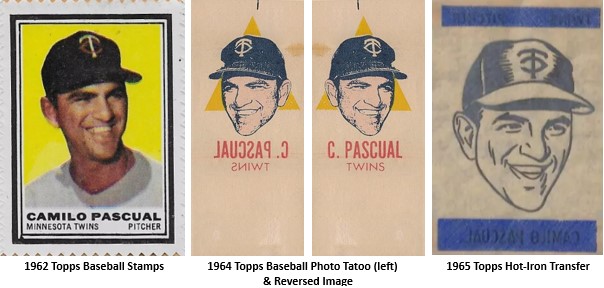
Twin Cities twirler Camilo Pascual had his 1962 Baseball Bucks headshot appear on his 1962 Stamp, 1964 Photo Tatoo and 1965 Hot-Iron Transfer. The Tatoo’s certified food color image is negative so when applied to one’s moistened skin or other surface it will appear positive. The same holds true for the Transfer, but this time, Topps reversed the TC hat logo.
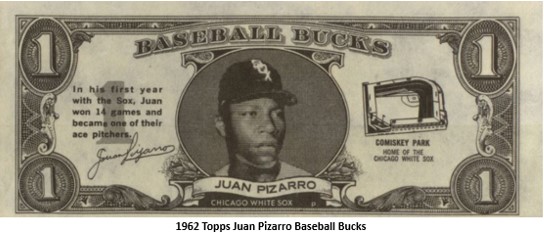
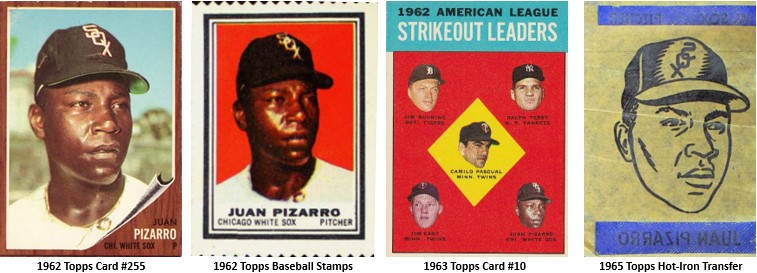
The same logo switcheroo happened with Chicago White Sox pitcher Juan Pizzaro three years after his Bucks likeness hit the market.
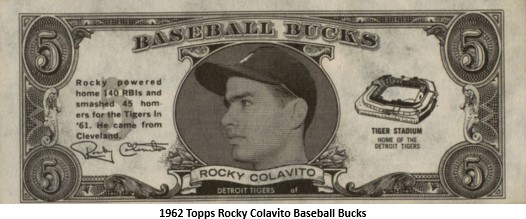
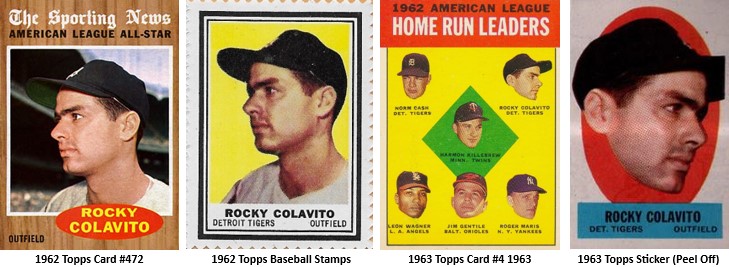
Ever spot that Detroit Tigers All-Star outfielder Rocky Colavito’s photo (shot in original Yankee Stadium) is looking to our left on his 1962 Baseball Buck, All-Star card and Stamp, but gazing right on his 1963 Home Run Leaders and Sticker?
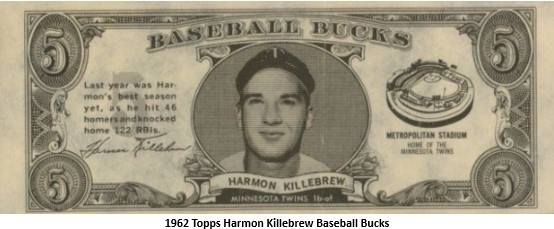
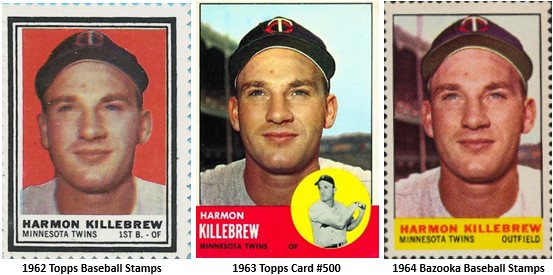
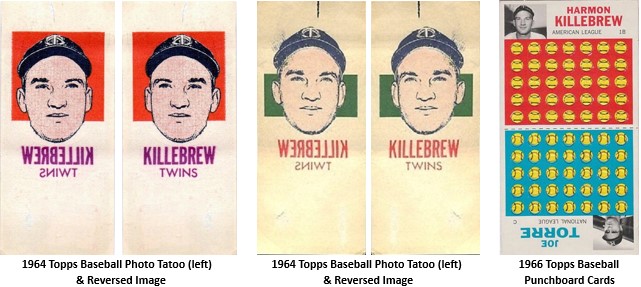
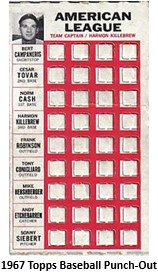
This is an extremely subtle discrepancy, but Minnesota Twins superstar Harmon Killebrew’s repetitive 1962 Bucks image is oriented correctly on every Topps offering where it appears except his 1967 Topps Baseball Punch-Out. Look how the famous Yankee Stadium façade, which is positively shown hanging from the left field stands, is reversed to right field.
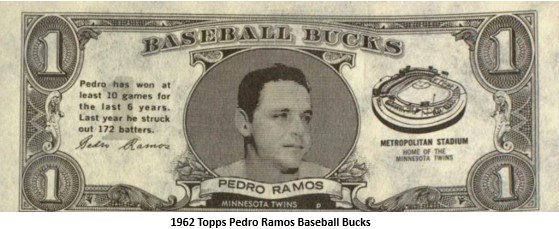
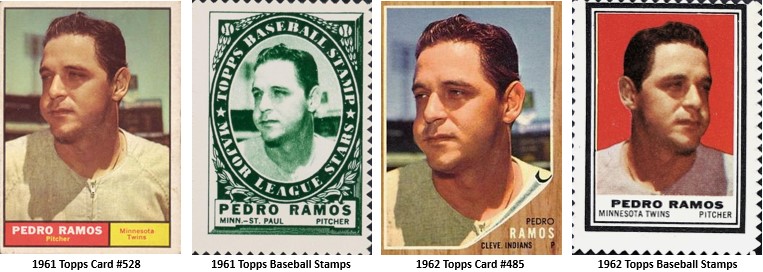
All right, so hatless pitcher Pedro Ramos is looking toward the right-hand border on his 1962 Bucks bill. Yet he’s looking to our left on his capless 1961 Topps base card and Stamp and 1962 base card, then right again on his lidless 1962 Stamp. So, which issued depictions are positive and which are reversed?
A similar picture, this time looking to our left with hat atop head, is captured on his 1960 Topps base and Venezuelan cards. But, since the Washington hat logo is a W and looks identical forward or backward, we’re left to wonder if this is a positive image.
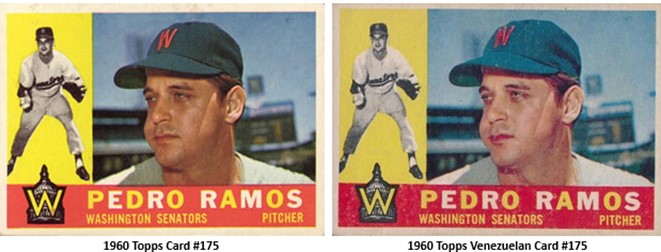
The scoreboard, light tower and stadium stands in the background look the same over this three-year period, so it appears Topps used images from the same on-field photo shoot.
The answer to this mini-mystery surfaces after a little internet digging. The scoreboard, light tower and grandstands are that of old Comiskey Park, home of the Chicago White Sox.
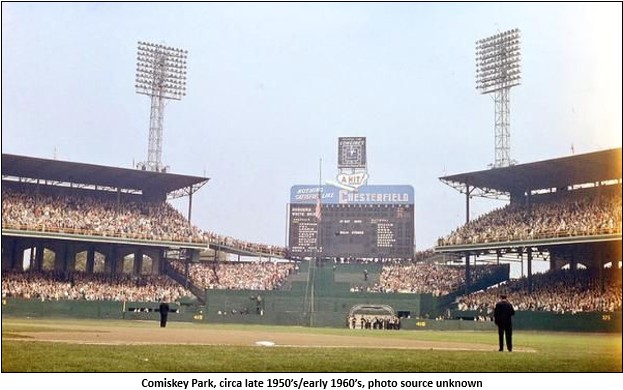
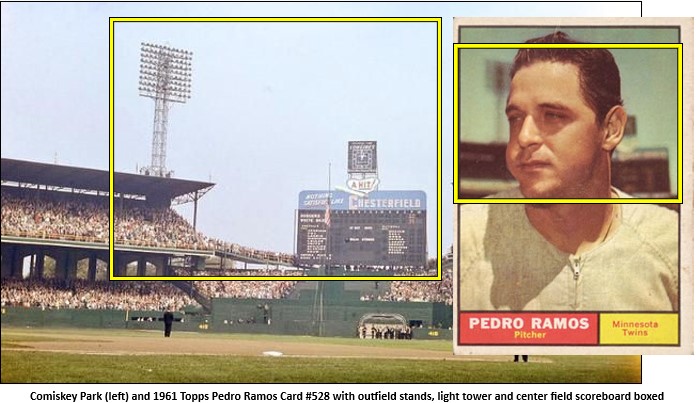
You can see the outfield stands, light tower and distinctive scoreboard with its “NOTHING SATISFIES LIKE CHESTERFIELD…A HIT!” cigarette sign align with Ramos’ 1961 base card. We now know the photo looking left is positively positive.
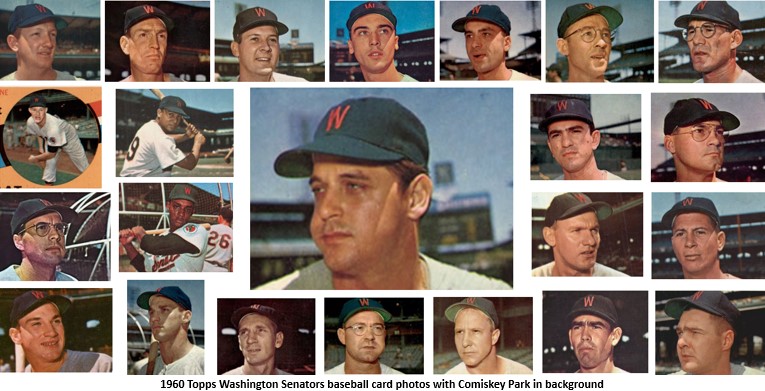
By the way, a whole slew of 1960 Topps Washington Senators baseball card photographs sure look like they were snapped inside Comiskey Park, most likely during the same photo session that captured Ramos’ hat on, hat off pictures.
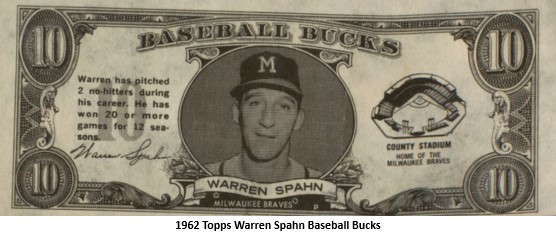
Then there’s the case of Warren Spahn, the Milwaukee Braves Hall of Fame hurler. Be forewarned, this one’s gonna make your head spin. Like Ramos, Spahn’s M hat logo looks the same forward or backward, darn it. His Bucks photo has him leaning ever so slightly toward our right with the greater visible part of his hat bill on our right side.
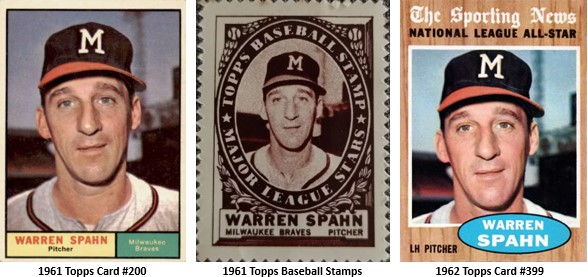
Here we go again. His 1961 base card and Stamp and 1962 All-Star card have him tilting slightly to our left…
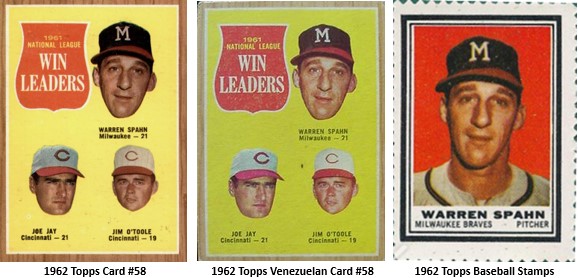
…while his 1962 Topps and Venezuelan Win Leaders cards and Stamp have him edging to our right again…
…while his positively applied 1964 Topps Photo Tatoo has him rotating back to our left…
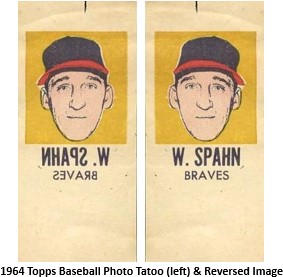
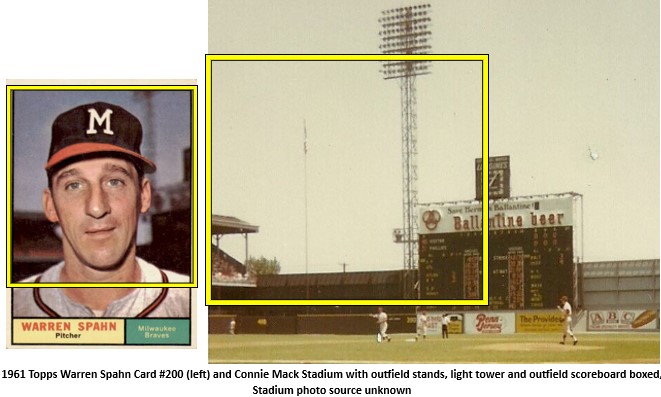
Anyone feeling queasy? Anyway, back to the internet. The background detectable on Spahn’s 1961 base card is that of Connie Mack Stadium, home of the Philadelphia Phillies.
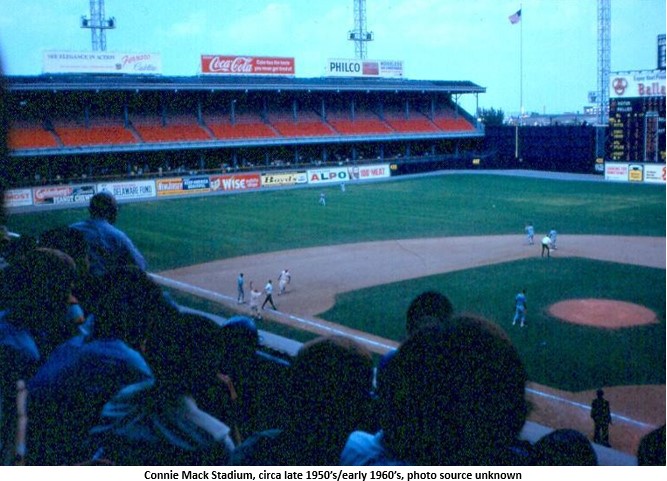
The left field grandstands, light tower and Ballantine beer scoreboard sign seen on Spahn’s card background match neatly with this outfield pic, verifying that the Milwaukee moundsman’s head is unequivocally leaning toward our left and anything to the right is indeed the reversed image.
I’ve compiled all the shared Topps images for each of the 96 Topps Baseball Bucks, like this one for Roberto (not Bob, thank you) Clemente, in a Microsoft Edge PDF document.

If you would like to peruse this set collection, simply email me at dgcarlson5@gmail.com and I’ll send them your way for absolutely nothing. If you got a kick out of this write-up and would like to read more of my Topps vintage articles, click here.
You can check out 1962 Topps Baseball Bucks on eBay here.
