
TTMCast Preview
We’re back with an all-new episode to kick off June. Clemente Lisi joins us to talk about hockey, soccer, the Topps Now Pope cards, and the upcoming Fanatics Fest in New York City. Drew and Arron cover upcoming shows and signings, as well as their TTM returns.
You can listen to this month’s show here.
TTM Successes
Greg Brock
Brock took over at first when Steve Garvey signed with the Padres, turning in a pair of 20-HR seasons before being traded to Milwaukee in 1986. In his first year as a Brewer, he hit .299 before losing the first base job to Franklin Stubbs in 1991.

He signed these for me in two weeks via his Oregon home. Beware: he kept two of the cards I sent, and has returned notes in the last few days indicating he will now have a fee of $1 per card.
Kevin Hodson
Best-known as a backup netminder to Hall of Famer Mike Vernon and possible future Hall of Famer Chris Osgood, Hodson was part of a pair of Cup winners in Detroit. He later went on to try to provide some stability to a Tampa Bay squad that burned through nine goalies in two seasons.
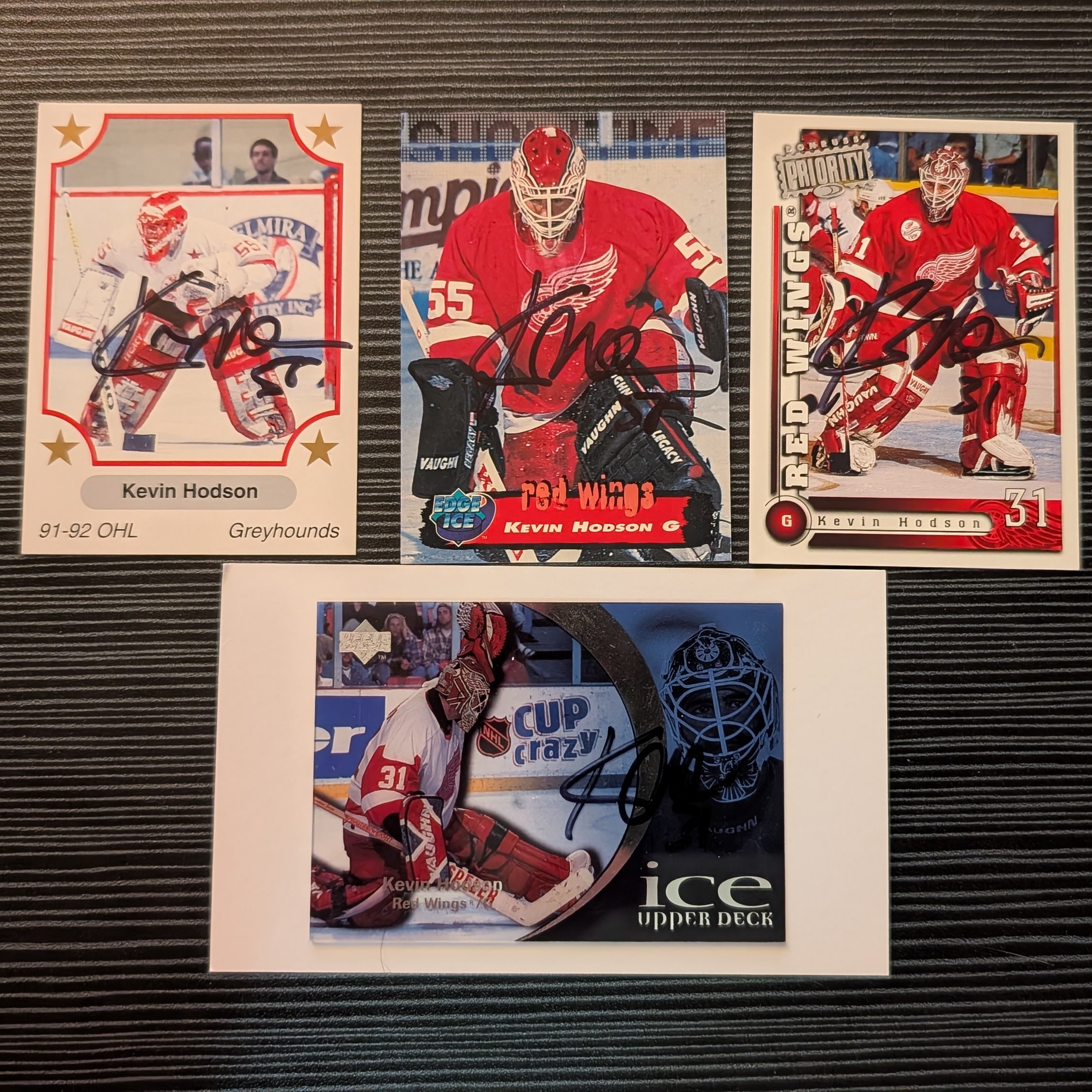
He signed these in six months via his Ontario work address.
IP Recap
For a bit, I thought my summer in-person graphing calendar might get chopped in half. The Cleburne Railroaders instituted a rule this season that they will only sell lawn tickets if every seat sells out– a rare happening for an independent league team. At a minimum of $21 a ticket, that’s more than I have ever paid for a minor league game anywhere– affiliated or independent– and marks it as possibly the highest minimum ticket price in the entire American Association.
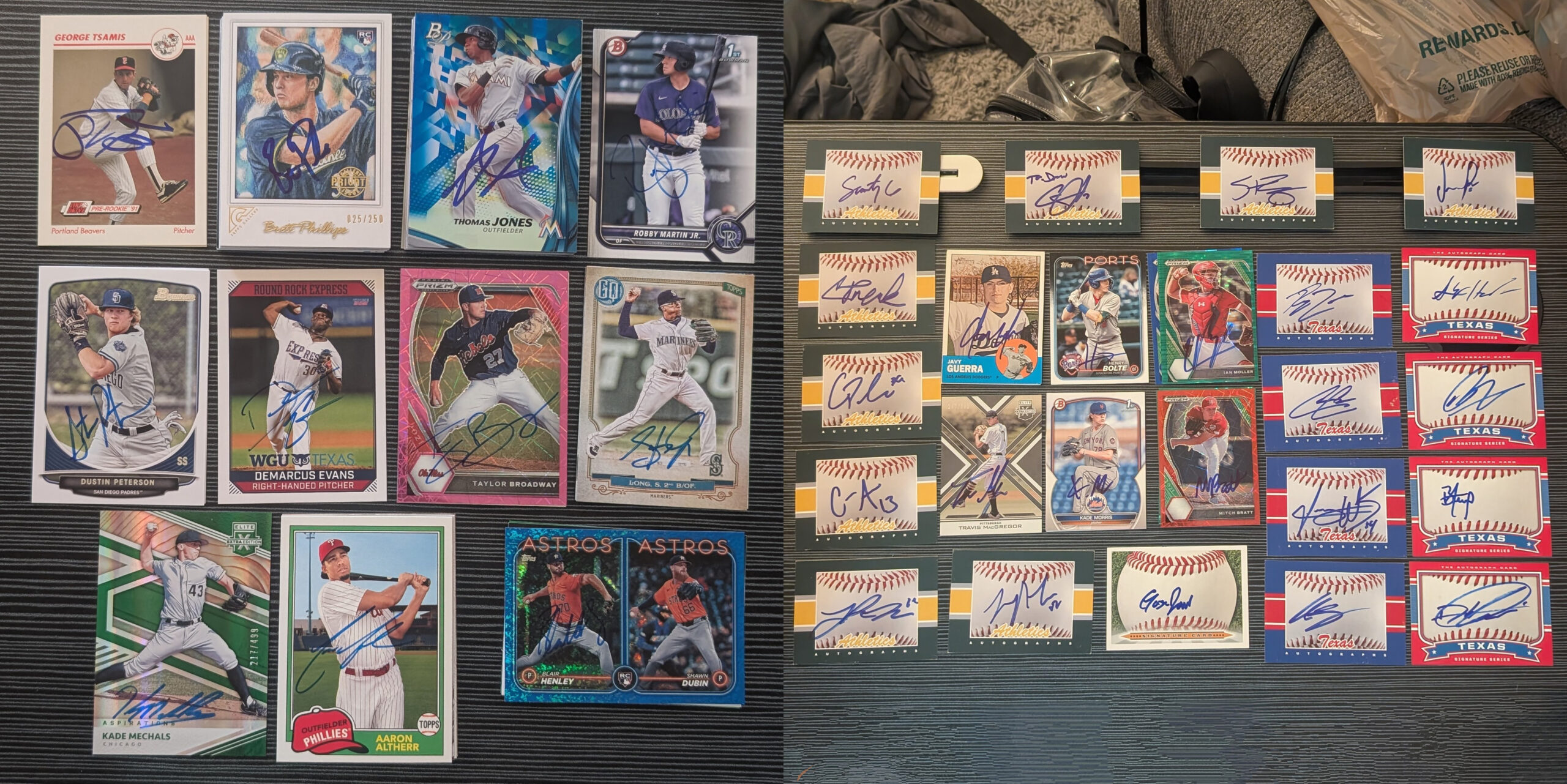
Fortunately, Thursday nights are All You Can Eat: for only $4 more, you get as much as you can handle in hot dogs, pretzels, and popcorn. Not too bad a deal. So despite missing the first series of the season, I was able to drop in and see the Kane County Cougars take on Cleburne. Both teams are stocked with a few former major leaguers. Signing for me included 2020 World Series hero Brett Phillips, former Phillies outfielder Aaron Altherr, former Mariner Shed Long, and former Ranger DeMarcus Evans. Blair Henley, previously of the Astros’ bullpen, even asked if he could have one of the cards I had of him, an orange and black striped parallel from 2025 Topps Update, which I gladly gave him.
A couple days later, I went the other way up to Frisco with the Midland Rockhounds (Athletics affiliate) coming to town to play the RoughRiders, the Texas Rangers’ AA team. I had trouble with the A’s prospects last season (Denzel Clarke’s smiley face sig, anyone?) and this year they seem to have gotten even tougher. Every player with legitimate cards said he would sign after the game rather than before. Fortunately at least two kept their word: Henry Bolte and Kade Morris inked cards for me, as did former Dodgers’ pitcher Javy Guerra. He’s Midland’s pitching coach and hails from just up the road in Denton, TX.
This week I should get to see the Chicago Dogs at Cleburne, and the Springfield Cardinals at Frisco.
Fun Sets for Sigs
Besides having the various sets I’m working on, I tend to have a bit of a mental depth chart for sets from which I like getting cards signed. I’m sure other collectors are the same and have their odd, inexplicable favorite sets that they enjoy getting signed, even if it’s not part of a project. Here are a few that I tend to put above others.
Baseball: 1996 Fleer
In an era where every company seemingly tried to make a big step forward– metallic foil, glossy UV coating, chrome, autographs, jersey pieces, embedding video, and making cards that were CD-ROM readable– Fleer took a step backward. Their 1996 and 1997 sets were on a matte finish card stock– and not the 1960s-90s Topps matte, but one which felt more like the back of those cards, but on both sides. They promoted it as a set that required no prep work for autograph seekers.
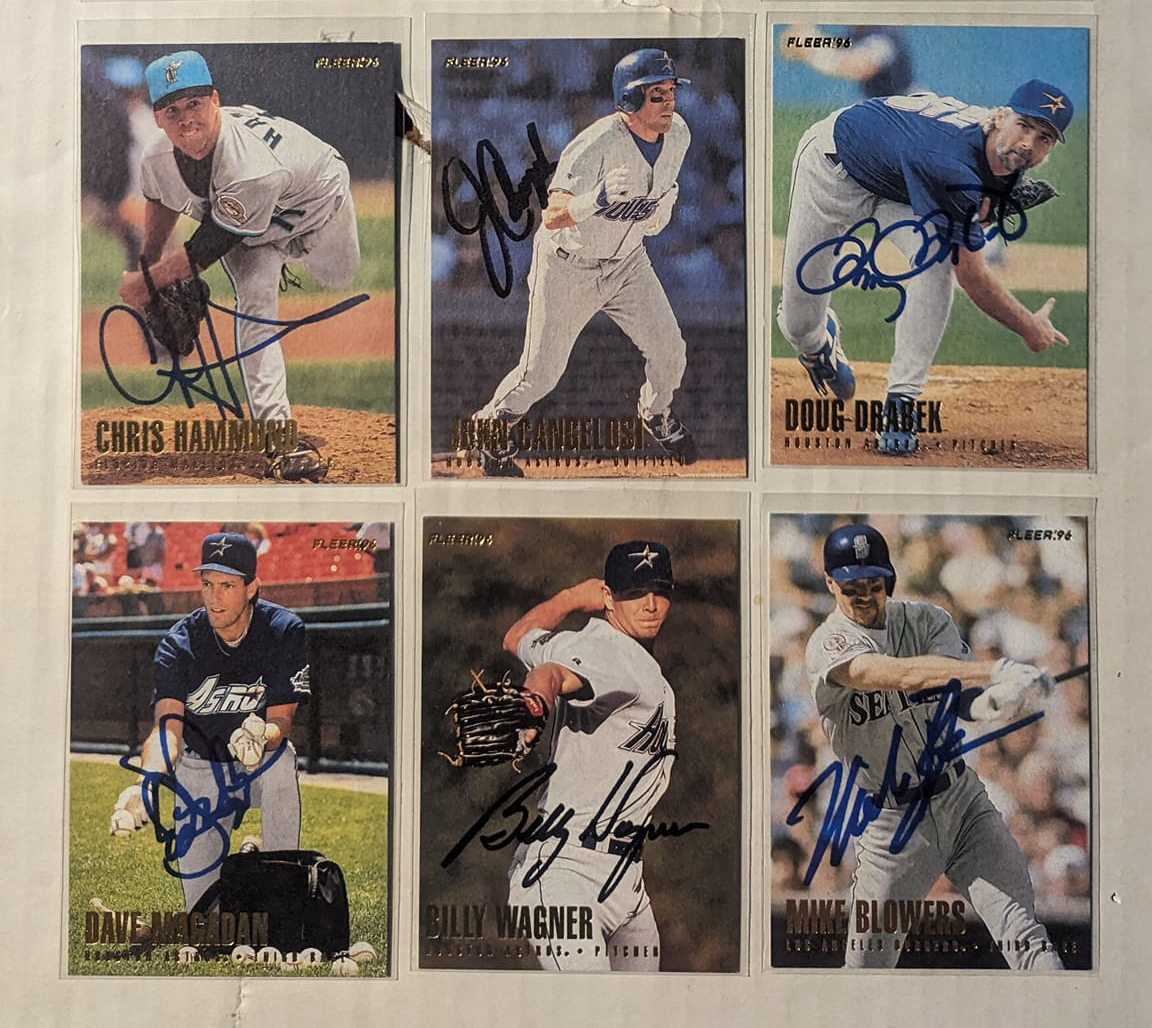
For those who needed their shine, there was one glossy parallel per pack. 600 cards of 600 players meant that the entire league was pretty well represented as well: 21 players per team on average and no duplication.
Football: 1990 Pro Set
The entire company of Pro Set will always be my guilty pleasure in football and hockey. The 1990 set was loaded with errors, but the photography was excellent and the design simple. Almost everyone got cards: punters, kickers, offensive linemen, backup quarterbacks. The cards are easy to find still today, 35 years later.
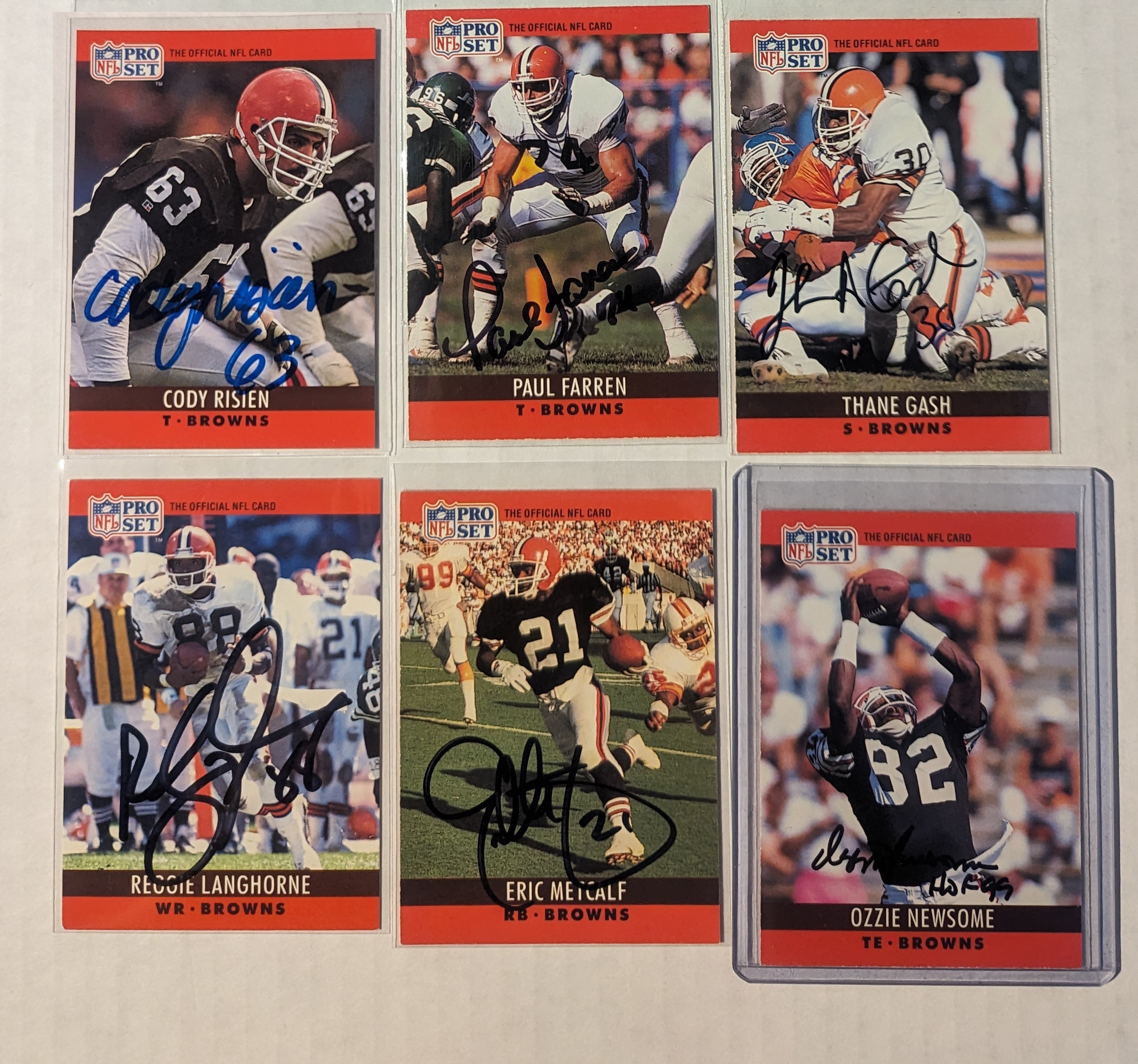
By 1992, Pro Set’s photo selection had fallen completely off a cliff and two years later they were completely out of business. The company trademarks are currently owned and used by Leaf.
Basketball: 1967-68 through 1969-70 Topps
The average height of pro baseball, football, and hockey players is around 6’2″. The average NBA player measures in at 6’6″. So it’s only reasonable that basketball cards started out taller than the others, right? From Topps’ re-entry into the sport in 1967 through 1970, their basketball cards had nearly an extra inch and a half in height. Sure, you’ll have to get specialized pages, sleeves, or toploaders for them, but it’s a fun difference that not only accentuates the difference in player size, but also gives some extra room to sign.

Later on in the mid-90s, Fleer used this size in other sports: Extra Bases in baseball, Gameday in football, Power Play in hockey, and Jam Session basketball.
Hockey: 1996-97 and 1997-98 Upper Deck Ice
Check out my Kevin Hodson success below: a signature on a clear card just looks cool. Upper Deck used clear acetate as the card substrate for two years, retiring the line briefly before bringing it back for another two years in 2000/01 and 2001/02, re-retiring it, and then bringing it back again on plain paper in 2003.
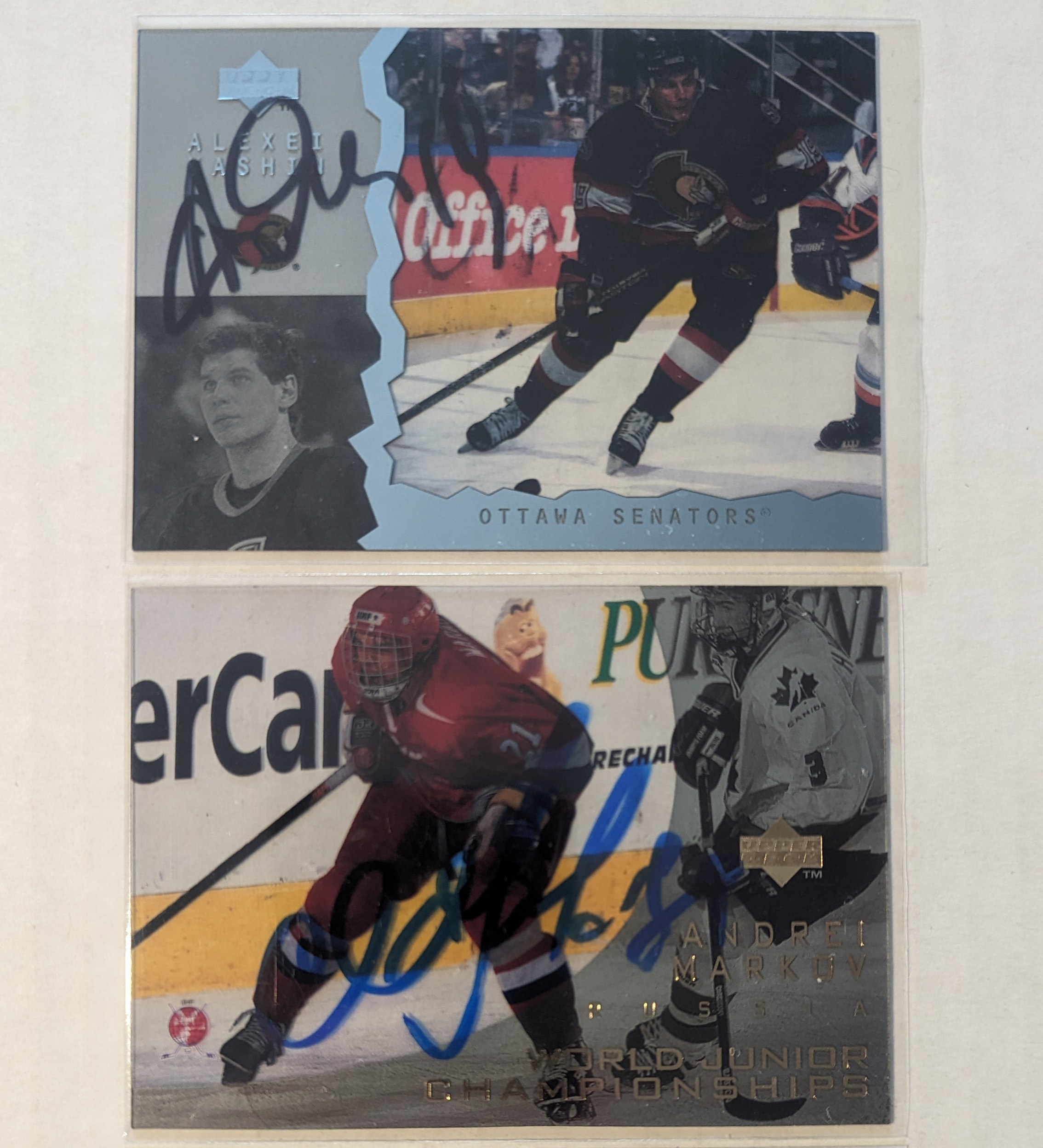
The ink sometimes doesn’t stick so well, but when it’s placed well and protected well, these cards are great for something a little different.
If you have any graphing questions, you can reach Drew via email at DFWGrapher@gmail.com
