
TTM Successes
Ted Hampson
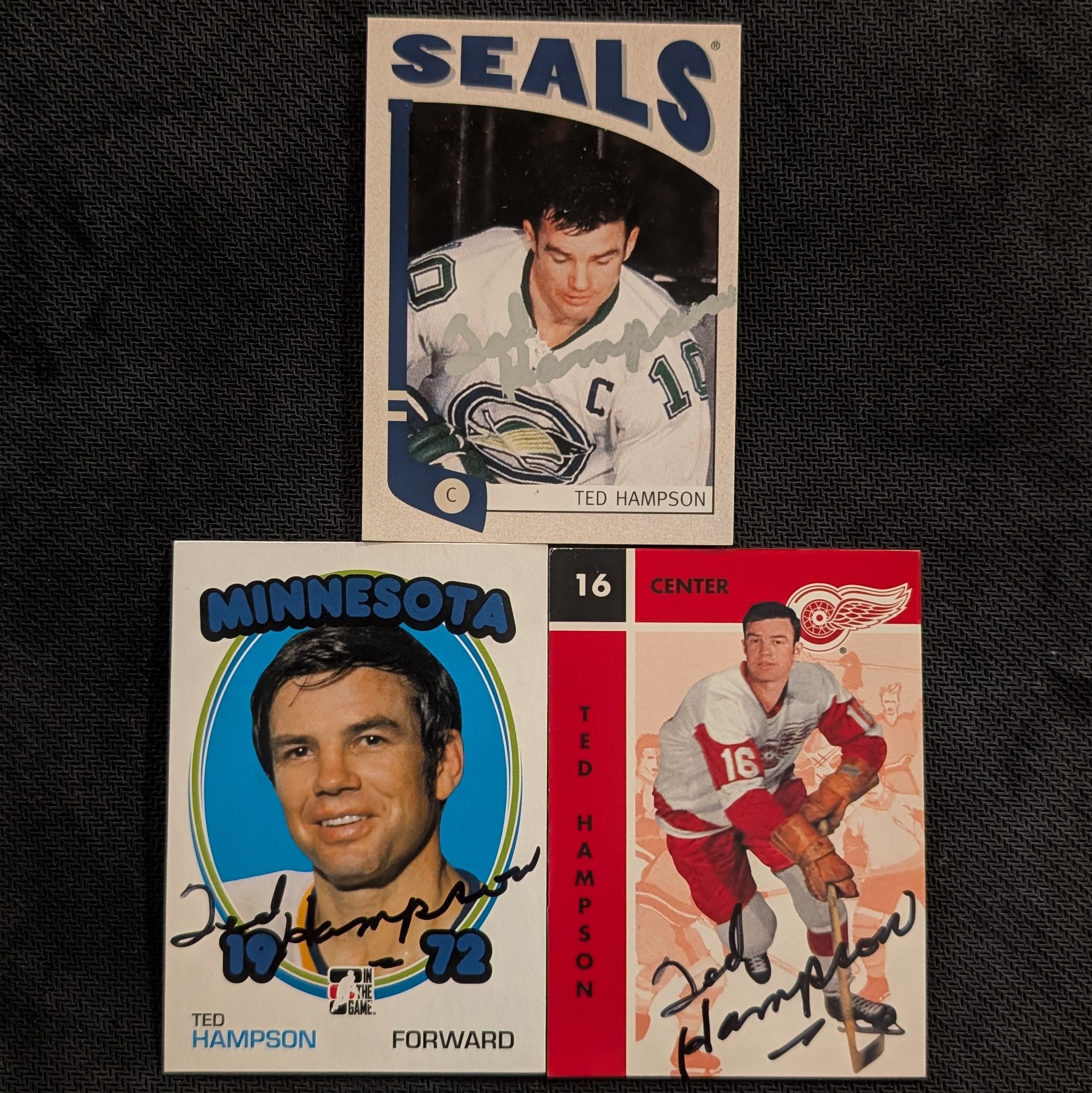
A true hockey lifer, Hampson played for seven teams in the NHL plus one in the WHA from 1959 to 1976. Following that, he was the GM, coach, and a player for the Central League’s Oklahoma City Blazers through 1981. While most would be happy enough to kick up their feet and relax at the age of 45 after a career like that, Hampson instead became a scout for the next 40 years, finally retiring from hockey at age 85 in 2022.
He signed these for me via his Minnesota home in a short five-year turnaround. This is my ninth-longest success ever, and second-longest in hockey.
Al Hrabosky
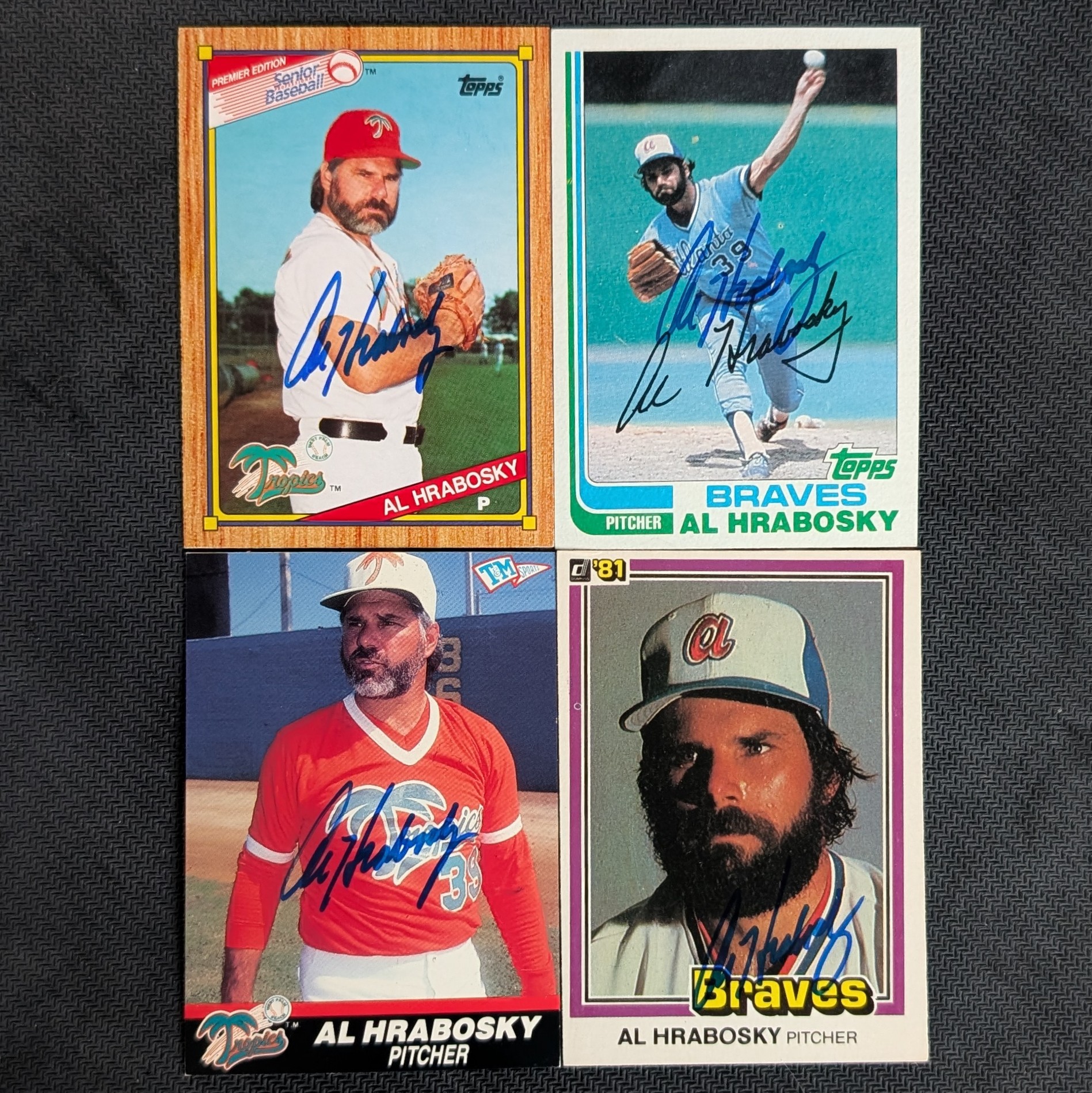
The Mad Hungarian has been a solid signer for years. As a closer in an era that vastly undervalued relievers, he managed to lead the National League in both winning percentage AND saves in 1975: he went 13-3 that year while closing out 22. Not good enough to be an All-Star, but good enough for a third-place finish in the Cy Young Award. The 76-year-old has been an analyst on St. Louis Cardinals broadcasts for many years.
He signed these for me in three months via his Missouri home.
A Graphing Ode to Junk Era Fleer
The junk era is loosely defined as the 1981-2000 era of cards, when there was no longer the Topps monopoly and you had several companies all fighting among each other solely by flooding the market more than the competitor. Ultimately, Score/Pinnacle was first to leave the market in the late 1990s, followed by Fleer being bought up by Upper Deck, Donruss being snapped up by Playoff/Panini, and both of those entities being forced out of the fully-licensed market by the mid-2000s as Topps returned to a monopolistic state.
In a Facebook post last week, PastPros mentioned a love for signed cards in the 1994 Fleer set. And As I thought about it, I realized that from 1983 to 1999, Fleer made a lot of really great sets for autographing– save for the 1995 eyesore, where they made a different design for each division, each more hideous than the next.
Over the last four months, I’ve been sorting through a whole ton of cards that my boss gave me and realized I’ve completely overlooked Fleer. So here’s five of my favorite 1980s and 90s Fleer sets for autographing. I may turn this into a recurring post even, exploring other companies of the junk era and even venturing into other sports.
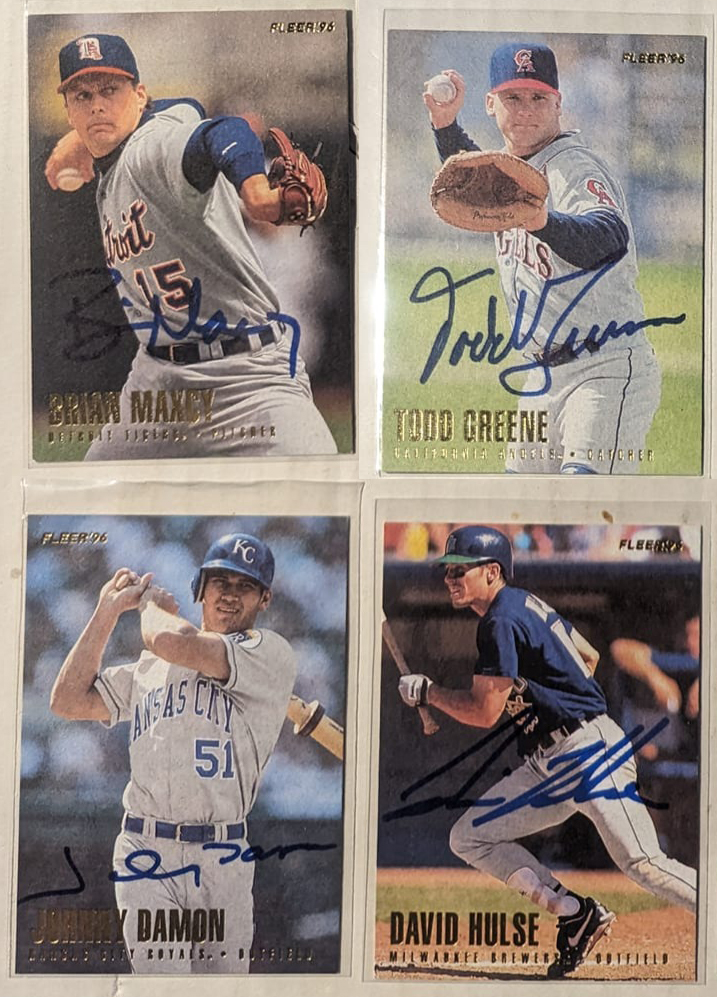
1996
The 1996 and 1997 Fleer sets were an anomaly: in a time when every card set was trying to out-shine the others with glossy surfaces, heavy stock, embossing, die-cutting, foils, and chrome, Fleer went in the opposite direction with their base set. The 1996 product featured a matte finish on both sides that they touted as being excellent for autographs, and it absolutely was: no prep work is required to prevent smearing and bubbling!
I wasn’t collecting a ton of autographs at that time in my life, but I loved the idea and bought a lot, thinking that maybe someday I’d get them signed. Nearly thirty years later, yeah, I have a few signed here and there in my collection.
1991
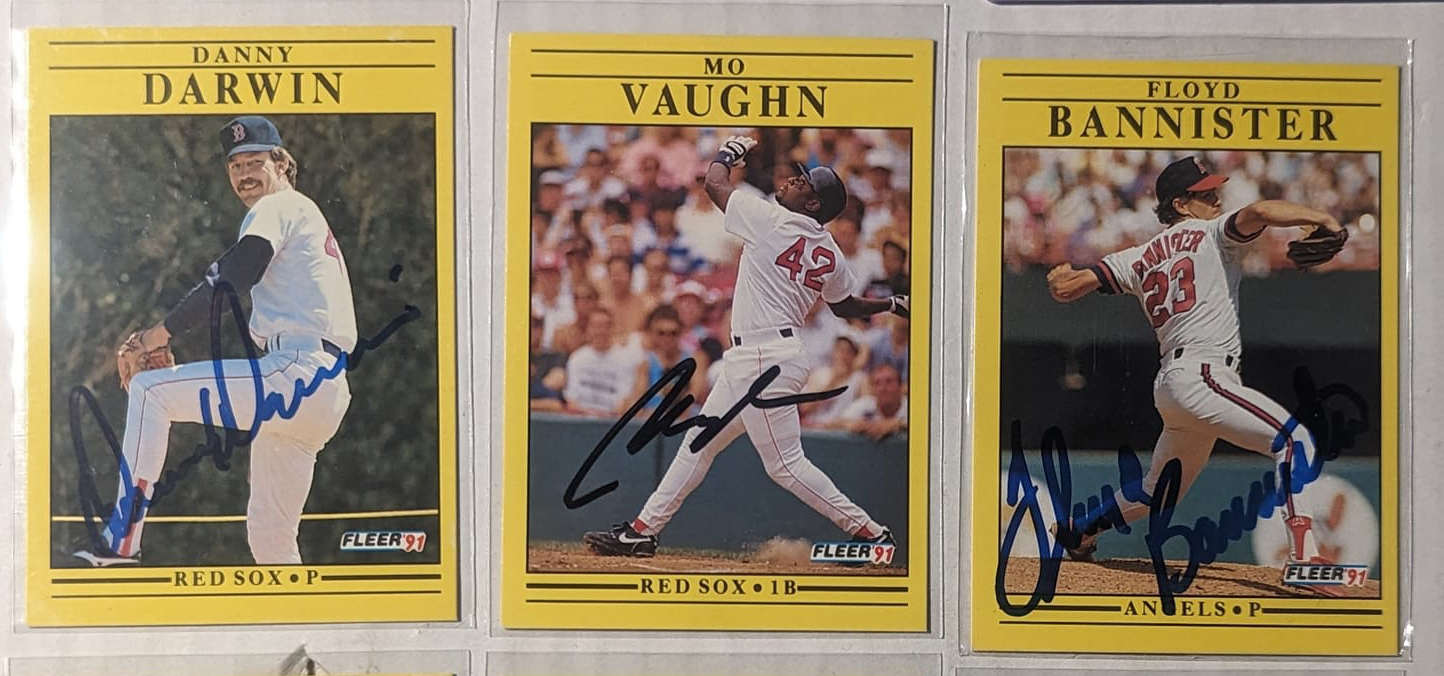
Blinding, right? Bright yellow borders and minimal info in a boring font on the front, and no logo on the front for the first time since 1982. But the bright yellow frame, while hideous unsigned, helps to show an autograph quite well. My only wish is that Fleer had changed the border colors by team– but a darker border wouldn’t be quite as good for signed cards.
The yellow may be hideous, but it works so well when getting your cards inked. It also was the first of Fleer’s sets to feature a player’s photo on the back after Score adopted the practice in 1988 and Upper Deck in 1989. If you were an in-person grapher seeing players out of uniform or in a jacket, having that extra photo can be helpful in trying to identify a player when you can’t see their number.
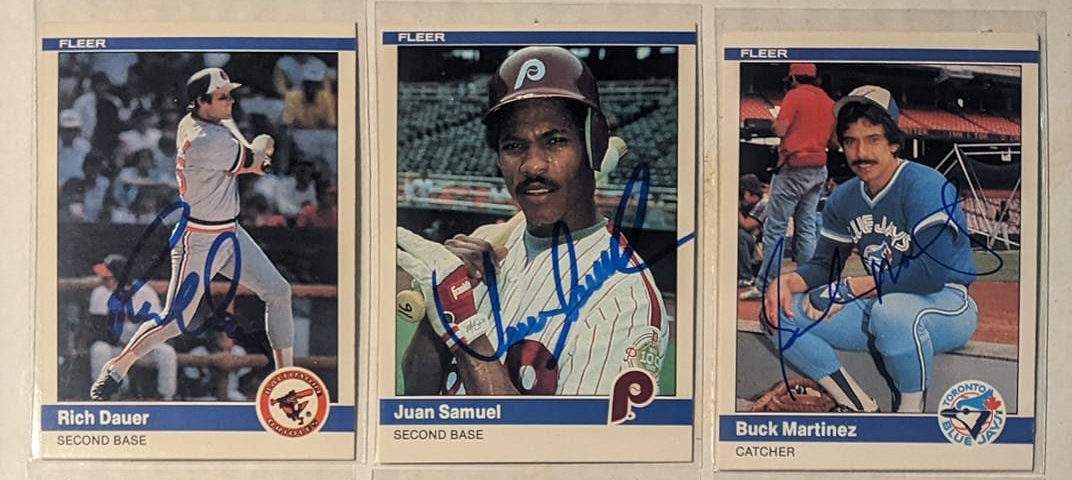
1984
The entire 1984 season of cards was the first time someone truly gave Topps some competition. Fleer and Donruss were still trying to figure things out in 1981 and put out subpar products. Donruss probably had the best year in 1982, while Topps reclaimed the crown in 1983.
1984 was a great leap forward– Donruss put out a set that is still loved today with a better design and premium action photography, while Fleer put out this mastery of minimalism– a simple blue and white border with the team logo in the corner.
1987
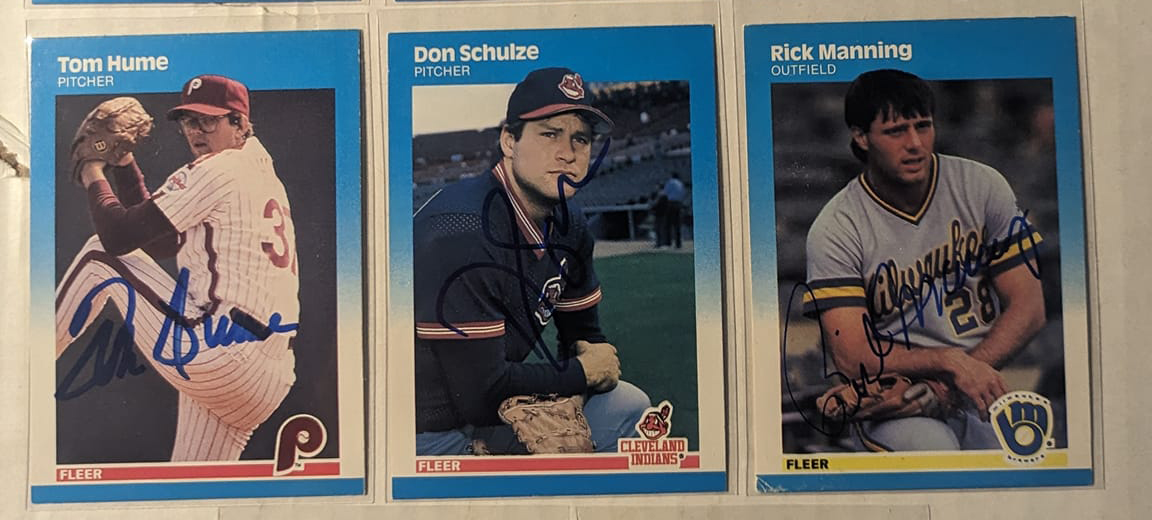
Most graphers get their sets signed in blue Sharpie whenever possible, so it would seem the blue-bordered 1987 set would be an overkill of the color. But not so: the light blue carries the royal blue ink well. And I always loved the scouting reports on the back with pitchers’ offerings rated on a scale of Awesome, Hot, Sharp, and Average and where hitters want their fastballs, breakers, and off-speeds.
The front design was resurrected for Fleer’s 2002 Platinum set, though at a much smaller 300 cards.
1990
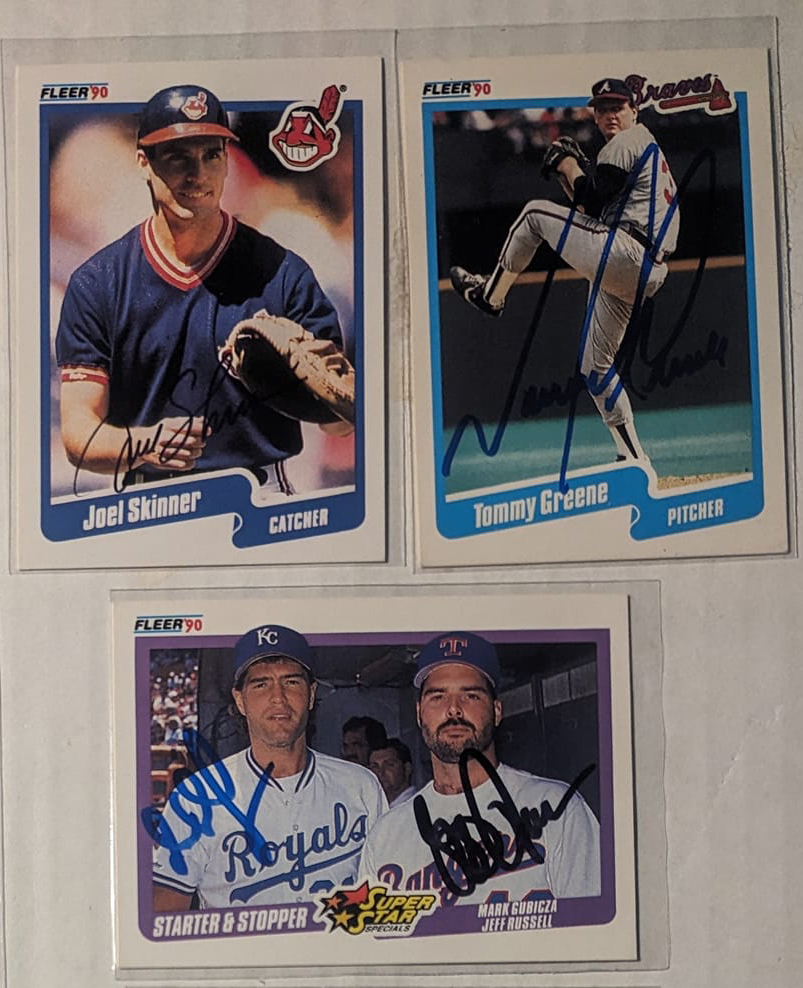
The 80s came to a close in the hobby not with a bang but with a whimper: Donruss had a terrifying red set that still haunts me, Score’s set didn’t move the needle much for me, Upper Deck was good but not great following their world-changing 1989 debut, and Topps put out one of my least favorite sets of all-time. But the 1990 Fleer set was one of their rare white-bordered sets, zigging as the other companies zagged. I love the bottom banner for the name and position.
While yes, it’s another product that you can find for super cheap, that’s not necessarily a bad thing: it may not carry a ton of value, but it looks great signed.
I remember this was one of the first sets I had cards from, as my grandmother gave me some of my first cards, picking up a binder, pages, and team sets of the Angels and Indians at her local Walgreens for my sixth birthday.
Like Donruss, Fleer was unafraid to experiment with non-white border colors, a rarity to that point in the industry. Besides the others I mentioned, they used gray in 1985, 1989, and 1993; blue in 1986; tan in 1983; green in 1992. Fleer’s color-bordered designs seemed more calm and tasteful when compared to some of the Jackson Pollock-esque Donruss sets of the era (1990 and 1991, I’m looking at you).
Fleer also arranged their cards by team from 1981 through 1997, so it made it easy to buy a set at the start of the season and– with the exception of winter and early spring trades– made it easy to have all the cards you need for a team at one easy grab.
In the next few weeks, I’ll take a look at some of the better signable offerings from 1980s and 90s Donruss, Topps, Score, and Upper Deck.
TTMCast Preview
On this week’s show, Les Wolff joins us and gives a couple appraisals as well as his thoughts on the 2026 National, Arron and Drew wrap up most of the in-person graphing season and we cover all the latest hobby news in this month’s episode of TTMCast.
You can listen to the latest episode here.
If you have any graphing questions, you can reach Drew via email at DFWGrapher@gmail.com
