
Phil Coffin did not intend to write a book about the 1959 Topps baseball card set. He was simply putting together essays in his office and would “go upstairs to go down rabbit holes.”
It got to be such a joke that his wife, Laura Messina, called the project “Bunnyball.”
But Coffin’s determination led to a book that features an essay about each of the set’s 572 cards, from Ford Frick to Billy Pierce’s All-Star card. It is a set that is dear to him, since it was the first Topps set he actively collected as a youth.

When Baseball Was Still Topps (McFarland; $39.95, softcover; $23.99, ebook; 243 pages) is engaging, sentimental, witty and informative. Coffin, 71, a copy editor at The New York Times since 1997 and a journalist with more than 40 years of experience, gives equal weight to the famous and not-so-famous players in what he called “a fun effort.”
“It didn’t start out as a book. Three years ago I wrote some baseball essays that were frivolous. Silly stuff,” Coffin said. “For Bastille Day, I wrote about guys named France or French. For Flag Day, I’d write about guys named Red, White or Blue.
“I wrote about the players in the Eddie Gaedel game (Aug. 19, 1951). I was doing these essays and sharing them. It was fun.”
So, Coffin began casually writing about the players in the 1959 set. He did not jump around, preferring to go right down the list.
“I did go in order,” Coffin said. “It was kind of a lark. I had this list, so I knocked them out.”
But was not long before he realized that this was going to be a project.
“I always loved the ’59 cards,” he said. “But like a stoonad, I forgot how many cards were in the set.
“My wife kept telling me, ‘That’s a book,’ but I resisted. But along about a third of the way, I said she was right.”
It took six months for Coffin to research and write up the capsules. Coffin said he started with each player’s page on Baseball-Reference.com, adding that the Society for American Baseball Research project pages “were a remarkable resource.”
“Doing the research, although painstaking, was real fun,” he said. “I read hundreds of obituaries.”
Coffin combed through 46 publications, 61 books and 36 websites during his research.
The toughest part of the project was finding a publisher.
“The writing is the easy part,” Coffin said. “The publishing is the hard part.”
Coffin likens his book to The Great American Baseball Card Flipping, Trading and Bubble Gum Book, the Bill James Baseball Abstract and The Baseball 100 “all in a blender.”
It may seem mundane to write vignettes about players who barely registered a blip in the consciousness of baseball fans, but Coffin was able to dig out some interesting gems.
“In the scheme of things, they were all good players because they made it to the majors,” he said.
But like every kid who aspires to pull a star card, Coffin had that one card that seemed to appear in every pack. That was Russ Heman (No. 283), who appeared in an airbrushed Cleveland uniform for his rookie card. And while doing his project, Coffin remembered him well.

“When I saw the name I knew something about him,” he said. “I went, ‘I got 20 of those.’”
Or, as he notes in the book, “one for every major league inning he pitched.”
Heman turns 91 on Feb. 10. He appeared in 12 games in 1961, his only season in the majors, splitting time between Cleveland and the Los Angeles Angels. And, he pitched 20 innings in the majors.
Coffin said his favorite capsule to write was about Gus Zernial (card No. 409), who was an outfielder with the Detroit Tigers in what would be his final season in the majors.
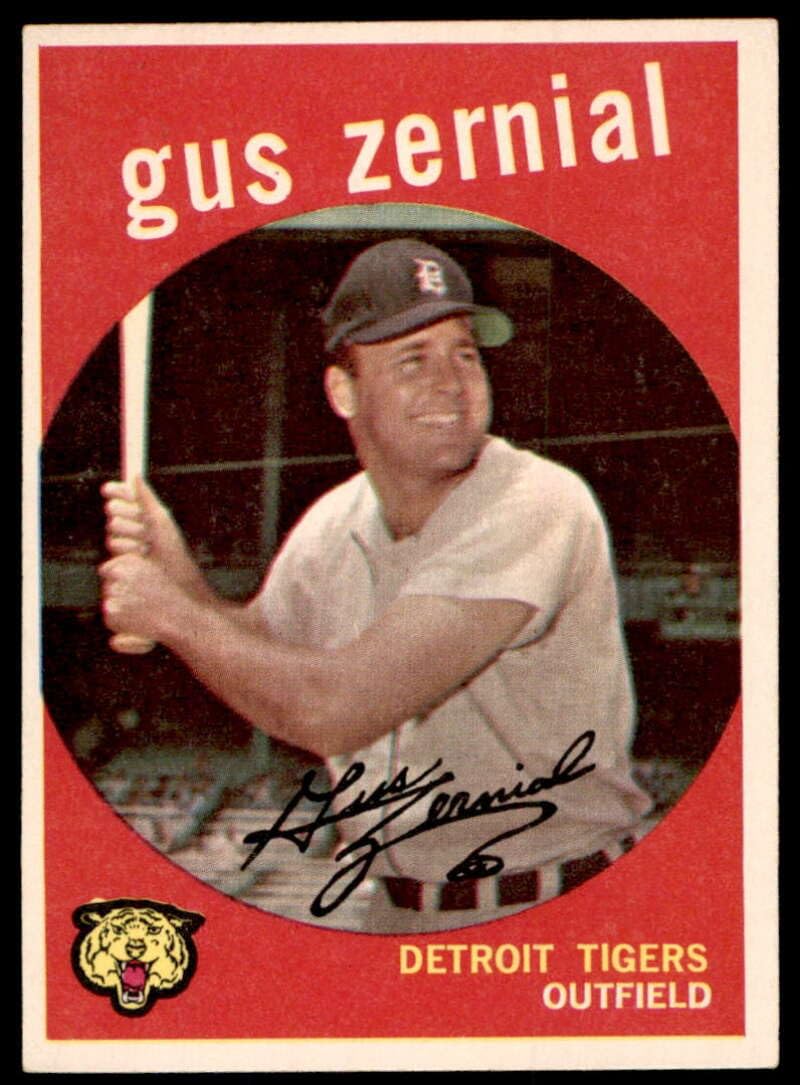
He makes career comparisons to Joe DiMaggio, which may seem odd until Coffin gets to the punch line — Zernial “had his arms around Marilyn Monroe before Joe DiMaggio did,” he writes.
Zernial was one of several players in 1951 who did a photo shoot with Monroe, and he recalled that the rising starlet was a beauty.
“Man, could a girl be any prettier?” Zernial recalled.

DiMaggio evidently saw the magazine spread and commented along the lines of “Why does a rookie like Zernial get to take a layout with someone like her?”
DiMaggio and Monroe eventually got together and were married for about a year. Zernial would be married for 50 years, Coffin writes.
Fun cards with a backstory? Try Ron Blackburn, a pitcher from Mount Airy, North Carolina. Card No. 401. It’s the birthplace of actor Andy Griffith.

“He was the template for Mayberry,” Coffin said. “It kept my enthusiasm high.
“Mount Airy was Mayberry and that was my eureka moment.”
Other essays include Al Worthington’s reluctance to play on a team that was stealing signs, and Norm Cash’s free admission that he used to cork his bats.
And there was Wes Covington (card No. 565), who had an All-Star card in the 1959 set but was never an official All-Star.

Coffin writes with a light touch and with the precision of a copy editor.
He began his journalism career in Indiana at the Bloomington Herald-Telephone (now the Herald-Times) under famed sports editor Bob Hammel. Then he spent 19 years at the Louisville Courier Journal before moving to the Times in 1997. He went part-time at the newspaper in 2021 and now works remotely from his home on the Jersey shore.
Coffin grew up in Indianapolis and recalled watching the 1959 World Series as a “pint-sized demilitarized zone” between his older brothers. One rooted for the Los Angeles Dodgers and the other pulled for the Chicago White Sox.
Coffin had dabbled in baseball cards in 1958, even pulling a Mickey Mantle All-Star card, but went full-bore as a collector in 1959, when he was 6.
“I was 6 and was falling in love with the game,” he said. “The cards were a nickel a pack and you’d get six cards and a stick of unpalatable gum.”

Still, completing the set was difficult because of one elusive card.
“It was always some nobody you couldn’t find,” Coffin said.
Eventually, he absorbed his brother’s collections, which included a 1954 Topps rookie card of Henry Aaron.
But, like many youths of that era, Coffin’s cards suffered the fate of a mother who was tidying up the place. His mother tossed them while he was attending college at Miami University in Oxford, Ohio.
“My freshman year of college, of course my mother threw them away.”
Coffin rekindled his interest in the 1959 Topps set as an adult and decided to complete the set again.
“I started nosing around and kept getting more cards,” he said. “Then I was down to the Mantle All-Star and the (Bob) Gibson rookie card.”
A friend found him a Mantle that he purchased “without paying an arm and a leg,” and the set was completed when his wife bought him the Gibson rookie card as a birthday gift.
Coffin admits he has more than 100 books about baseball. He counts Jim Bouton’s Ball Four as a favorite (“to me, it’s unbeatable”), and calls Jim Brosnan’s The Long Season a “fascinating read.”
The Baseball 100 by Joe Posnanski and the Bill James Abstract are books “with so much good information in them.”
The first baseball book he ever read was 1958’s The Real Book About Baseball by Lyman Hopkins.
Speaking of books, Coffin said he is working on a second one that is “sort of an Advent calendar of baseball history.” McFarland will also publish book No. 2.
He said he has already written “25 to 30 chapters.”
For example, an entry for March 21 will include players named Spring or Springs.
But it will mostly concentrate on the history of the game.
“There will be a little less of the lighthearted stuff,” Coffin said. “It will be a straightforward history pegged to specific dates.”