
Tony Reid- Me, too. I wanted to ask, do you remember seeing yourself on a trading card for the first time?
JT-Yeah, actually I do. I think that that was one of those surreal moments for me. And then when you get your first card deal, they send you a bunch of cards to the house. I actually still have a bag full of all those cards. That was really awesome. My sons love to play with them.
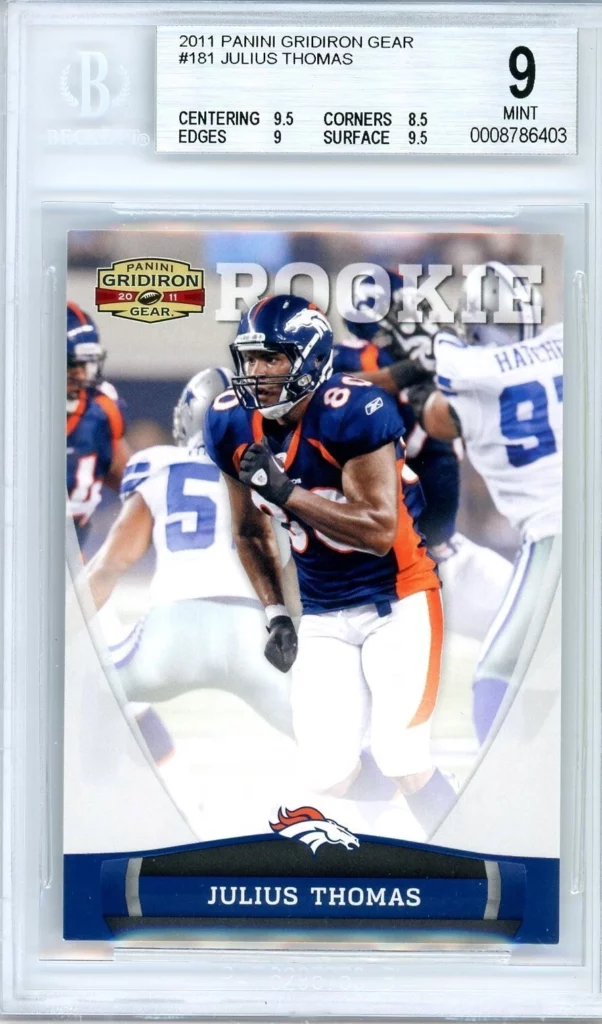
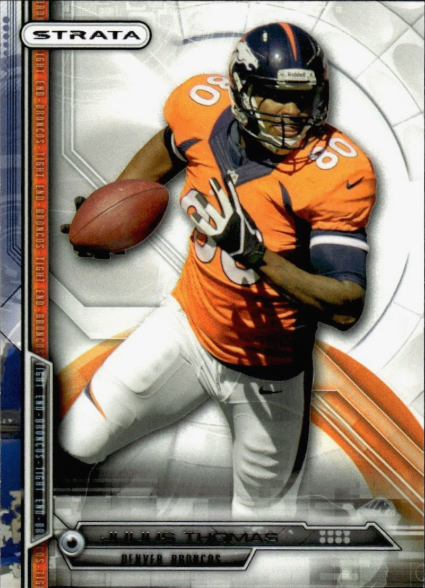
TR–Speaking of, you’ve appeared in over 1,400 cards over the years. Do you have a favorite or a few that stick out for whatever reason or that are top of mind, just that you remember seeing at some point?
JT-Yeah, that’s a good one. I think there’s one that’s like a white, it’s white and silver with me and a blue Broncos jersey. I think that was probably the one that I thought like, wow, such a sick card. So that’s probably the one.
TR–Growing up in Northern California, what athletes did you look to for inspiration? Whose posters were hanging on the wall? Were you a card collector?
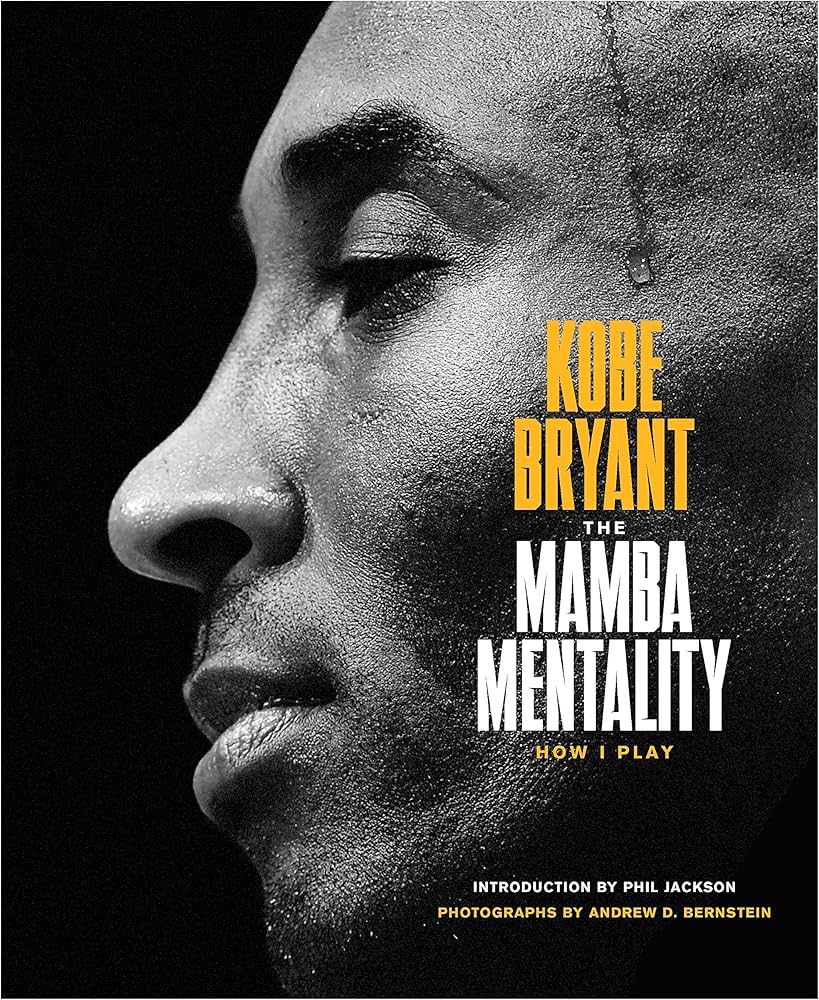
JT-Good question. No, I wasn’t a big card collector. I didn’t have many sports decorations in my room, but I’m a huge Kobe Bryant fan. Always have been. You know, you pinch yourself. I had a moment to actually sit and spend some time with him early on in my career. And so that was a really cool, surreal, full circle moment.
TR–What do you remember from that interaction or from that conversation?
JT-I mean, first off, he’s calling me by my nickname. So we saw each other a couple of times. And then I guess, maybe a third or fourth time. And he calls me by my nickname, like my friends call me. And I was like, wow, that’s pretty crazy right there. But he was so thoughtful, right? You know, he’s very intellectual.
You can tell he was actually curious and interested in what that conversation was. And he’s a deep thinker like I am. So we were able to really talk about like things that had a lot of depth. And that was a really, really cool moment for me.
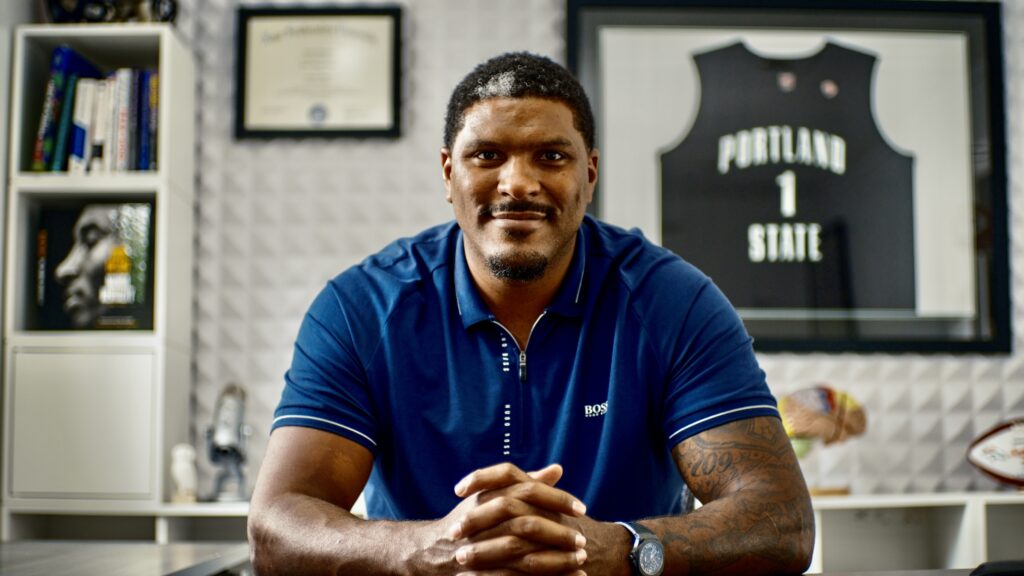
TR– You spent seven seasons in the league, voted a two-time Pro Bowler, with back-to-back 12 touchdown seasons, just an incredible run. Can you just walk us through what’s in your office, in your area, the things that you hold near and dear enough to showcase and display?
JT– Oh, first you can see my (Portland State) basketball jersey. That’s really where my elite sports experience first started. I got a chance to play in the NCAA tournament twice. So that’s pretty cool for me. Another thing I have is the football we got for having the best offense in NFL history in Denver in the 2013 season. I think that’s a really cool achievement to have. Just being able to execute at such a high level and making the game feel easy.
And just the way we were operating, that was just a phenomenal experience. So that’s really cool. I don’t have any of my Super Bowl jerseys or Pro Bowl jerseys here but I have those in my house.
But then (I also have) my master degree in clinical psychology. That really means a lot to me. And then I’ve got this gap here that pretty soon we’ll be getting filled with the doctoral degree. Those things are really meaningful for me. And then I’ve got my hat, which is like my first piece of clothing that’s branding optimal performance. I kind of try to have in my office just a hodgepodge of what I’ve done, what I’ve been blessed to experience, and what kind of makes up me.
TR–So whether it was in high school, once you got to Portland State, or even in the NFL, when was the first time someone came up and asked for your autograph?
JT– I didn’t really go to a power five college. So sports there, it’s not the same level of fan base in some of those schools. So for me, it was probably an NFL training camp in Denver, in Dove Valley. Just tremendous friends, tremendous turnout for training camp. Everybody in the city is really excited about it. You finish training camp practice and pull the ropes out, and you get an opportunity to go sign autographs. And for me, that was probably the first time when people started asking me to sign stuff for them.

TR–If you could go back and ask anyone you lined up against, who would you want to stop for a jersey swap after the game?
JT-Yeah, the jersey swap that I really was excited about was Antonio Gates. He’s not somebody I know really well. We’ve spoken a few times. But just really what he did by showing what was possible, being a guy that played college basketball and was able to transition to football and play at a high level.
It was seeing what he did that made me think that it’s something that I could do. And when I was originally making that transition, I watched a ton of his tape. I mean, I used to wake up in the morning every single day and watch about an hour of his film. Every catch, every route. I really used him to model my game off of. So I’ve got to give him a lot of respect and credit for the example he set. And for me being able to use him as a foundation for the way I could run routes and play football.
I think the person when I think about football right now is Patrick Mahomes. I think his last season was rough and sometimes life brings those. But what he’s been able to do in his career at his age is absolutely phenomenal.
I didn’t think there would be another person that would put pressure on the legacy that Tom Brady left for decades. To see how he’s done that already. I mean, he still has this further to go. But I was kind of shocked to see that there’s a guy that’s getting mentioned in the same category as Tom Brady. What he was able to do from a Super Bowl perspective so soon. So Patrick Mahomes, he’s a phenomenal player. Watching him has been really fun.
TR– After your NFL career was over, you pursued your doctorate in psychology. What was the main motivating factor to make that career choice post-NFL?
JT-Yeah, I think the main catalyst was when I realized, it’s something I call the golden trophy. You’ve got to be blessed enough to experience it. But it’s when you realize that there’s no fame, there’s no status, there’s no amount of money that can make you feel good on the inside. And that’s why I call it the golden trophy, because trophies are amazing but if you reach inside of them, they’re empty. And in the year that I made the most money in my life and the height of my career was the year I felt the most off and unsettled inside. And I was like, well, where do I go wrong? This wasn’t supposed to be this way.
And I had to really start to work on me. I spent a couple of years doing that. The more you start to learn about how you can suffer inside, the more you start to learn it’s not just you. There’s so many people that feel that way. And I used to always say in the locker room and different moments around the game, like, man, ‘somebody should help that guy.’ And after enough times of saying it, one day I realized, well, maybe that somebody should be me.
I knew I wanted to help people to be able to be the best they could be, but also do it in a way where they could have the well-being and the fulfillment that they wanted. And so I thought the best thing to do is to find the hardest training circumstances that I could have and subject myself to it. And decided that, you know, shooting for a doctor would test me in ways that sports never could. It would really start to help me round out my mental, my physical, my emotional, right, like some of these components that I teach now. So it’s really awesome now to have a company Optimal Performance allows me to really be instrumental with what I’ve learned in the clinical health side, but then also to be able to incorporate some of the things I learned in performance and being around some of the best athletes on earth. So it’s truly something I enjoy. I’m passionate about it, and I feel like I’ve found my calling.
TR–How did that play a role in the psychology degree and your moving forward with your doctorate and your educational pursuits?
JT-I think I was interested in the mentor at a very young age, even before I understood what it was. And I think that’s what drew me to Kobe, was his mindset, was his approach, then the more you learn about Kobe, the more you start to realize that it wasn’t such a mindset for basketball. It’s a mindset for life. And I was constantly thinking about how he can raise and improve his mental state and that’s what I did, because that’s what I had to rely on. I wasn’t the most jump off the charts athlete. I was a good athlete, but I didn’t go to combine and wow everyone. When I played basketball, I was a 6-5 center/power forward in Division 1 college, so I wasn’t jumping off the charts there either. And I was really relying on my mind and the mental pieces to find a way onto the floor or find a way onto the field. And that became what I used to be successful.
So when I think about the Mamba Mentality, it’s a constant quest to be the best version of oneself. And that’s a mentality that I can get behind and that I follow with my whole life. That’s what I try to teach my sons. How do you try to be the best version of yourself every day? And once you have that mindset, you’re going to accomplish tremendous things in your life.

TR-In January of 2022, you co-founded your a neuro strength and solutions company. Can you explain your role, maybe day-to-day operations, kind of what your average day looks like at this point?
JT-Yeah, so I’m no longer the co-founder. After a couple years of that, I went and focused on Optimal Performance. So now my day-to-day is working with some of the most elite organizations and people on earth. In Optimal Performance, I get a chance to do coaching and consulting. I get the chance to do keynotes, workshops for some Fortune 500 companies, really large private companies. Also, I’m the mental performance specialist for the San Antonio Spurs.
I get a chance to work there and be in the corner and provide support on the mental side for their players, which is awesome for me. So really what I want to do is I want to help make the world aware that high performance is broken, that we’ve been so focused as a society on the result that we’ve lost track of the well-being. And it’s not important to have one or the other. It’s important to have both. And I always talk about how the United States of America has the highest GDP on earth, but then we have the lowest health and well-being of the developed nations. And that disparity, it doesn’t align with the American exceptionalism I think we all have.
My goal is to try to help people be aware that there’s a new type of performance that’s really built with that dual mandate to maximize performance plus maximize well-being, not one or the other. And that’s what Optimal Performance is doing. We’re designing the systems, the assessments, the frameworks, the coaching, and the organizational leadership consulting to be able to help highest performing teams and individuals understand how to be both highly successful and have a really enjoyable personal life.
TR–We’re going to circle back to the card game. If there was a card produced in 2026 of Julius Thomas, what bio, stat, or fact would we find on the back of the card?
JT-I think the bio would say I led a very unique life, as an NCAA tournament participant, an NFL Pro Bowler, and a doctor. It would say what the power of the mind can do in a person’s life. It can lead you to climb many mountains.