
Born into a football family, Jim Harbaugh was initially raised in Toledo, OH, before bouncing around the country as his father, Jack was an established college coach.
A star high school quarterback, Harbaugh attended high school in both Ann Arbor, MI and Palo Alto, CA, while Jack Harbaugh served as an assistant coach at Michigan and Stanford during his formative years.
Jim settled in Ann Arbor in 1982 and became the signal caller for Bo Schembechler’s Wolverines for three seasons. Harbaugh led Michigan to the 1987 Rose Bowl and was a Heisman Trophy finalist, finishing third overall. Most of us probably didn’t remember that.
The Chicago Bears tabbed Harbaugh in the first round of the 1987 NFL draft.
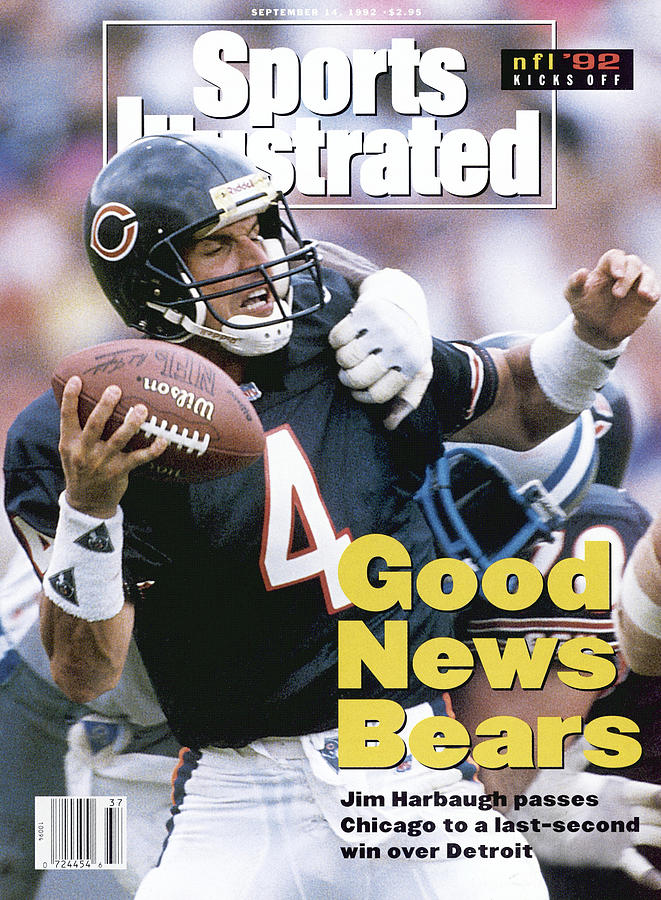
Harbaugh had success at all stops, playing seven seasons for the Bears before stints with the Indianapolis Colts, Baltimore Ravens and San Diego Chargers.
Harbaugh took the Colts to the 1995 AFC Championship game and earned his lone Pro Bowl selection while being named the NFL Comeback Player of the Year.
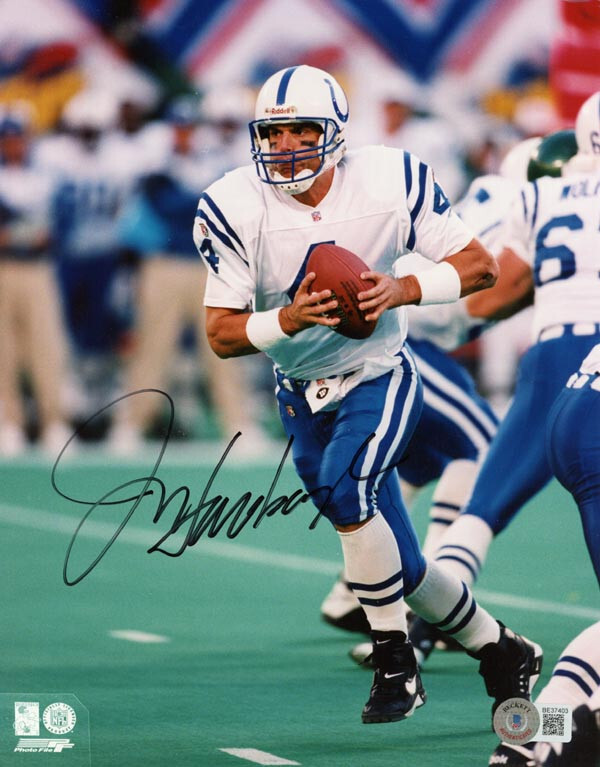
Coaching was always in the younger Harbaugh’s blood, as evidenced from 1994 to 2001, while still playing in the NFL, he was an unpaid assistant coach at Western Kentucky University where his father Jack ran the show. Yes, you read that right.
After playing 14 seasons in the NFL, it was no surprise when he transitioned into a full-time coaching gig, first as the Oakland Raiders quarterbacks coach then on to San Diego University as the Terreros head coach before landing as a head coach at Stanford, then onto the NFL with the 49ers, back to college for a legendary run at his alma mater at the University of Michigan and finally in his current position as the Los Angeles Chargers head coach.
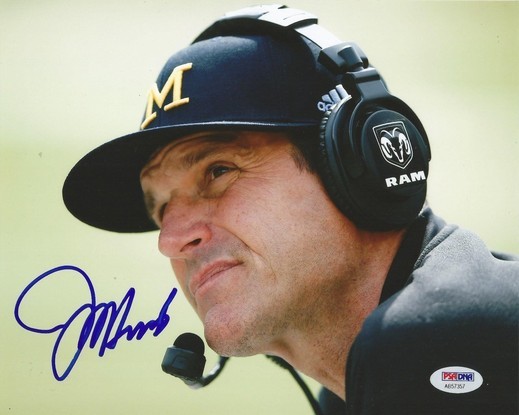
Known for his unique, culture shifting coaching approach and his results driven, paradigm shifting formula, Harbaugh finds himself atop the heap of the list of talented current football coaches.
Forgivably, the current younger generation of collectors only knows Harbaugh for his outstanding coaching career. Many forget that he was a legitimate baller back in his day. Here’s a trivia question for you: which current NFL head coach had more career rushing yards than Bo Jackson? That would be Jim Harbaugh–2,787 to 2,782 (of course, Harbaugh played 14 NFL years while a severe hip injury limited Bo’s NFL career to only four seasons).
Most collectors digging around are well aware of his 1989 Topps Traded extended rookie card, where he’s featured in his classic Bears uniform but without doing a little more research, people might not realize the QB had a total of three rookie year releases.
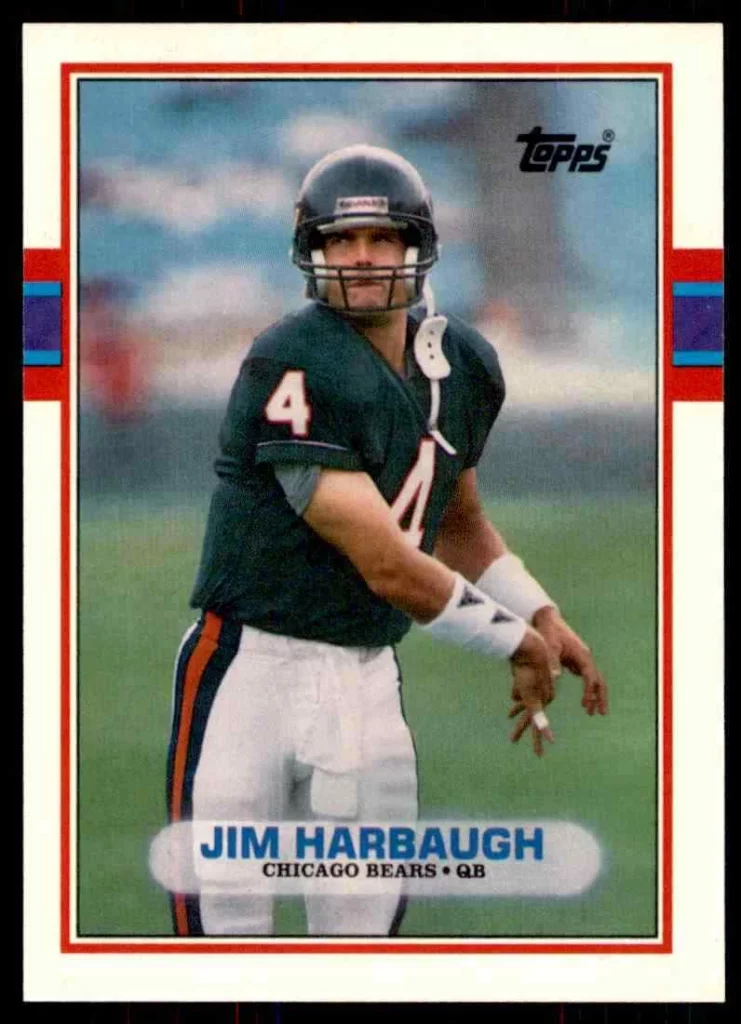
The aforementioned 1989 Topps Traded #91T Harbaugh XRC can be had for a very modest cost— a buck or two in ungraded form with graded 9s at under $15 and about $30-$40 for a Gem Mint 10. Regardless, it’s still a kick seeing a current coach in his prime playing days, lacing them up and this picture of Harbaugh tossing the rock, chin strap undone and gunslinger look on his grill, is just a classically cool image of the coach.
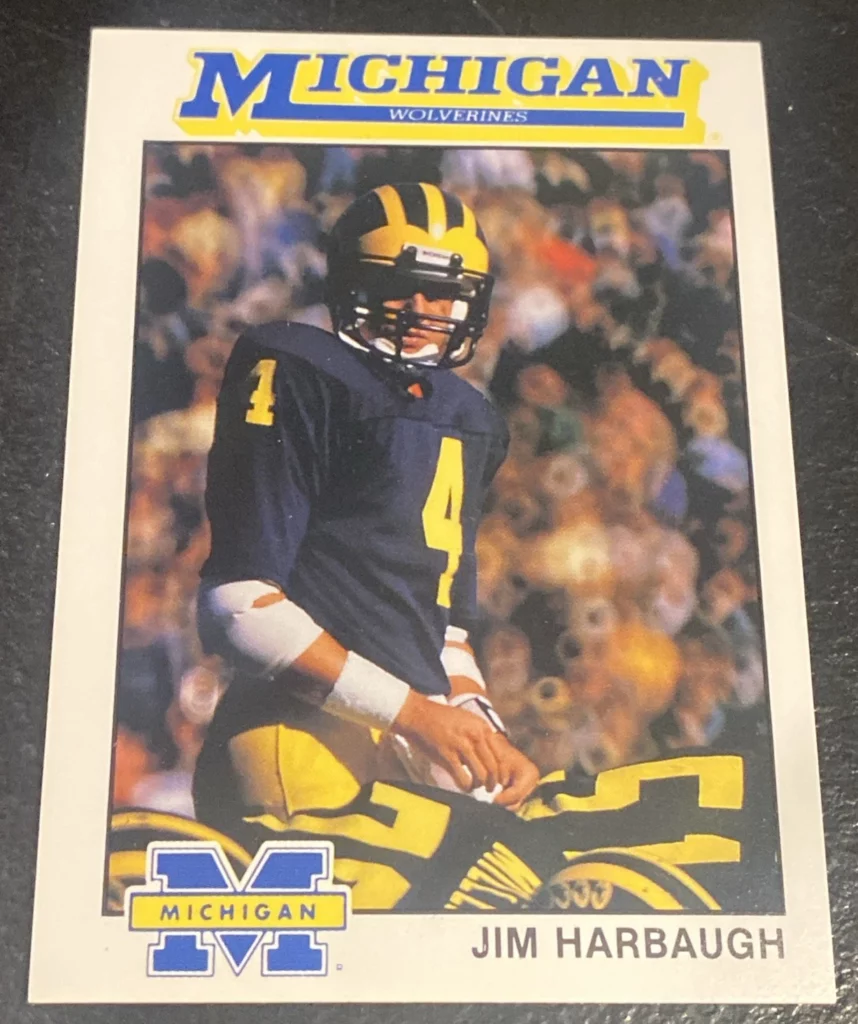
One of his often overlooked rookie year cards, this is 1989 Michigan Wolverines All-Time team card pictured in his Michigan gear, the young QB is under center surveying the defense before getting the play off. The card, featuring the Michigan logo and the classic Maize and Blue, is a great, affordable addition to any coach collection. The card back is very basic and offers a full paragraph of all of his accomplishments in Ann Arbor.
There aren’t a ton of these available online at any given time but prices are still very collector friendly.
You might have to really dig deep into the playbook to find the third and final option for a rookie year Harbaugh card.
Issued as a scratch off game card in packages of Team and Shredded Wheat cereal in the UK, this 30-card set features what would be considered by most as team cards, with full game action shots coupled with multiple scratch off covered footballs to make this set an interactive, lottery style scratcher card. You better follow the rules, as you can only scratch off ONE of the multiple football images to be the big winner.
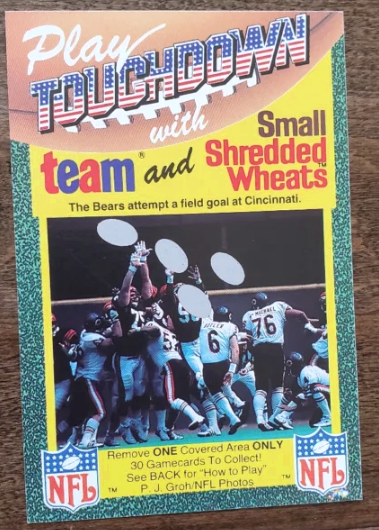
The card design features a generic football at the top with the word touchdown featured with the stars and stripes and red, white and blue of the American Flag with the logos of Team and Small Shredded Wheats, an inaction team picture takes up about two-thirds of the card, and the NFL logo is found at the bottom two corners. Harbaugh makes a cameo on the card described as ‘The Bears Attempt a Field Goal at Cincinnati.’ You can find him in the lower right-hand corner of the card as the holder for longtime Bears kicker Kevin Butler’s field goal attempt. Again, this is a tough one, but not usually expensive when you do find one.
Harbaugh cards would become more commonplace starting in 1990 but as for rookie year issues, these are it: a very mainstream card, a college-focused issue and a completely obscure overseas option.